London has imposed sanctions on seven Russian scientists and two state-run research laboratories accused of developing the chemical agents used in two high-profile attacks on European soil. The UK Foreign Office announced the measures on Monday, directly linking the sanctioned entities to the Novichok nerve agent deployed in the 2018 Salisbury poisoning and the chemical weapon believed to have killed opposition figure Alexei Navalny in Siberia earlier this year.
“These new measures directly hit two leading scientific research centres and key individuals involved in the development and production of toxic chemicals,” the Foreign Office said in a statement. The institutions targeted are SC Signal, a Russian state scientific research institute, and GNIII VM, the country’s Scientific Research and Testing Institute for Military Medicine. Both are central to Moscow’s chemical weapons programme, according to British officials.
Chemical Attacks on European Soil
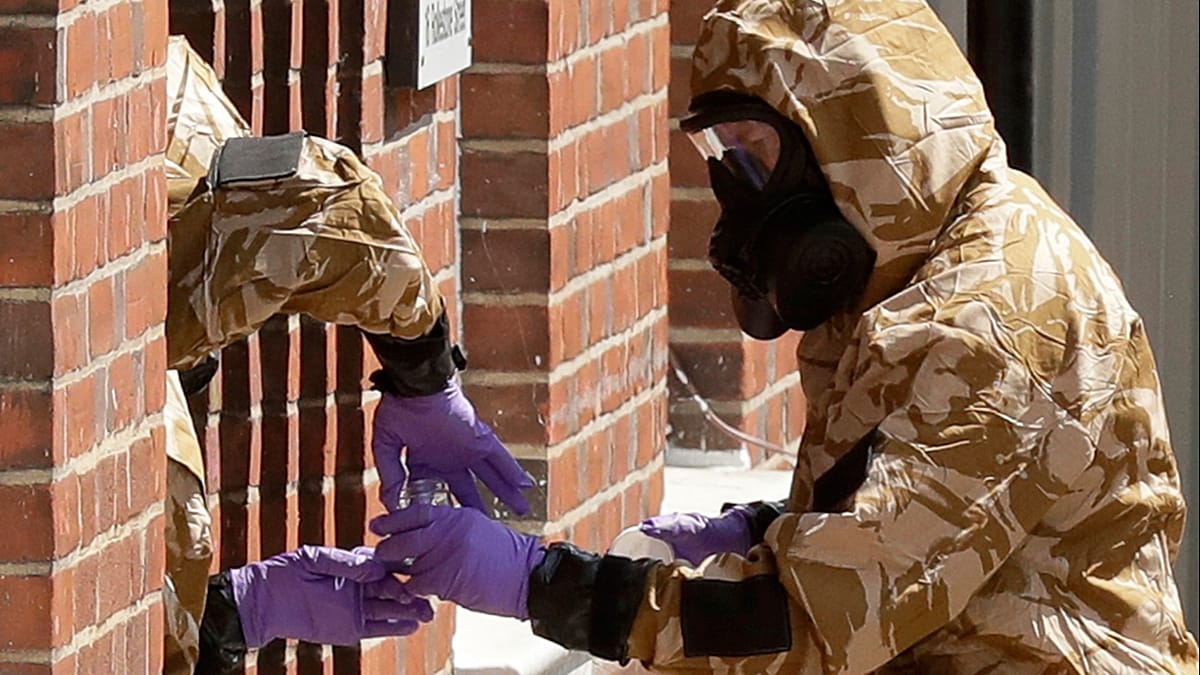
The sanctions come in response to two incidents that have shaken European security. In March 2018, former Russian intelligence officer Sergei Skripal and his daughter Yulia were poisoned with Novichok in Salisbury, England. They survived, but a British woman, Dawn Sturgess, died later that year after her partner found a discarded perfume bottle believed to have contained the nerve agent. The attack marked the first offensive use of chemical weapons in Europe since the Second World War, triggering a mass expulsion of Russian diplomats by Western nations.
In February 2024, Navalny, President Vladimir Putin’s most prominent domestic critic, died in an Arctic prison colony while serving a 19-year sentence. Western governments and independent investigators have concluded that he was poisoned with a chemical agent similar to Novichok. Navalny had survived a previous poisoning attempt in 2020, when he fell ill on a flight from Siberia and was evacuated to Berlin for treatment.
“Russia’s repeated use of chemical weapons is a sickening violation of international law and a direct threat to global security,” said British Foreign Secretary Yvette Cooper. The sanctioned individuals include directors and technical specialists at the two research institutes, the Foreign Office confirmed.
Broader Sanctions Context
The announcement coincides with the NATO summit opening Tuesday in Ankara, where the war in Ukraine is expected to dominate discussions. The UK has now sanctioned over 3,400 individuals and organisations since Russia’s full-scale invasion of Ukraine began in February 2022. The latest measures build on earlier EU actions, including the EU sanctions on six Russian scientists over the Navalny poisoning.
The timing underscores the ongoing threat posed by Russian chemical weapons capabilities, even as the Kremlin denies any involvement in the Salisbury and Navalny attacks. Western intelligence agencies have repeatedly accused Moscow of maintaining a covert chemical weapons programme despite its commitments under the Chemical Weapons Convention.
As NATO leaders gather in Ankara, the alliance is expected to reaffirm its support for Ukraine and discuss further measures to counter Russian aggression. The UK’s latest sanctions serve as a reminder that the use of chemical weapons remains a red line for European security, with consequences for those who develop and deploy them.