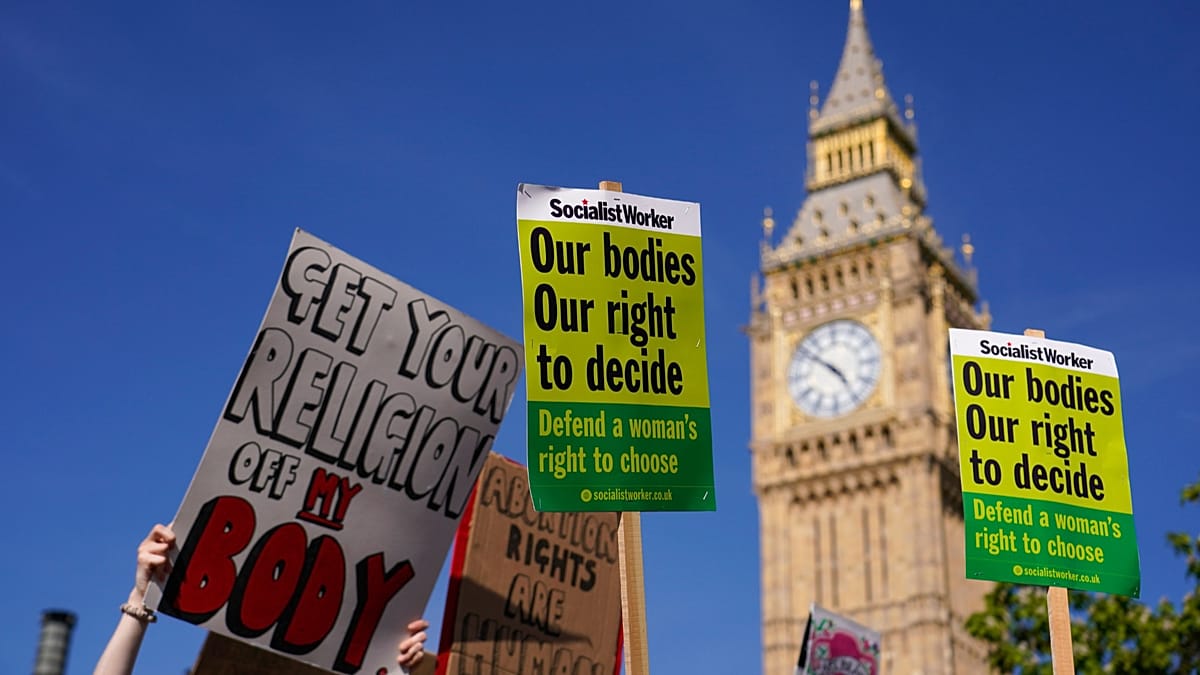
From Monday, women in Britain who were convicted under a 19th-century law for ending their own pregnancies will receive automatic pardons, the UK government has announced. The measure also covers police cautions and will see records of arrests or investigations for self-managed abortion removed from criminal files.
The pardons follow Parliament's decision last year to repeal a section of the 1861 Offences Against the Person Act, a landmark vote that decriminalised abortion across England, Scotland, and Wales. The change means that no woman can now face criminal charges for terminating a pregnancy at any stage.
Women do not need to apply for the pardon, and some will be granted posthumously. The government did not specify how many women are affected, but Tonia Antoniazzi, the Labour MP who introduced the decriminalisation amendment, said police had investigated more than 100 women suspected of illegal abortions in the five years before the vote. That figure included cases where women had suffered natural miscarriages or stillbirths.
A long-overdue correction
Heidi Stewart, chief executive of the British Pregnancy Advisory Service, welcomed the move. “For too long, women have faced the devastating consequences of outdated abortion laws,” she said. “While no pardon can undo the distress and trauma these women have experienced, this historic change in the law recognises the profound harm caused by their criminalisation and represents a meaningful step towards justice.”
Antoniazzi described how women suspected of illegally aborting a foetus were once “dragged from hospital beds to police cells” and interrogated when they should have been cared for. “This trauma cannot be erased, but I hope that this offers some alleviation of the pain these women have endured, enabling them to participate fully in society again, living their lives to the full, working the jobs they’ve always wanted to,” she said.
The reform comes after a series of high-profile prosecutions that sparked public outcry. In 2023, Carla Foster, a mother of three, was sentenced to more than two years in prison for medically inducing an abortion about eight months into her pregnancy. An appeals court freed her a month later, stating that the case called for “compassion, not punishment.”
In another case, Nicola Packer was acquitted of unlawfully self-administering poison or a noxious substance with intent to procure a miscarriage. Packer, who took abortion medication when she was about 26 weeks pregnant, testified that she had not realised she was more than ten weeks along.
Under current law, doctors can legally perform abortions in England, Scotland, and Wales up to 24 weeks, with exceptions beyond that for risks to the mother's life or severe fetal abnormality. Northern Ireland decriminalised abortion in 2019. The new Crime and Policing Act, which took effect this spring, removes criminal liability for women entirely.
Anti-abortion groups opposed the change, arguing it would lead to abortion on demand at any stage of pregnancy. However, supporters of the reform point to the disproportionate impact on vulnerable women and the chilling effect of criminal investigations on healthcare access.
The UK's move stands in contrast to developments elsewhere in Europe. In Poland, abortion reform has stalled in parliament, with nationwide protests highlighting the issue. Analysts note that even proposed changes would leave Poland among the EU's most restrictive countries, as this analysis shows.
The automatic pardons are a symbolic but significant step, acknowledging the injustice suffered by women under a law that predated women's suffrage. As Antoniazzi noted, the trauma cannot be erased, but the pardon offers a measure of recognition and a path to full participation in society.