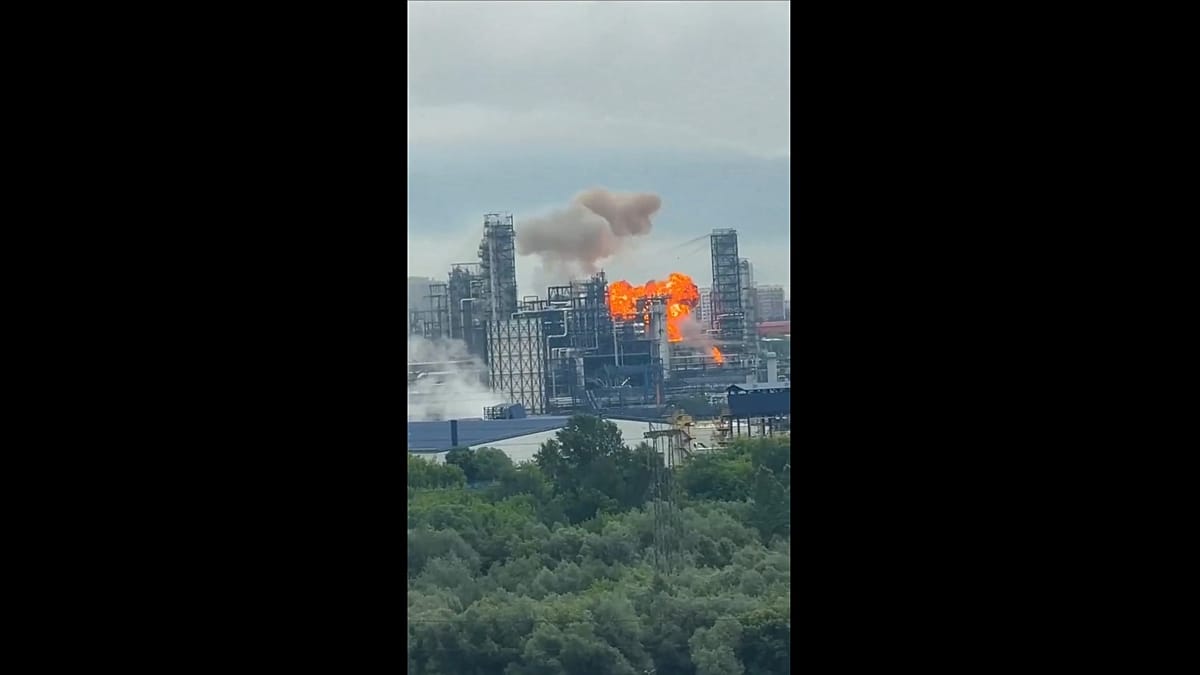
In a significant escalation of aerial warfare, Ukraine launched one of its largest drone attacks of the conflict, targeting the Moscow Oil Refinery, a critical infrastructure site located approximately 15 kilometers from the Kremlin. Russian officials confirmed the attack, which involved hundreds of drones, marking a notable shift in Kyiv's ability to strike deep into Russian territory.
Video footage released by Russian media shows massive fires raging at the refinery, with thick black clouds of smoke billowing over the capital. The attack underscores Ukraine's growing drone capabilities and its strategic focus on disrupting Russia's energy infrastructure, a key component of Moscow's war economy.
Strategic Implications for Europe
The assault comes amid a broader pattern of Ukrainian drone strikes aimed at reducing Russia's ability to fuel its military operations. This development has direct implications for European energy security, as the Moscow refinery is a major supplier of fuel to the Russian military and civilian sectors. The attack also highlights the evolving nature of the conflict, where drones have become a central tool for both sides.
European leaders have closely monitored these strikes, as they affect the continent's energy markets and geopolitical stability. The European Union has imposed multiple sanctions on Russian energy exports, but attacks like this one could further disrupt global oil supplies, potentially impacting prices across Europe.
Meanwhile, Ukraine continues to face relentless Russian drone and missile barrages. Recent attacks have hit residential areas in Kyiv and Mykolaiv, sparking major fires and causing civilian casualties. The symmetry of drone warfare has become a defining feature of the conflict, with both sides using unmanned systems to strike critical infrastructure and population centers.
European Response and Diplomatic Channels
The attack also occurs against a backdrop of internal European debates over diplomatic engagement with Russia. EU Council President António Costa has defended opening a diplomatic channel with Moscow, arguing that dialogue is necessary to de-escalate tensions, despite internal divisions among member states. Critics, however, point to Russia's ongoing aggression as evidence that such channels are ineffective.
In a related development, Bulgaria blocked EU sanctions on Russian Orthodox Patriarch Kirill, highlighting the fragmented nature of European unity on Russia policy. The move has drawn criticism from Ukraine and other EU members who advocate for a tougher stance.
Ukraine's Defence Minister recently stated that Crimea will become an island as drones cut supply lines, signaling a strategic shift in the war. The use of drones to isolate the peninsula could reshape the battlefield and further strain Russian logistics.
As the conflict enters its third year, the role of drones continues to expand. Ukraine's ability to strike deep into Russia, including the Moscow region, represents a psychological and tactical blow to the Kremlin. For European audiences, these developments underscore the war's direct impact on continental security and energy stability.