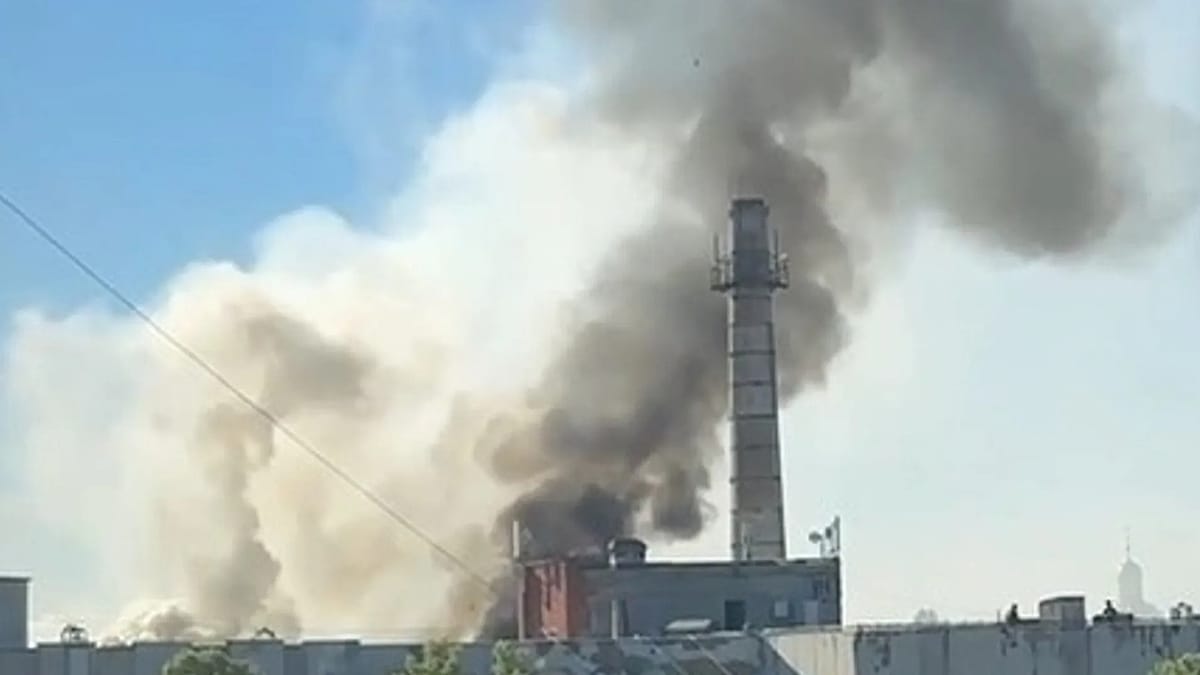
Ukrainian forces have struck Russia's major Ufa oil refinery for the second time in seven days, President Volodymyr Zelenskyy announced on Wednesday. The facility, located more than 1,000 kilometres from Ukraine's border, is one of Russia's largest producers of lubricants and a key node in its energy infrastructure.
“This is an entirely just response to everything Russia is doing against us. Peace is needed, and this is exactly what Russia’s leadership must realise,” Zelenskyy wrote on X. “Russia must end its war. And Russia’s leadership has every opportunity to do so. I thank every Ukrainian warrior who ensures our long-range accuracy.”
In addition to the Ufa strike, Ukraine also targeted a plant producing missile components in the Penza region, southeast of Moscow and roughly 500 kilometres from Ukrainian territory. Russian officials did not confirm the attacks, which could not be independently verified. The Russian Defence Ministry reported intercepting 179 Ukrainian drones over 16 regions, annexed Crimea, and the waters of the Azov and Black Seas. Penza Governor Oleg Melnichenko said only that downed drone debris damaged a power line and fell on an unfinished building.
Fuel Crisis and Political Pressure on the Kremlin
The almost daily long-range strikes on Russian oil facilities have created a fuel crisis and heaped political pressure on the Kremlin as its full-scale invasion of Ukraine enters its fifth year. On Sunday, President Vladimir Putin acknowledged for the first time that Russia faces a “certain deficit” of fuel. “We see the problems, we are aware of them and are responding to them, but we will certainly ensure the security of both the country and our citizens, as well as the inviolability of Russia's borders,” Putin said in a speech.
Ukraine’s domestically developed drones and missiles have been hammering Russian oil refineries, terminals, storage depots, and pipeline pumping stations for months. Many regions of Russia, one of the world’s largest energy producers, have introduced fuel rationing. The campaign has also slowed the Russian army’s momentum on the battlefield, according to Western officials and analysts. “Russians now have great problems with delivering infantry to the front line and supplying it,” Ukrainian Defence Minister Mykhailo Fedorov said on Wednesday.
Meanwhile, Russia’s aerial attacks on Ukraine decreased in June compared to May. Moscow launched 5,749 drones and 180 missiles against Ukraine last month, down 29% and 15% respectively, according to an analysis of Ukrainian air force data by AFP. The drop came as Ukraine intensified its own retaliatory strikes. Kyiv primarily targets oil processing and export facilities, but has also claimed successful attacks on military plants. Last month, it said its forces struck a plant making key components for Iskander missiles in Voronezh, a hit that would “significantly degrade Russia's capacity to manufacture new missiles.”
Last week, Zelenskyy announced on social media that he had approved a 40-day “influence operation” against Russia “aimed at compelling it to end the war.” The strikes on Ufa and Penza are part of that broader strategy, which combines military pressure with diplomatic efforts. Ukraine continues to push for EU accession, with Ireland setting its sights on advancing Ukraine's EU accession during its presidency, though challenges remain, as Hungary's new PM Péter Magyar hesitates on Ukraine's EU path.
The conflict also strains European energy markets and security. As Ukraine's energy grid faces new strain from a heatwave moving east, the EU's Green Deal summer readiness is being tested by a second heatwave across the continent. The war's ripple effects continue to shape European politics, from fuel prices to defence cooperation.