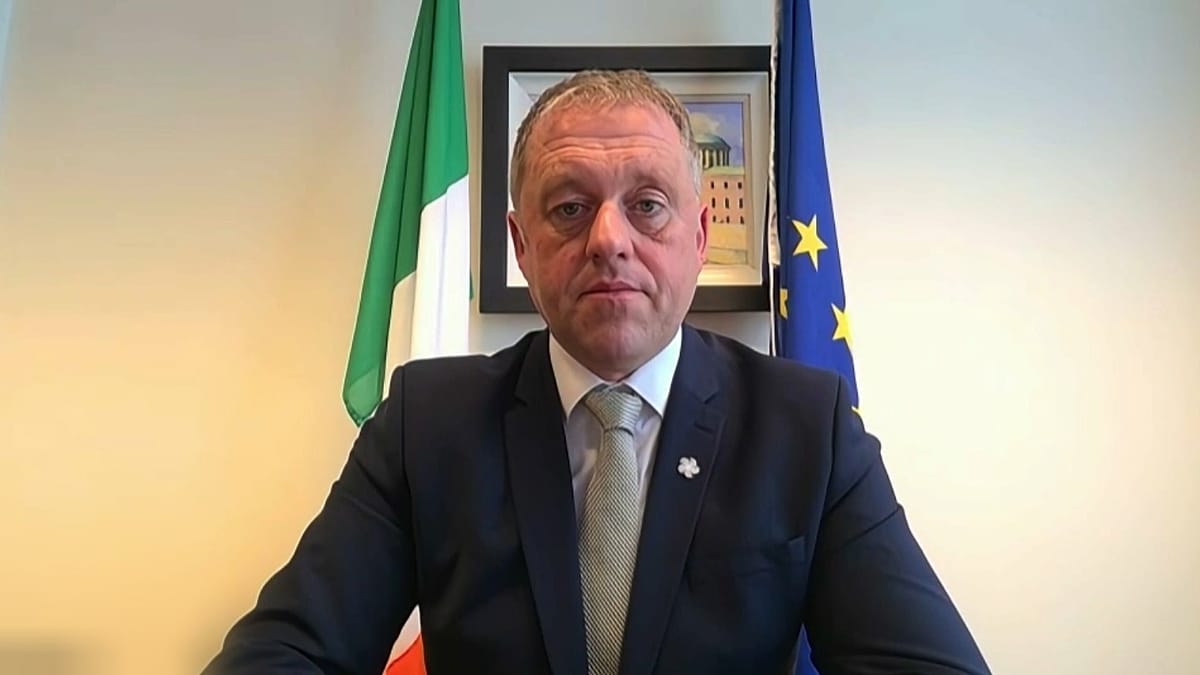
Ireland is positioning its upcoming six-month presidency of the Council of the European Union as a pivotal opportunity to accelerate Ukraine's accession process. Thomas Byrne, Ireland's Minister of State for European Affairs and Defence, described the presidency as a 'generational moment' for the country, with a clear focus on advancing Ukraine's integration into the bloc.
Speaking to reporters in Dublin, Byrne outlined that one of the key priorities will be to open additional negotiation clusters with Ukraine. These clusters cover broad policy areas such as the rule of law, economic criteria, and the functioning of democratic institutions, and are central to the accession framework. 'We are ambitious to make real progress on Ukraine's path,' Byrne said, adding that Ireland intends to use its presidency to push for concrete steps rather than just symbolic gestures.
Economic and Security Dimensions
Beyond Ukraine, Byrne stressed that strengthening the EU's economy will be another pillar of Ireland's presidency agenda. With global economic headwinds and the ongoing war at Europe's eastern border, Dublin sees an opportunity to advocate for policies that bolster competitiveness and resilience. 'A stronger economy is the foundation for everything else — from defense to climate action,' he noted.
The Irish presidency comes at a delicate time for EU-Ukraine relations. While Kyiv has made progress on reforms, several member states remain cautious. Hungary, for instance, has expressed reservations about the pace of accession, as highlighted in Why Hungary's New PM Péter Magyar Hesitates on Ukraine's EU Path. Poland, a key ally, has also faced bilateral tensions, including the collapse of a drone deal that threatened to complicate accession talks, as reported in Poland-Ukraine Drone Deal Collapses, Threatening EU Accession Talks.
Byrne acknowledged these challenges but insisted that Ireland's role as a neutral broker could help bridge divides. 'We are not a large country, but we have credibility and a track record of constructive engagement,' he said. 'Our presidency will be about building consensus, not imposing it.'
Timing and Context
Ireland will assume the rotating presidency in the second half of 2026, following Poland and Denmark. The timing is significant: by then, Ukraine is expected to have completed several more reform milestones, and the EU will have had time to assess the impact of previous enlargement decisions. The presidency will also coincide with ongoing debates about the EU's own institutional reforms, including potential changes to voting rules and budget allocations to accommodate new members.
Byrne's comments come amid a broader European push to maintain momentum on enlargement. The European Commission has recommended opening accession talks with Ukraine, and several member states have signaled support. However, the process remains slow and politically fraught. The Ukraine and France Negotiate License for SCALP Missile Production deal underscores the deepening defense ties between Kyiv and EU capitals, even as diplomatic hurdles persist.
For Ireland, the presidency is also a chance to shape the EU's agenda on issues beyond enlargement. Byrne mentioned that Dublin will prioritize digital innovation, climate resilience, and social cohesion. 'We want to leave a lasting mark,' he said. 'Not just for Ireland, but for the entire continent.'
The minister's remarks have been welcomed by Ukrainian officials, who see Ireland as a sympathetic partner. Ukraine's Deputy Prime Minister for European Integration, Olha Stefanishyna, called the announcement 'encouraging' in a social media post, adding that 'every chapter opened is a step closer to a united Europe.'
As the EU prepares for what could be its most significant enlargement since 2004, Ireland's ambitions reflect a broader recognition that the process cannot afford to stall. 'This is a generational moment,' Byrne reiterated. 'We have to seize it.'