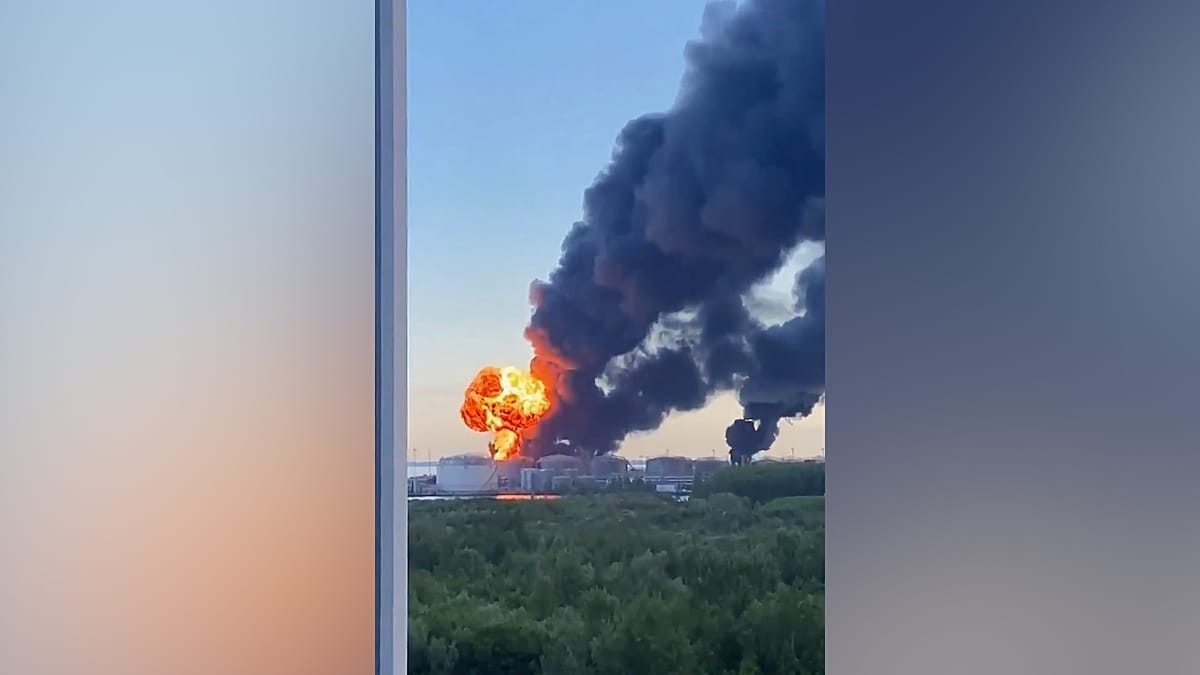
A Ukrainian drone strike ignited a fire at an oil terminal near St. Petersburg on [date], sending plumes of black smoke over Russia's second-largest city. Both Ukrainian and Russian officials confirmed the attack, which occurred days before President Vladimir Putin is scheduled to attend a prominent economic forum in the city.
The strike targeted a facility in the Leningrad Oblast, approximately 30 kilometres from the historic city centre. Local authorities reported that emergency services responded to the blaze, though no casualties were immediately confirmed. The attack underscores the expanding reach of Ukrainian drone operations, which have increasingly struck infrastructure deep inside Russian territory.
Strategic Timing and Regional Implications
The timing of the drone strike is notable, coming ahead of the St. Petersburg International Economic Forum (SPIEF), an annual event where Putin typically showcases Russia's economic resilience and courts foreign investment. The forum, scheduled for later this week, is expected to draw delegates from across the globe, including from Europe, Asia, and the Middle East. The attack may serve as a symbolic reminder of the ongoing conflict's proximity to Russia's economic heartland.
This incident follows a pattern of Ukrainian strikes on Russian energy infrastructure, aimed at disrupting logistics and supply chains that support Moscow's war effort. In recent months, drones have hit oil depots, refineries, and storage facilities in regions such as Krasnodar, Rostov, and Tatarstan. The St. Petersburg terminal is a key node for fuel distribution in northwestern Russia, including supplies to the Baltic Fleet.
European observers have noted the broader implications for energy security and regional stability. The attack comes as the EU continues to debate further sanctions on Russian oil exports, including measures to tighten the price cap and restrict maritime services. The EU has recently abandoned hopes for a full ban on maritime services for Russian oil tankers, highlighting the challenges of enforcing existing restrictions.
Meanwhile, the conflict's impact on civilian populations remains severe. Russian drone barrages have hit residential areas in Kharkiv, intensifying the humanitarian crisis in Ukraine's second-largest city. The reciprocal use of drones by both sides has raised concerns about escalation and the potential for miscalculation.
In response to the St. Petersburg attack, Russian officials have vowed to bolster air defences around critical infrastructure. The Kremlin has also accused Ukraine of targeting civilian sites, though the oil terminal is a legitimate military target under international law. Ukrainian authorities have not commented directly on the operation but have consistently stated their right to strike military objectives on Russian soil.
The attack also coincides with diplomatic movements in Europe. Ukrainian President Volodymyr Zelenskyy is set to meet with French President Emmanuel Macron, German opposition leader Friedrich Merz, and UK Prime Minister Keir Starmer in London, as Kyiv seeks to maintain Western support amid battlefield setbacks. The meeting underscores the ongoing coordination between Ukraine and its European allies.
For residents of St. Petersburg, the sight of smoke over the city is a jarring reminder of a war that has largely been fought far from Russia's urban centres. The city, known for its imperial architecture and cultural heritage, has seen little direct impact from the conflict until now. Local authorities have urged calm, but the psychological effect of the attack is likely to resonate.
As the SPIEF forum approaches, the Kremlin will be keen to project an image of normalcy and control. However, the drone strike serves as a stark counterpoint, illustrating that the war's reach extends even to the symbolic heart of Putin's Russia.