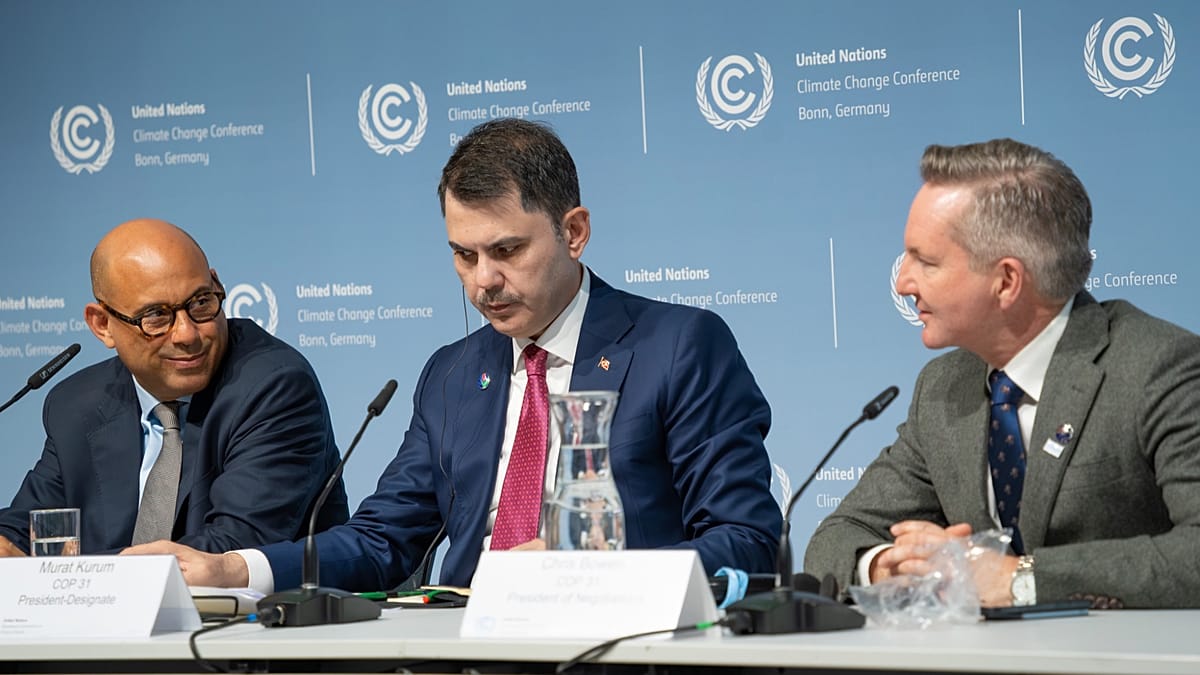
This week, delegates from nearly 200 nations have gathered in Bonn, Germany, for the 64th session of the Subsidiary Bodies (SB64) of the United Nations Framework Convention on Climate Change (UNFCCC). These talks, running from 8 to 18 June, are the first major negotiating session since COP30 in Belém, where countries failed to agree on a roadmap to phase out fossil fuels. The pressure is now on to turn political commitments into concrete action on adaptation, fossil fuels, food systems, land use, trade, and just transition.
However, a growing chorus of criticism is targeting the accessibility of these negotiations. Climate activists and journalists, particularly from developing countries, are facing what many describe as unprecedented barriers to participation. The issue has sparked debate over who truly gets a seat at the table in global climate governance.
Civil Society Press Access Slashed
For three decades, the Climate Action Network (CAN), a coalition of over 2,500 civil society organisations in more than 150 countries, has held daily press briefings at UN climate talks. These briefings are a critical channel for independent reporting on the negotiations. Yet this year, CAN was initially allocated just five press conference slots for the entire two-week conference. Mohamed Adow, founder and director of the climate think tank Power Shift Africa, described the move on LinkedIn as a “deliberate narrowing of civic space.” After his post gained traction, the UN added two additional slots, but the reduction remains a concern.
“Civil society press briefings are one of the key ways the public gets an independent account of what is happening behind closed doors,” Adow told Euronews Earth. “This issue is especially important because many journalists, particularly from developing countries, are unable to attend in person due to cost, visa barriers or shrinking newsroom budgets.”
Dr Ketakandriana “Ke” Rafitoson, Executive Director of the Resource Justice Network, echoed these worries: “We’re deeply concerned by reports that civil society press access at SB64 has been significantly reduced. Civil society briefings are one of the few ways the public can understand what is happening inside highly technical negotiations. Restricting that space risks weakening accountability precisely when Parties should be rebuilding trust in multilateral climate action.”
Visa Delays Exclude Frontline Nations
Visa barriers are a persistent problem. The German Institute of Development and Sustainability (IDOS) has documented exclusion of delegates from least developed countries since 2008. Last year’s Bonn climate event saw 223 delegates from Africa and Asia struggle with visa applications: 25 were denied outright, 167 were left unprocessed, and 37 faced delays. Burundi, Cameroon, Egypt, Morocco, and Rwanda were left without a single representative. This year, reported cases have risen to 298.
Randa Khaled from the Egyptian environmental organisation Greenish is one of those affected. Despite obtaining UNFCCC accreditation, paying €150 for a visa application, and submitting on time, her participation remains uncertain. She told Euronews Earth she is “devastated” by the setback.
Baboucarr Nyang of CAN Africa highlighted the systemic nature of the problem: “Negotiations can be focused and still be fair. But when it is consistently African delegates, Pacific islanders, and frontline community representatives who are denied visas, delayed at borders, or priced out by soaring hotel costs while wealthy country delegations arrive without a single barrier – that is not process management. That is exclusion wearing a bureaucratic mask.”
Fossil Fuel Lobbyists Gain Ground
While civil society access is curtailed, the presence of fossil fuel lobbyists is growing. A 2025 analysis by the Kick Big Polluters Out (KBPO) coalition found that one in every 25 attendees at COP30 was a fossil fuel lobbyist, a 12% increase from the previous year in Baku, Azerbaijan. This marks the highest concentration since tracking began in 2021. The UNFCCC did not respond to requests for comment on lobbyist numbers at the Bonn talks.
Adow warned that the consequences extend beyond NGOs: “When access for civil society is reduced, it is not only NGOs that lose out. Journalists, citizens and communities around the world lose a vital window into the negotiations. The principle at stake is whether independent civil society voices have a regular platform within the UN climate process.”
The broader context of European climate policy adds urgency. As EU Environment Chief: Climate Policy Is Now Defence Policy underscores, the bloc views climate action as a security imperative. Yet if the UN process cannot ensure equitable participation, its legitimacy is undermined.
Dr Rafitoson concluded: “If the UN climate process is serious about a just transition, it must protect the civic space that allows impacted communities and their representatives to be heard.” The Bonn talks may produce technical progress, but the growing exclusion of those most affected by climate change raises fundamental questions about fairness and accountability in global governance.