The World Meteorological Organisation (WMO) has released projections indicating that the planet is on track to repeatedly breach the 1.5°C warming threshold over the next five years, driven by a combination of human-caused climate change and a strong El Niño event that may persist until 2028. The findings, produced in collaboration with the UK's Met Office, paint a stark picture for Europe and the wider continent.
According to the report, there is a 75 per cent probability that the average global temperature between 2026 and 2030 will exceed 1.5°C above pre-industrial levels — the limit set by the 2015 Paris Agreement. More immediately, the WMO calculates a 91 per cent chance that at least one of the next five years will surpass that mark, and an 86 per cent likelihood that a new hottest-year record will be set, eclipsing 2024.
Europe's Heatwave Reality
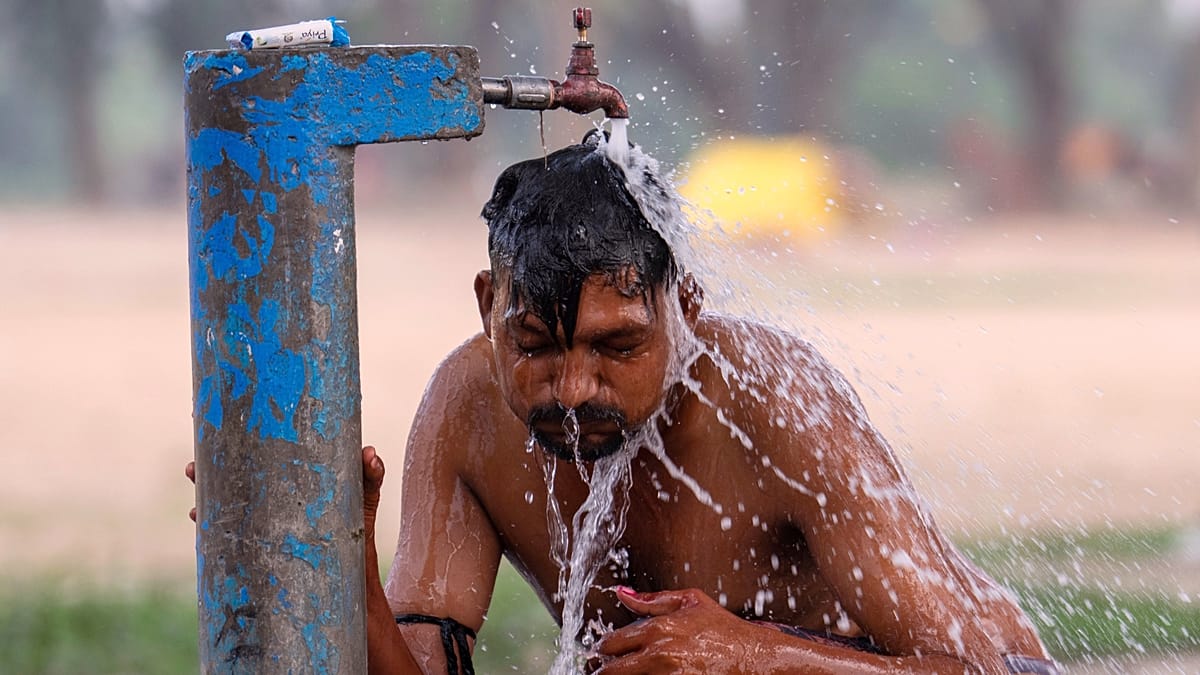
The warnings come as large parts of Europe swelter under unseasonably high temperatures. France and the United Kingdom both recorded their hottest May days on record this week, while even typically cooler cities like Oslo experienced temperatures well above the climatological norm. The May heatwave that shattered records across Western Europe has been described by experts as a historic event.
“This record-breaking heat has the fingerprints of climate change all over it,” said Friederike Otto, a climate scientist at Imperial College London. “Temperatures on this scale were once exceptional even at the height of summer. Seeing 35°C in the UK during spring is absolutely astonishing, but the science is very clear – climate change makes these heatwaves hotter, longer and far more frequent.”
Otto, who was not involved in the WMO report, warned that an entire year or more above 1.5°C would bring “a whole range of extreme weather events that exceeds anything we've experienced in the past.” She stressed that European cities remain woefully unprepared for the scale of the threat.
El Niño's Role and the Fossil Fuel Factor
The WMO projects that a strong El Niño — a natural warming of the central Pacific that alters global weather patterns — could stretch all the way to 2028. Because of this, co-author Melissa Seabrook of the Met Office said 2027 is likely to break the 2024 heat record. While El Niño typically adds a temporary 0.1–0.2°C to global mean temperatures, this is dwarfed by the approximately 1.3–1.5°C of warming already caused by human activity.
“El Niño is a natural phenomenon. It comes and goes. Climate change on the contrary gets worse as long as we do not stop burning fossil fuels. So climate change is the reason to freak out,” Otto emphasised.
The European Union has been urged by the UN to “kick the fossil fuel addiction,” but progress remains uneven. While Germany risks missing its 2030 climate goal, Spain has already surpassed its target, highlighting the divergent paths among member states.
Arctic Amplification and Amazon Drought
The WMO report also highlights accelerating warming in the Arctic, where temperatures are rising 3.5 times faster than the global average due to reduced ice and snow cover that previously reflected solar radiation. Winters in the Arctic from 2020 to 2025 averaged 1.2°C warmer than the 1991–2020 baseline; the next five winters are projected to be 2.8°C warmer than that recent norm. Arctic sea ice is expected to continue shrinking in summer, with implications for global weather patterns and European climate.
In the Amazon basin, the report forecasts even warmer and unusually dry conditions, increasing wildfire risk and threatening the region's role as a critical carbon sink. Dr Theodore Keeping of Imperial College London warned that a strong El Niño “can have a major effect on wildfire risk later in the year,” noting that the combination of a rapid start to the fire season and the forecast El Niño could produce a particularly severe fire year. Wildfires not only cause immediate fatalities but also degrade air quality over hundreds of kilometres, leading to long-term health problems.
As the continent braces for more extreme weather, the WMO's projections serve as a sobering reminder that every fraction of a degree of warming brings more severe impacts. “It’s important to note that [1.5°C] is not kind of a cliff edge that we’re going to fall off,” said Seabrook. “Every kind of 0.1 of a degree has more and more severe impact.”