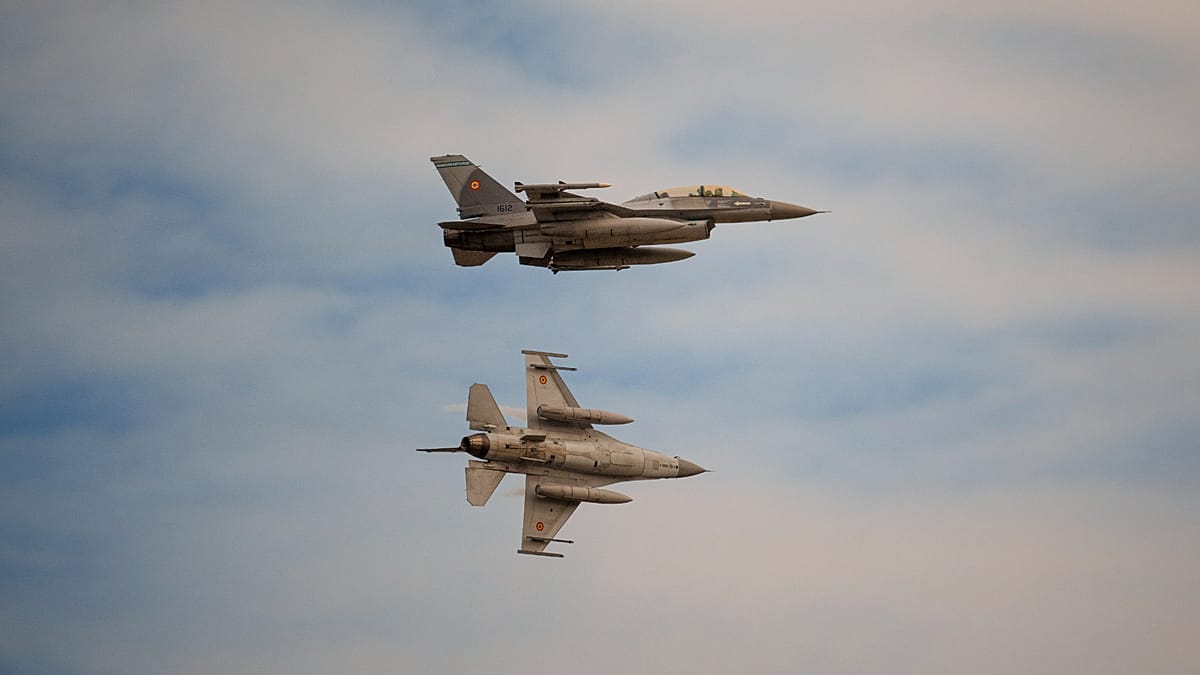
The United States is in preliminary discussions about expanding its nuclear weapons presence in Europe by stationing additional aircraft capable of delivering nuclear warheads in NATO member states, according to a report in the Financial Times. The talks, confirmed by three individuals briefed on the matter, focus on deploying dual-capable aircraft (DCA) — planes that can carry both conventional and nuclear munitions — to bases in Poland and the Baltic states of Lithuania, Latvia, and Estonia.
Currently, six European countries participate in NATO's nuclear-sharing arrangement: the United Kingdom, France, Germany, Italy, Belgium, and the Netherlands. Under this program, these allies host US nuclear weapons and maintain aircraft certified to deliver them in wartime. The alliance has long viewed the scheme as a cornerstone of collective deterrence — the strategy of preventing conflict through political unity and military readiness.
Strategic Shift in the Baltics
Expanding the program eastward would mark a significant shift in NATO's posture, bringing nuclear-capable assets closer to Russia's borders. Poland and the Baltic states have been vocal advocates for a stronger NATO presence since Russia's full-scale invasion of Ukraine in 2022. Warsaw, in particular, has repeatedly called for the deployment of US nuclear weapons on its soil, arguing that the current arrangement leaves the alliance's eastern flank vulnerable.
“The security environment has fundamentally changed,” said a European diplomat familiar with the discussions. “NATO must adapt its deterrence posture to match the new reality.” The talks come amid heightened tensions between the alliance and Moscow, which has repeatedly warned against any expansion of NATO infrastructure eastward.
Experts estimate that around 100 US B61 nuclear bombs are currently stored at bases in Belgium, Germany, Italy, the Netherlands, and Turkey under the nuclear-sharing program. Adding new host nations would require significant infrastructure upgrades, including secure storage facilities and training for local air forces on nuclear operations.
The potential expansion also has implications for the broader European security architecture. Germany and the Netherlands recently announced plans to deploy a joint NATO command in the Baltics, signaling a deeper commitment to the region's defense. That move complements the nuclear-sharing talks, though officials stress that no final decisions have been made.
Political and Diplomatic Hurdles
Any expansion of nuclear hosting would require unanimous approval from all 32 NATO members, a process that could face resistance from some allies. France, which maintains its own independent nuclear arsenal under the Cinquième République, has historically been cautious about integrating US nuclear weapons into European defense structures. Similarly, Turkey, which already hosts US nuclear bombs at Incirlik Air Base, has complex relations with both Washington and Brussels that could complicate negotiations.
The discussions also intersect with broader US foreign policy priorities. The Biden administration has been engaged in parallel talks with Iran over its nuclear program, with Kazakhstan recently offering to store Iran's enriched uranium as part of a potential deal. That initiative highlights the delicate balance Washington must strike between non-proliferation efforts and its commitments to NATO allies.
For now, the nuclear-sharing talks remain at an exploratory stage. US officials have signaled openness to the idea but have not committed to a timeline or specific basing arrangements. The Financial Times report suggests that the discussions are part of a broader review of NATO's deterrence posture, which is expected to be presented at the alliance's next summit in The Hague in June 2025.
“This is not a done deal,” cautioned a senior NATO official. “But it reflects a recognition that the status quo may no longer be sufficient to guarantee the security of all allies.”



