Since Donald Trump returned to the White House in January 2025, Washington has quietly built a global network of deals with developing countries to accept migrants who cannot legally be sent back to their home nations. A joint investigation by Forbidden Stories and international media partners, published on Monday, reveals that at least 25,447 people had been deported to third countries by 31 August 2026, with the US earmarking $410 million (€357 million) in payments to participating governments and UN agencies.
The vast majority of deportees—roughly 20,000—were sent to Mexico, but the remainder were dispersed across 27 other countries in Latin America, Africa, and the Pacific. Agreements have been finalised with seven additional nations, bringing the total to 35. The terms vary widely: some deals specify which nationalities can be transferred, while others allow the acceptance of individuals with criminal records.
Secretive negotiations and a new State Department office
Most of the negotiations and payments were handled by a little-known State Department division called the Office of Remigration, created in May 2025. The office is led by Christian Jove Ehrhardt, a 41-year-old diplomat who previously served as a security officer. According to the investigation, Ehrhardt personally visited Cameroon, which signed a memorandum of understanding with the US in December 2025 to accept deportees. A week later, Washington also signed a five-year health assistance programme with Cameroon worth nearly $400 million (€348 million).
The following month, the State Department announced an additional $30 million (€26 million) for the UN Refugee Agency (UNHCR) in Cameroon to "facilitate the voluntary return of refugees and combat illegal immigration." The first plane carrying deportees arrived in Cameroon on 14 January 2026.
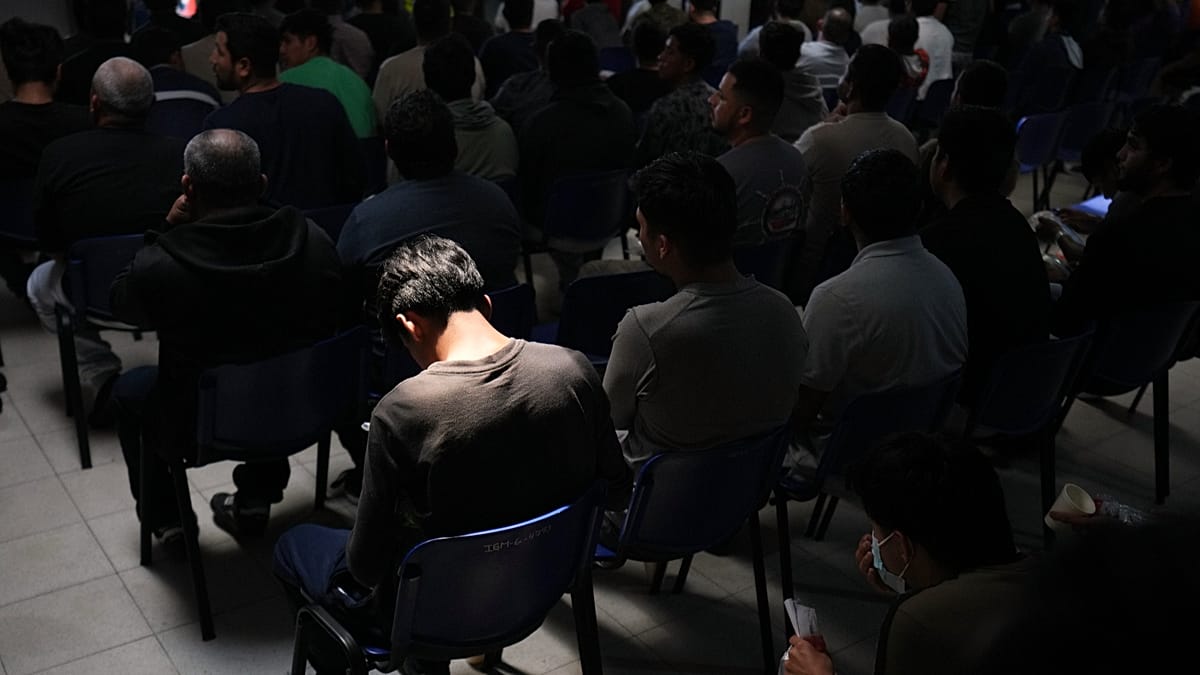
Lawyers representing deportees have described the situation as a "legal black hole," where individuals are held without charge in countries where they have no ties and few, if any, rights. An earlier investigation by AFP found that Washington is using visa bans and restrictions on African countries to pressure them into accepting deportees. Forbidden Stories reported that 49 of Africa's 54 countries had been approached about taking third-country deportees.
Payments and criticism of UN agencies
The financial arrangements vary. Palau, a Pacific island nation with a population of under 18,000, signed an agreement in December 2025 to accept up to 75 third-country nationals in return for $7.5 million (€6.5 million). So far, only three people have been sent under that deal. In Eswatini, 32 people have arrived since July 2025 out of a possible 160 under an agreement worth more than $5 million (€4 million). That deal has accepted deportees with criminal records, the investigation found.
Internal State Department records show that of the $410 million planned for the agreements, $81 million (€70 million) was earmarked for signatory governments. The rest was intended for aid organisations, including more than $178 million (€155 million) for the UN's International Organisation for Migration and $123 million (€107 million) for UNHCR. Both agencies have faced criticism over their involvement, although UNHCR told Forbidden Stories that it was not party to the bilateral agreements and that US funding was being used in line with its mandate to strengthen asylum systems.
The revelations raise serious questions about the legality and ethics of the US approach, which some experts argue undermines international refugee protection. The deals are reminiscent of similar arrangements made by other countries, including Australia's offshore processing, but the scale and secrecy here are unprecedented. For European readers, the story is a stark reminder of how migration policy is being reshaped globally, often at the expense of the most vulnerable.
As the US continues to expand its network of deportation deals, the human cost is becoming clearer. The investigation's findings are likely to fuel debates in European capitals about the ethics of outsourcing migration control and the responsibilities of wealthy nations.