The United States and Iran signed a framework agreement on Wednesday aimed at reopening the Strait of Hormuz and restarting negotiations over Tehran's nuclear programme. The signing took place in two locations: US President Donald Trump signed a physical copy while dining with French President Emmanuel Macron at the Palace of Versailles, while Iranian President Masoud Pezeshkian signed in Tehran, according to state-run IRNA news agency, which published an image of the document bearing both signatures.
The deal, which has not been officially published by either Washington or Tehran, immediately waives US sanctions on Iranian oil exports, allowing Iran to sell crude on global markets and restore a revenue stream worth billions. It also calls for Iran's highly enriched uranium to be diluted under International Atomic Energy Agency supervision, but leaves further nuclear restrictions to future talks.
Strategic Assessment: Who Gains Most?
Analysis by the Institute for the Study of War (ISW) think tank suggests that Tehran has emerged from the conflict in a stronger strategic position than the deal's public framing implies. The leaked text, if accurate, grants Iran significant economic relief that it could use to reconstitute its missile, drone, and nuclear programmes, as well as its regional proxy network. ISW noted no indication that Iranian decision-makers are willing to make concessions on nuclear issues that would need to be resolved in a final agreement.
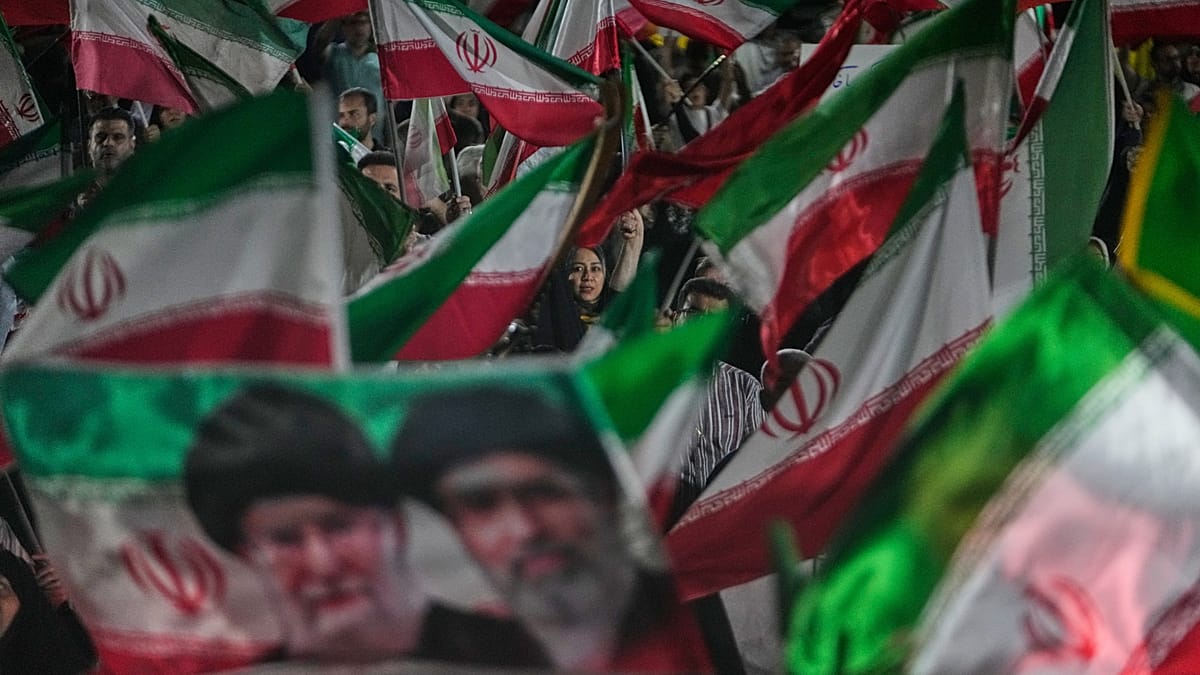
Iranian state media, including Press TV, have framed the memorandum as a victory that formalises Iran's military gains. The outlet described it as "the political codification of a battlefield reality," according to ISW. The Islamic Republic has survived the most serious attempt by Israel and the US to topple its regime, despite the war's opening volleys that killed Ayatollah Ali Khamenei and other top officials.
Strait of Hormuz Reopens, but Ambiguity Remains
Under the agreement, the Strait of Hormuz will reopen, and the US will lift its blockade of Iranian ports—moves expected to push down global gas prices. Passage through the waterway will be toll-free for 60 days, though the deal does not preclude fees after that, according to US officials speaking on condition of anonymity. Iran's closure of the strait, through which roughly a fifth of the world's traded oil passed before the war, proved a powerful weapon, driving up petrol prices and raising costs for food and fertiliser.
ISW assessed that Iran will likely exploit ambiguous language in the agreement to maintain effective control over shipping. The reported text does not explicitly bar Iran from "managing" the waterway, meaning Tehran could continue to insist vessels use its traffic separation scheme in Iranian territorial waters and pay fees to the IRGC Navy—an arrangement Washington previously sanctioned as unlawful.
Oil Revenue and Nuclear Talks
The deal immediately waives, but does not eliminate, sanctions on Iran's oil exports, allowing it to sell crude on world markets. Last year, Tehran earned an estimated $45 billion from oil sales, though it had only one major buyer, China, and relied on a shadow fleet to evade sanctions. Under the blockade since April, exports nearly ground to a halt. With the waiver, Iran will likely find more customers and sell at higher prices.
The draft agreement calls for Iran's highly enriched uranium to be "downblended" under IAEA supervision, without specifying details. Negotiations on further nuclear restrictions lie ahead, with a 60-day period for talks now underway. The question remains whether Trump can secure a better deal than the 2015 nuclear accord he scuttled eight years ago.
For European observers, the deal's implications are significant. The reopening of the Strait of Hormuz will ease energy prices across the continent, but the ambiguity over Iran's nuclear programme and its regional influence raises concerns for EU member states, particularly those with Mediterranean coastlines. The European Union has long sought a diplomatic resolution to the Iran nuclear issue, and this framework may provide a foundation—or a source of further tension—depending on the outcome of the 60-day talks.