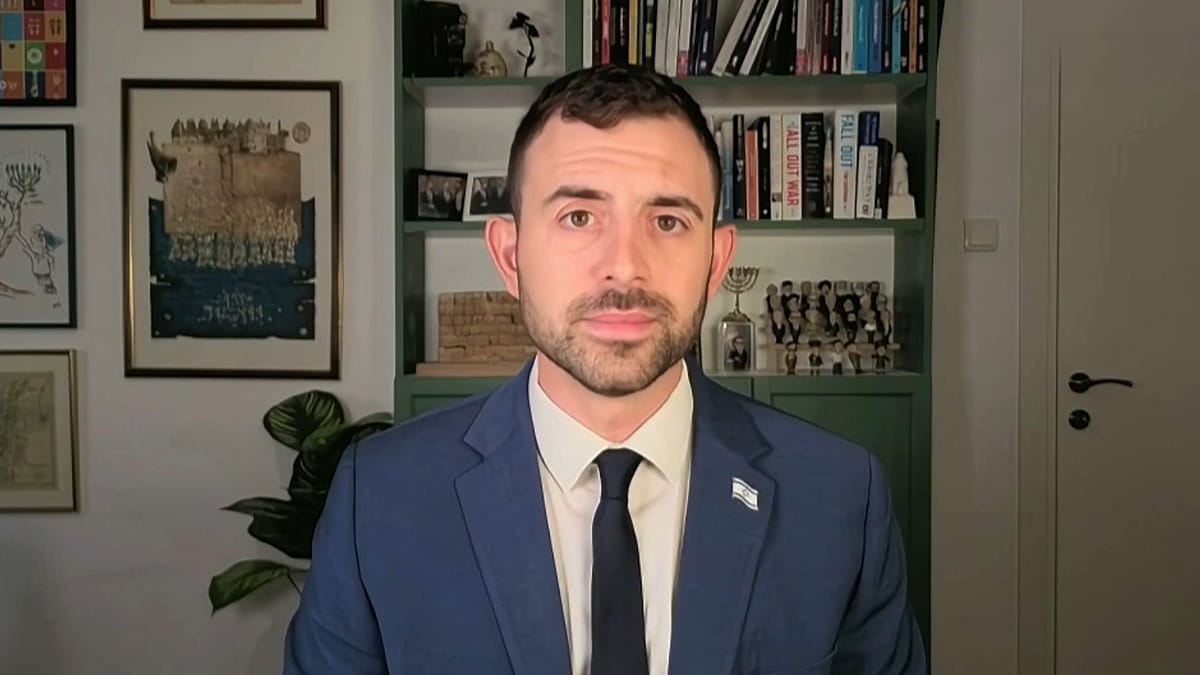
As the United States and Iran resume nuclear negotiations in Geneva, a former Israeli government spokesperson has warned that these talks could inadvertently derail a nascent peace process between Israel and Lebanon. Eylon Levy, who served under Prime Minister Benjamin Netanyahu, argues that the current military dynamics in the region are creating a unique window for diplomatic progress—one that Washington's focus on Tehran might jeopardize.
A Fragile Opportunity in the Levant
Levy contends that Israel's ongoing campaign against Hezbollah along the Blue Line is not merely a military operation but a strategic effort to reshape Lebanon's political calculus. “Israel’s campaign is creating the urgency and opportunity for Lebanon to confront Hezbollah,” he said in an interview. “If Lebanon is capable of dismantling Hezbollah, it could mark the beginning of a beautiful peace between Israel and Lebanon.”
This perspective comes amid heightened tensions along the Israel-Lebanon border, where exchanges of fire have intensified since October 2023. Hezbollah, the Iran-backed Shia militia and political party, holds significant sway in Lebanon's government and controls much of the country's southern region. For decades, its armed wing has been a central obstacle to any formal normalization between Beirut and Jerusalem.
Levy's remarks reflect a broader concern in Jerusalem that the US-Iran talks, which aim to curb Tehran's nuclear program and ease sanctions, could inadvertently strengthen Hezbollah's position. If the Islamic Republic secures relief from economic pressure, it might redirect resources to its proxies, including Hezbollah, thereby undermining any leverage Israel has built through military operations.
Europe's Role in the Balance
The European Union, which has long maintained a delicate balancing act in the Middle East, now faces a critical juncture. Brussels has been a key player in the Iran nuclear file, with the E3 (France, Germany, and the UK) leading diplomatic efforts alongside the US. However, the bloc's energy dependence on the Gulf and its concerns over instability in the Strait of Hormuz have complicated its stance. As Greenpeace recently criticized, the EU's energy policy remains deeply incoherent, relying on fossil fuel imports from a volatile region while championing climate goals.
European capitals, particularly Paris and Berlin, have also been active in Lebanon, pushing for political reforms and supporting the Lebanese Armed Forces as a counterweight to Hezbollah. Yet, the US-Iran talks risk sidelining these efforts. If Washington reaches a framework deal with Tehran—as suggested by recent reports that Iran and the US clashed over details hours after the Geneva talks—European mediators might find themselves marginalized.
Levy's warning echoes sentiments from other regional observers. A former US negotiator recently cautioned that Iran emerges stronger from conflict, urging Europe to prepare for a more assertive Tehran. This assessment aligns with Levy's view that the current military pressure on Hezbollah is a rare opportunity that should not be squandered by diplomatic concessions to Iran.
The Path to Peace or Peril?
The prospect of an Israel-Lebanon peace deal remains highly uncertain. Lebanon's sectarian political system, Hezbollah's entrenched role, and the unresolved issue of Palestinian refugees all pose formidable barriers. Yet, Levy insists that the alternative—a prolonged conflict with Hezbollah—is far worse. “The status quo is unsustainable,” he argued. “Lebanon has a choice: either it becomes a normal state that can make peace with its neighbors, or it remains a hostage to Iranian interests.”
For Europe, the stakes are high. A stable Lebanon would reduce the risk of a broader regional war, curb refugee flows, and open new economic opportunities. Conversely, a failed peace process could reignite sectarian violence and further destabilize the eastern Mediterranean. The EU's recent engagement with the Taliban in Brussels, as reported in secret talks to boost Afghan deportations, shows that Brussels is willing to pursue pragmatic diplomacy—but it must also prioritize the Levant.
As the US and Iran continue their talks, European leaders should heed Levy's warning. The fragile peace process between Israel and Lebanon may not survive another round of great-power bargaining. Whether Europe can help steer the outcome remains an open question, but the cost of inaction could be measured in lives and regional stability.