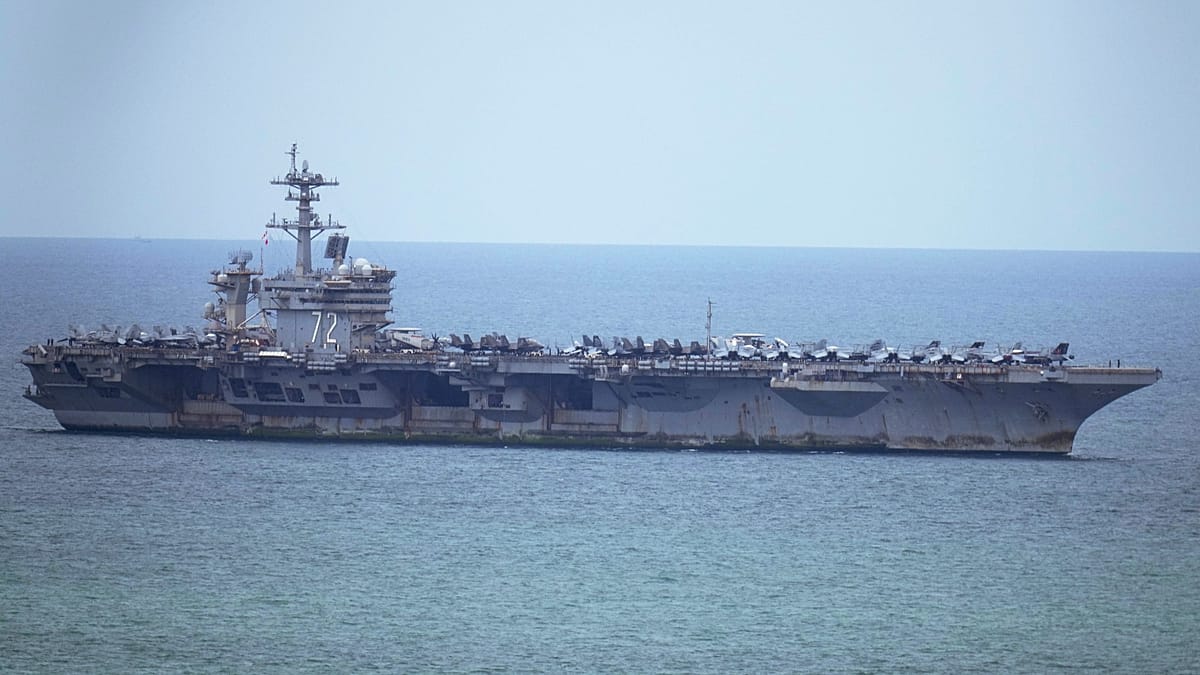
The US Navy has acknowledged that eight service members attempted suicide during the record-breaking deployment of the aircraft carrier USS Abraham Lincoln to the Middle East. The disclosure, made public on Wednesday, came in a letter from Acting Navy Secretary Hung Cao to Democratic Senator Kirsten Gillibrand, who had been pressing for answers about the welfare of the crew.
The letter, seen by the AFP news agency, states that since the carrier left its homeport in California in November 2025, there have been eight suicide attempts across the strike group. It also notes that no suicides have occurred on board during this period.
The Lincoln was originally deployed to the South China Sea but was rerouted to the Middle East ahead of the US-Israeli strikes on Iran that began in late February 2026. The ship finally made a port call in Thailand in early September after spending 286 consecutive days at sea—an unusually long stretch for a carrier.
Details of the incidents
According to the letter, one sailor assigned to an air wing went overboard in early August and was quickly recovered by a search-and-rescue helicopter before being taken off the ship for follow-up care. Another sailor attempted to go overboard in March but was stopped by shipmates and later returned to homeport.
These incidents have intensified scrutiny of living conditions on the carrier. In August, military families and lawmakers raised alarms about reported suicide attempts, serious mental health issues, food shortages, and poor hygiene. At the time, President Donald Trump dismissed the claims, and Defence Secretary Pete Hegseth insisted that the situation had been “misrepresented.”
The confirmation of the suicide attempts has reignited debate about the toll of extended deployments on US military personnel. The Lincoln's deployment is among the longest for a US carrier in recent decades, and the crew has faced repeated extensions without a clear end date.
Senator Gillibrand, who sits on the Senate Armed Services Committee, has called for a full investigation into the conditions on the ship. In a statement, she said the Navy's admission “confirms what families and sailors have been saying for months—that the crew is under immense strain.”
The Navy's letter also highlighted broader concerns about mental health support on board. It said that the service is reviewing its policies on deployment length and crew welfare, but stopped short of announcing immediate changes.
This episode comes at a time when European allies are closely watching US military operations in the Middle East, given the potential for wider regional instability. The prolonged deployment has also raised questions about the sustainability of US force posture in the region, a topic that European defence officials have discussed in recent NATO meetings.
For European readers, the incident underscores the human cost of extended military operations, a concern that resonates across the continent, where many nations are also grappling with the welfare of their own armed forces during prolonged missions.