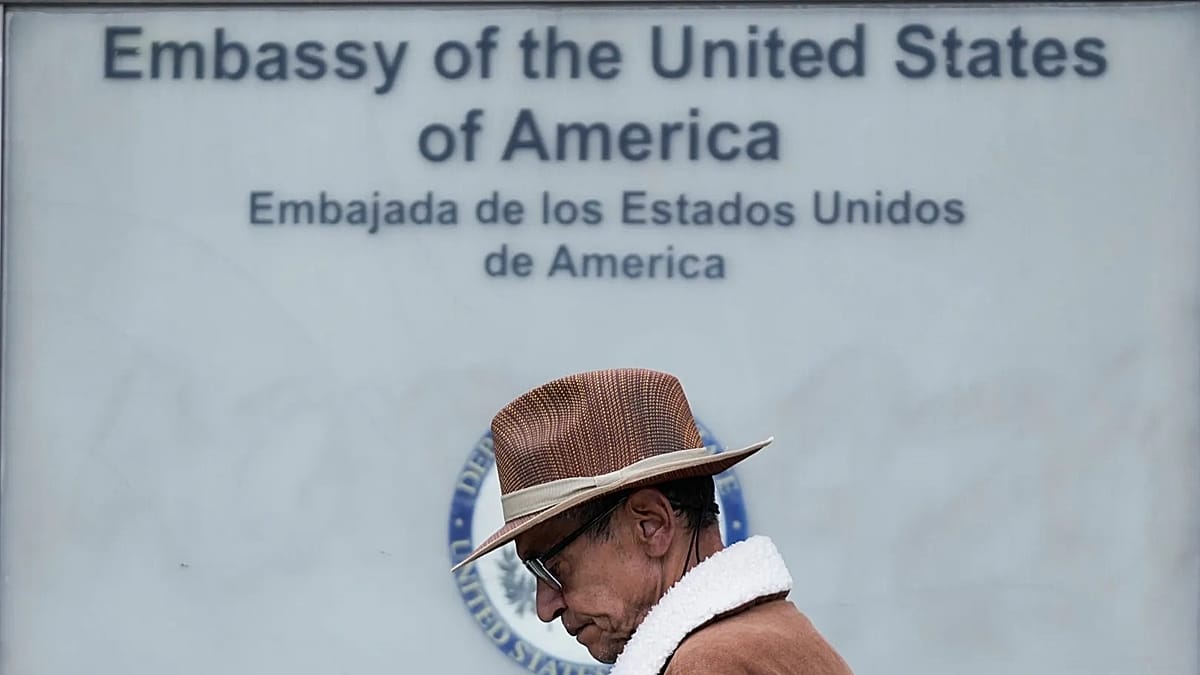
The United States State Department is set to sharply reduce the number of its embassies and consulates in Africa that process visa applications, scaling back from roughly 50 to just 20 hubs in the coming weeks. The move, approved by Secretary of State Marco Rubio, is part of the Trump administration’s broader effort to tighten both immigrant and non-immigrant visa issuance and curb overstays by temporary visa holders.
According to a report by the Associated Press, US diplomats—including consular chiefs—were informed during a conference call last Friday that Washington would be consolidating its visa services across the continent. The change is expected to take effect this month, though no exact date has been set.
The reduction means that citizens of countries without a designated hub will have to travel to one of the 20 approved sites, potentially incurring significant costs and logistical challenges. For example, a resident of Bamako might need to fly to Dakar or Abidjan for an interview, adding hundreds of euros to the application process. Consular sections in non-hub countries will remain open but will be limited to assisting American citizens with passport renewals, emergency requests, and special cases such as diplomatic visas or national interest applications.
Broader Context: Travel Bans, Bonds, and Ebola
This latest restriction follows a series of measures that have already complicated visa access for Africans. The US has imposed a travel ban on certain countries, required applicants to post bonds of up to $15,000 (€12,891), and recently introduced additional screening due to the Ebola outbreak. The cumulative effect is a significant barrier for Africans seeking to visit the US for business, education, or family reunification.
For European readers, the implications are twofold. First, European citizens traveling to Africa may face longer wait times or reduced consular services if they need US visas while in the region. Second, European companies with operations in Africa—particularly in sectors like mining, logistics, and agriculture—could see their African employees struggle to obtain US visas for training or meetings. The EU's recent growth forecast downgrade already highlights the fragility of global supply chains; adding visa friction to African business travel could further complicate trade.
The move also echoes a broader trend of the US scaling back its diplomatic footprint in Africa, even as other global powers—including China, Russia, and the European Union—expand their engagement. The EU, for instance, has been investing in infrastructure and health partnerships across the continent, such as the CEPI's fast-tracking of Ebola vaccines in response to the Bundibugyo outbreak. The US reduction in visa services could be seen as a retreat from people-to-people ties, at a time when many African nations are seeking stronger economic links with Europe.
Critics argue that the policy disproportionately affects students, entrepreneurs, and families—groups that are less likely to overstay visas. The US has long relied on African talent in fields like medicine and technology, and this move may deter potential applicants. Meanwhile, the Trump administration frames the cuts as a necessary step to prioritize security and reduce illegal immigration.
As the changes roll out, European diplomats and business leaders will be watching closely. The reduction in US visa hubs could push more African travelers toward European destinations, potentially boosting tourism and education exchanges with EU countries. However, it also risks creating a two-tier system where only the wealthy or well-connected can afford the journey to a hub, deepening inequality in mobility.