Late on Friday, US President Donald Trump announced what he called “the biggest oil deal in world history” with Venezuela, but the White House has offered few details beyond a social media post. The agreement, negotiated by Secretary of State Marco Rubio, Defense Secretary Pete Hegseth, and Venezuela’s interim leader Delcy Rodríguez, would give the United States access to Venezuela’s vast oil reserves.
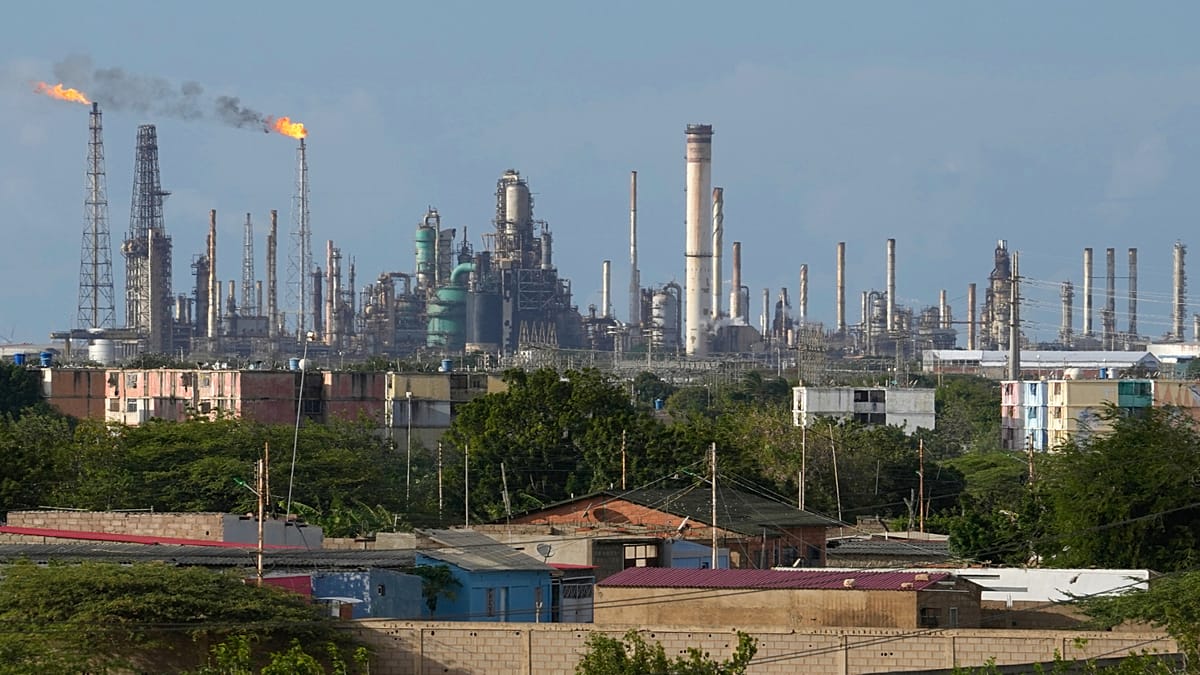
According to a statement from Rodríguez, the deal covers 17 oil fields with proven reserves of 65 billion barrels. It could attract $100 billion (€86 billion) in investment and generate more than $209 billion (€180 billion) in tax revenue for Caracas. The US would receive 55% of the output from a newly formed company, including an ownership stake and the right to buy oil at cost. That oil would go to the US Strategic Petroleum Reserve and the military, according to a US official who spoke on condition of anonymity.
The company would become the second-largest corporate holder of proven reserves after Saudi Aramco, the official said. But no text of the agreement has been released, and many questions remain unanswered.
Reactions in Venezuela
In Venezuela, the deal has sparked anger among those who see it as a betrayal of the country’s long-standing principle that its resources belong to its people. Ricardo Hausmann, a former Venezuelan planning minister and professor at Harvard University, called it a “shameful deal.”
“Venezuelans will not respect this illegitimate deal and no major US oil company will take it seriously because they know it will not last,” Hausmann said on social media, adding that Rodríguez “has no legitimacy or constitutional power to commit Venezuela to any such deal.”
In a televised address on Sunday, Rodríguez pushed back against the criticism, insisting that “Venezuela retains ownership and sovereignty over its resources.” She said the goal is to modernise the oil industry and attract other international companies, including Chevron, Repsol, and Shell. “We want to be an energy powerhouse, a major oil producer, a significant gas exporter, and a major national petrochemical developer,” she said.
Capitol Hill weighs in
The deal has also divided lawmakers in Washington. Republicans, including Senator Bernie Moreno of Ohio, called it a historic win for both countries. “If it were up to DC Democrats, Maduro would still be in power, Venezuelan oil would be going to China at half price, and the people of Venezuela would be getting robbed by a corrupt regime,” Moreno wrote on social media.
Democrats condemned the arrangement. Senator Tim Kaine of Virginia said Trump was always after Venezuela’s oil, branding it “corruption at epic scale.” Senator Chris Van Hollen of Maryland accused Trump of putting “our service members at risk to get Venezuelan oil for his billionaire buddies.”
Unanswered questions
Many crucial details remain unclear, including the identity of the private operator, how the US ownership stake breaks down, and who will cover the necessary investments. It is also uncertain whether major American oil companies will return to Venezuela, given the political instability and damaged infrastructure. Chevron, the only US oil company currently producing in Venezuela, declined to comment, as did Exxon Mobil.
David Oxley, chief climate and commodities economist at Capital Economics, noted that the deal could double US oil reserves and reduce dependence on Canadian and Mexican crude. But he cautioned that logistical hurdles remain and that the value of Venezuela’s reserves may have been exaggerated under former President Hugo Chávez. Even with legal and security guarantees, Oxley wrote, US oil companies “might not be eager to invest” because “there simply might be more enticing commercial opportunities on offer elsewhere.”
The agreement comes amid broader geopolitical shifts, including reports of the deal's scale and Venezuela's insistence on sovereignty. For Europe, the deal could have implications for energy markets and transatlantic relations, as the EU seeks to diversify its energy sources. The coming weeks will reveal whether this agreement is a genuine breakthrough or another chapter in a long history of unfulfilled promises.