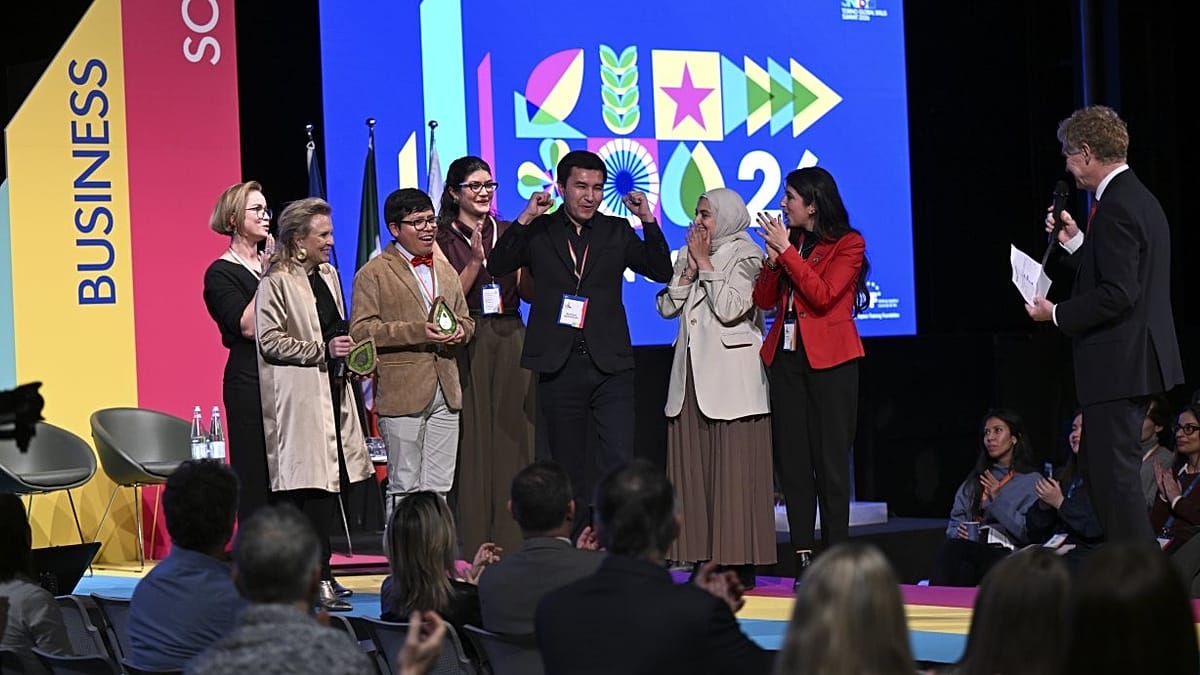
When history teacher Abrorjon Sadriddinov noticed his students in Namangan, eastern Uzbekistan, were tossing organic waste into recycling bins, he decided it was time to rethink environmental education. What began as a classroom fix has grown into a movement reaching 25,000 people across 25 schools and earning top honours at the European Training Foundation’s (ETF) Green Skills Award 2026 in Turin.
The award, announced on the final day of the Torino Global Skills Summit, recognised Sadriddinov’s programme, the Sustainable Future Society (SFS). It adapts the international Eco-Schools framework to Uzbekistan’s educational system, giving students real responsibility for identifying and solving environmental problems on their school grounds.
From waste bins to green flags
Under the SFS model, students assess their school’s environmental performance, design solutions, and measure the results. Along the way, they pick up practical skills in critical thinking, data analysis, and project management. Within two years, the Presidential School in Namangan earned the internationally recognised Green Flag certification, a mark of environmental excellence used by Eco-Schools worldwide.
The initiative has since generated 128 student-led projects, ranging from recycling systems to energy-saving measures. According to the ETF, the model can be replicated in other schools without significant investment or sophisticated technology—a key factor in its appeal.
Sadriddinov, speaking after receiving the award, stressed that environmental protection is everyone’s responsibility. “Together we can build our sustainable future,” he said.
Pilvi Torsti, the ETF’s director, said the winning initiatives show that “the green transition is no longer an abstract ambition: it is already well underway, driven by communities, educators and innovators.”
The competition drew 369 applications from 94 countries. An expert jury shortlisted six finalists, and the winners were chosen by public vote. Peru took second place with its Young Glacier Ambassadors programme, while Nepal came third with an initiative teaching people to repair electronic devices and cut waste. Projects from Bosnia and Herzegovina, Cyprus, and Jordan completed the shortlist.
Skills at the heart of economic development
The awards capped the Torino Global Skills Summit, which brought together more than 250 participants and 80 speakers from 48 countries from 23 to 25 November. Organised by the ETF—a European Union agency working with 28 partner countries—the summit focused on how education and training can drive competitiveness, employment, and social cohesion.
European Commission Executive Vice-President Roxana Mînzatu stressed that investment in infrastructure, technology, and industry must go hand in hand with skills development, both within Europe and through the EU’s international partnerships. The summit also saw the presentation of voluntary guidelines developed by six multilateral development banks, including the European Investment Bank and the World Bank Group, to embed workforce training into investment projects from the earliest planning stages.
The recognition of Sadriddinov’s work highlights a broader trend: grassroots environmental education is gaining traction across Europe and beyond. For a region often focused on industrial policy and green tech, the award is a reminder that lasting change often starts in the classroom. As Uzbekistan continues to modernise its education system, initiatives like SFS could serve as a model for other countries in Central Asia and Europe alike.