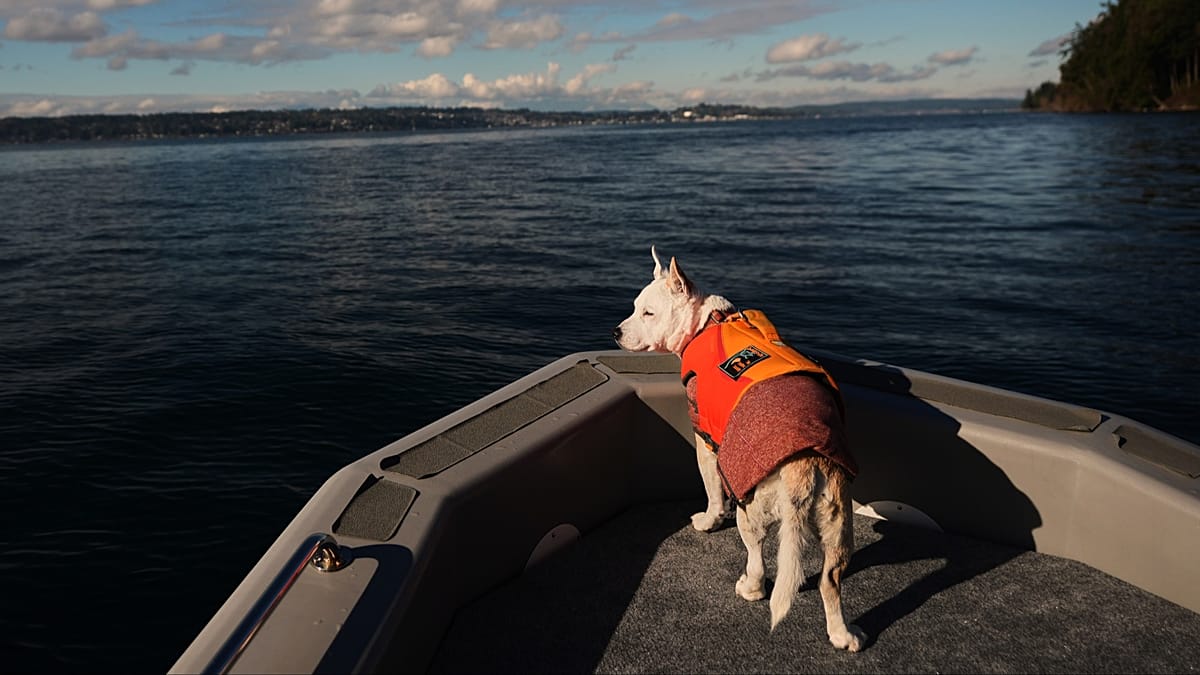
Most dogs spend their days chasing balls or lounging in the park. Eba, an 11-year-old Labrador mix, spends hers on the bow of a research boat, sniffing the salt air for a very specific scent: the feces of endangered killer whales.
Eba works alongside Dr. Deborah Giles, a scientist with the SeaDoc Society who has spent years tracking the dwindling population of Southern Resident killer whales. These orcas, which inhabit the inland waters between Washington State and British Columbia, are struggling to find enough food. In recent autumns, they have been spotted hunting coho and chum salmon just north of Seattle, offering a rare chance for researchers to study them up close.
The collaboration between the SeaDoc Society and the San Diego Zoo Wildlife Alliance uses drones equipped with petri dishes and microscope slides to collect droplets from whale spouts. But for fecal samples, the team relies on Eba's extraordinary nose.
How Eba helps scientists
On a chilly November day, the research team motors out to where whale watchers have reported sightings. Dr. James Sheppard, a drone pilot and senior scientist at the San Diego Zoo Wildlife Alliance, launches the drone from the boat's bow. He hovers high to locate a whale, then descends to just a few meters above the surface. When an adult male with a massive dorsal fin surfaces, the drone sweeps through the spray, collecting samples.
“Once we’ve got the sample it’s important we bring the drone back to the boat as quickly as possible so that the samples don’t get degraded with the wind and the sunlight,” Sheppard said.
The whales pay little attention to the drone. “The few times that they’ve actually noticed the drone they’ll just roll on their side, maybe look at it for a few seconds, and then just keep on swimming. To them, it’s just a strange seagull that’s been following them for a few seconds,” he added.
After the drone, it's Eba's turn. She stands at the bow, held on a leash by Jim Rappold, Giles' husband and research partner. When she catches a scent, she whines and paces, alerting the team. On this day, the feces prove elusive, but on other outings, Eba has helped collect hundreds of samples.
What the samples reveal
The fecal and breath samples contain hormones, bacteria, fungi, parasites, and DNA. They are sent to the San Diego Zoo Wildlife Alliance lab for analysis, where scientists compile health profiles for individual orcas.
“If we need to intervene, if we need to have a discussion about something that might need to happen to an individual animal, we have that animal’s entire record right there,” Giles said.
The data has revealed a troubling trend: many female orcas are experiencing miscarriages, and calf mortality is high. Mothers have been seen carrying dead calves for days. This contrasts sharply with the thriving Bigg's killer whales, which eat seals and sea lions and are reproducing successfully.
Giles argues that the most critical action is restoring salmon runs. Salmon that spawn in the Salish Sea migrate as far as Alaska, where they are caught before they can return to the orcas' feeding grounds. “It’s our job to turn back the clock,” she said.
The plight of the Southern Resident killer whales is a stark reminder of the fragility of marine ecosystems. Similar concerns are echoed in European waters, where EU auditors warn marine protection targets will be missed. Innovative approaches, like using dogs to detect wildlife scat, are gaining attention worldwide, from Madeira's Desertas Islands to the Pacific Northwest.
While authorities have reduced vessel noise to help the whales, Giles insists that without abundant salmon, the Southern Residents cannot recover. For now, Eba remains on the front lines, her nose guiding the way to a healthier future for these iconic orcas.