In the rolling hills of southern Austria, a quiet revolution is taking shape. The Green Tech Valley cluster, headquartered in Graz, has become a nerve centre for companies developing the sustainable technologies that will define Europe's industrial future. With 300 member firms—including 20 global tech leaders—the cluster is a testament to the continent's ambition to lead in the circular economy.
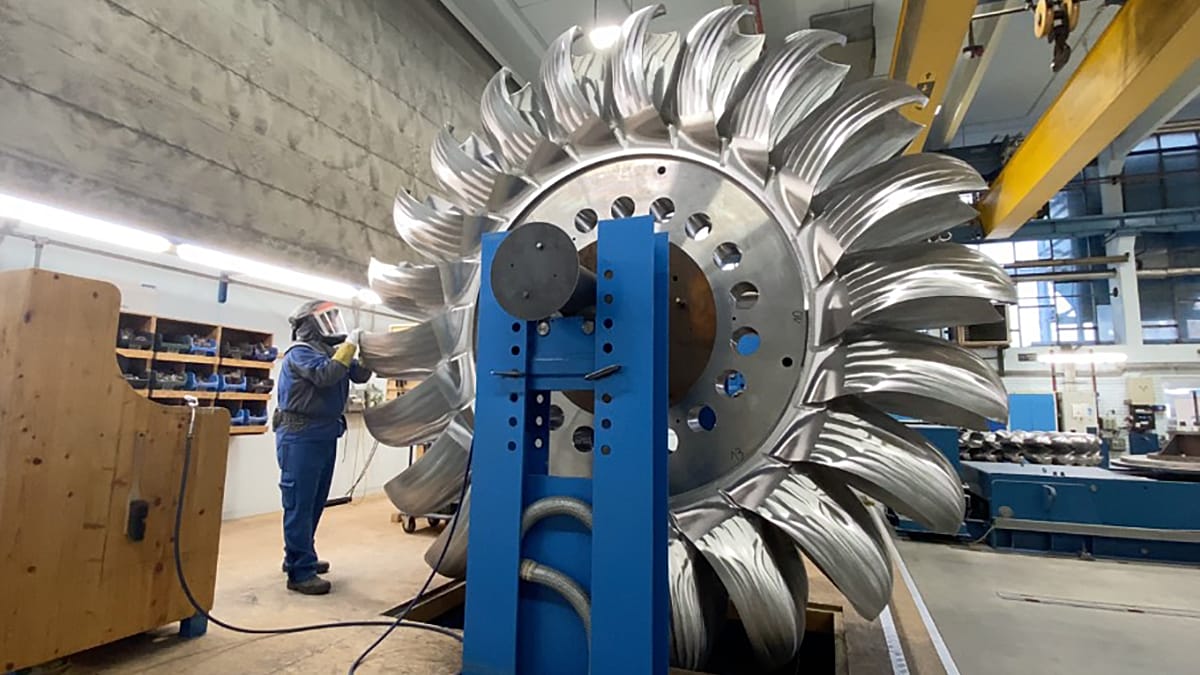
Among its flagship members is Andritz AG, a machinery giant with 30,000 employees across 280 locations in over 80 countries. At its manufacturing site in Graz, we were granted rare access to see how the company is advancing hydropower, energy storage, and pulp and paper technologies. CEO Dr. Joachim Schönbeck is clear about the mission: "We have a responsibility to develop the technologies we can because that is what we can provide to society. But our target is to make it economically viable, because we learned that if it's too costly, nobody can afford it; it will not fly."
Andritz's latest annual revenue hovered around €8 billion and is growing. Schönbeck points to electrification as the core driver: "The roadmap is definitely this drive to electricity. We have the renewable energy. We have the extension of the grids that will come. We will see much more applications into electrical motors, into batteries, into transformers. This is where we can all supply technology into. We have almost 40% of our revenue related to that area, and we see that growing."
From textiles to a circular future
Just a short drive away, another European heavyweight is tackling waste. Saubermacher AG, a family-owned recycling firm with 4,000 employees across nine countries, serves 40,000 clients in 1,600 municipalities. At its Graz facility, around 10,000 tonnes of used textiles are processed every year—currently by hand, but soon with automated sorting lines.
CEO Andreas Opelt highlights the scale of the challenge: "Currently, just 1% of the textiles worldwide are recycled, and so the technology for textile recycling is not as advanced and upscaled as it should be. 30 years ago, we started with plastic recycling, also in a similar stage with manual sorting. Then we created our first pilot plants, and we have our first pilot plant being set up here. I'm sure in two or three years, we will have big plants fully automated, doing the job at a big scale because we want to reach much more than this 1%—a degree that is really sustainable."
Both Andritz and Saubermacher are members of the Green Tech Valley cluster, which operates from the futuristic Science Tower in Graz's Smart City district. The 60-metre-tall building, designed by architect Markus Pernthaler, features a double-skinned façade with transparent energy-generating glass—a fitting symbol for the cluster's mission.
Bernhard Puttinger, the cluster's CEO, explains the collaborative model: "We see, of course, at the European Union, we have high wages, high energy costs, but we are very pioneers in these technologies, and we see, of course, that global competition sometimes is not a level playing field. But to overcome these challenges, innovation and new ways of collaboration are the answer, and this is what we as a cluster try to foster."
The cluster's impact is global: its members' technologies are responsible for one-seventh of the world's green electricity production. From hydropower and solar thermal to wind, recycling, batteries, and e-mobility, the solutions developed here are "made in Europe"—a point of pride and a strategic advantage.
Yet the path forward is not without hurdles. High energy costs and intense global competition—particularly from Asia—put pressure on European manufacturers. As some industry leaders have argued, cutting red tape and embracing green energy are essential to remain competitive. The cluster's answer is to double down on innovation and cross-sector partnerships.
For policymakers, the lessons from Graz are clear: supporting such clusters can yield outsized returns. As Europe pushes for a sustainable digital future, the same principles of circularity and efficiency apply. The Green Tech Valley shows that with the right mix of public-private cooperation and long-term vision, Europe can turn environmental challenges into economic opportunities.
As the sun sets over the Styrian hills, the message from this green valley is one of quiet confidence: the technologies of tomorrow are being built today, and they are being built in Europe.