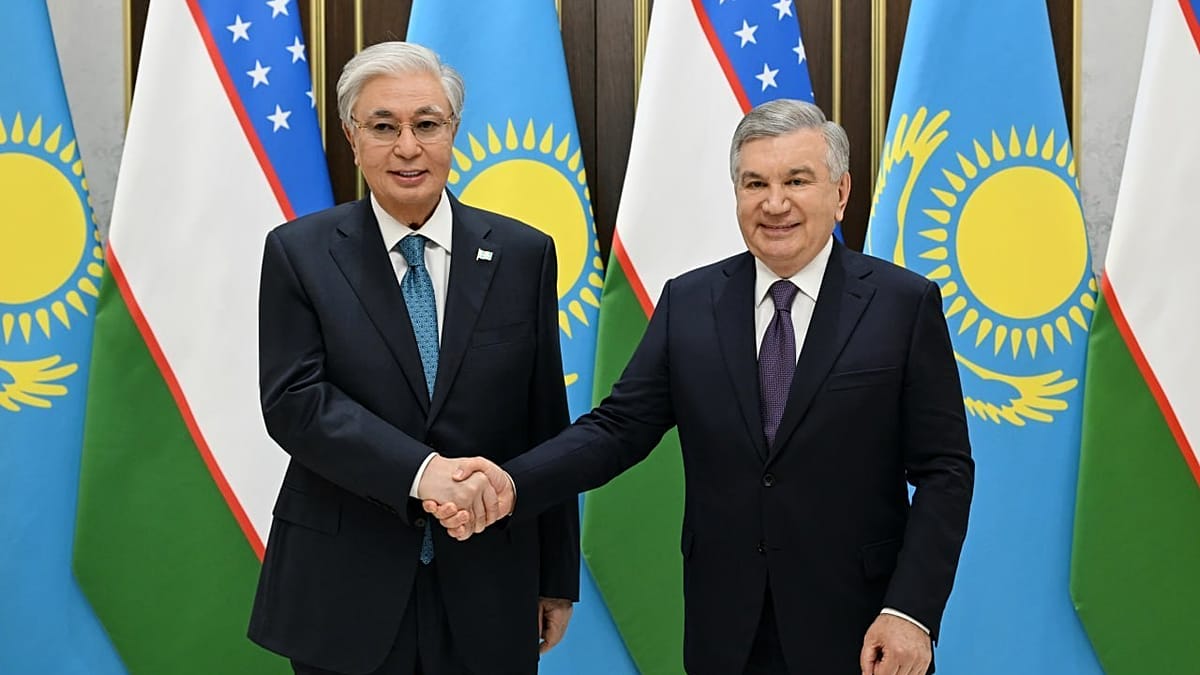
Presidents Shavkat Mirziyoyev of Uzbekistan and Kassym-Jomart Tokayev of Kazakhstan met over the weekend in the historic city of Bukhara, deepening economic and strategic ties between the two Central Asian nations. The talks, held against the backdrop of Bukhara's ancient architecture, focused on doubling bilateral trade from nearly $5 billion (€4.3 billion) last year to $10 billion in the coming years.
Both leaders outlined a broad agenda spanning transport, energy, digitalisation, and environmental initiatives. Joint projects are already underway in automotive manufacturing, infrastructure, logistics, electrical engineering, and construction materials. The discussions also highlighted new areas for cooperation, including digital technologies, water management, and environmental protection.
Environmental and Energy Cooperation
Mirziyoyev proposed a joint Clean Air initiative to tackle air pollution in major border cities such as Tashkent, Almaty, Turkistan, and Shymkent. He stressed the importance of expanding the International Cooperation Centre and enhancing regional connectivity. The Uzbek president called for modernising border checkpoints, removing logistical bottlenecks, and accelerating major energy projects, including the construction of the Kambarata hydropower plant and the export of green energy to Europe. This aligns with broader European efforts to diversify energy sources, as seen in the US and Azerbaijan Launch TRIPP Corridor Talks.
Tokayev expressed strong support for deepening cooperation in innovation and digitalisation, as well as backing Uzbekistan's environmental initiatives. Both governments are now focusing on translating agreements into concrete outcomes, with expected expansion in energy, industrial supply chains, and the processing of raw materials, including rare metals.
Infrastructure and Border Improvements
Improving transport links and border infrastructure remains central to these plans. More efficient corridors are expected to reduce delays, lower costs, and improve access to external markets. A key milestone will be the launch of the Jibek Joli border checkpoint between Uzbekistan and Kazakhstan in September, with a daily capacity of up to 70,000 people and more than 2,000 vehicles. Additional infrastructure projects, including the Darboza–Makhtaaral railway, are set to boost cargo capacity by up to 20 million tonnes annually.
Both sides also agreed to intensify cultural and humanitarian exchanges, including through Days of Culture, youth forums, and expanded cooperation in tourism and the creative economy. This cultural dimension echoes initiatives like the Royal Danish Ballet Brings Bournonville Tradition to Astana in Cultural Exchange.
Digitalisation and Industrial Development
Alongside formal talks, the two leaders took part in a series of joint visits focusing on Uzbekistan's reform agenda and industrial development. They were briefed on the work of the Bukhara regional Situation Centre, which operates under a new public administration model designed to improve coordination among government agencies and speed up decision-making.
The presidents also visited a national artificial intelligence event, the National AI Hackathon, where they reviewed progress in digital transformation. Officials presented solutions spanning e-government systems, transport, customs, taxation, healthcare, and energy, reflecting broader efforts to integrate advanced technologies across the economy.
As part of the programme, the leaders toured a major textile enterprise in Bukhara, where they reviewed modern manufacturing processes and export-oriented production. The facility, launched in 2024 with an investment of $35 million (€30 million), employs more than 800 people and produces finished fabrics and garments for international markets. Equipped with advanced production lines from Europe and Japan, the company exports to countries including Italy, Austria, the United Kingdom, and Germany. The heads of state welcomed the company's expansion plans and its role in strengthening industrial cooperation and export potential.
The meeting also included a cultural programme, reflecting the growing role of informal regional dialogue. The leaders visited some of Bukhara's most iconic landmarks, including the Ark Fortress, the Poi Kalyan and Lyabi-Hauz ensembles, as well as the Bahauddin Naqshband Mausoleum.



