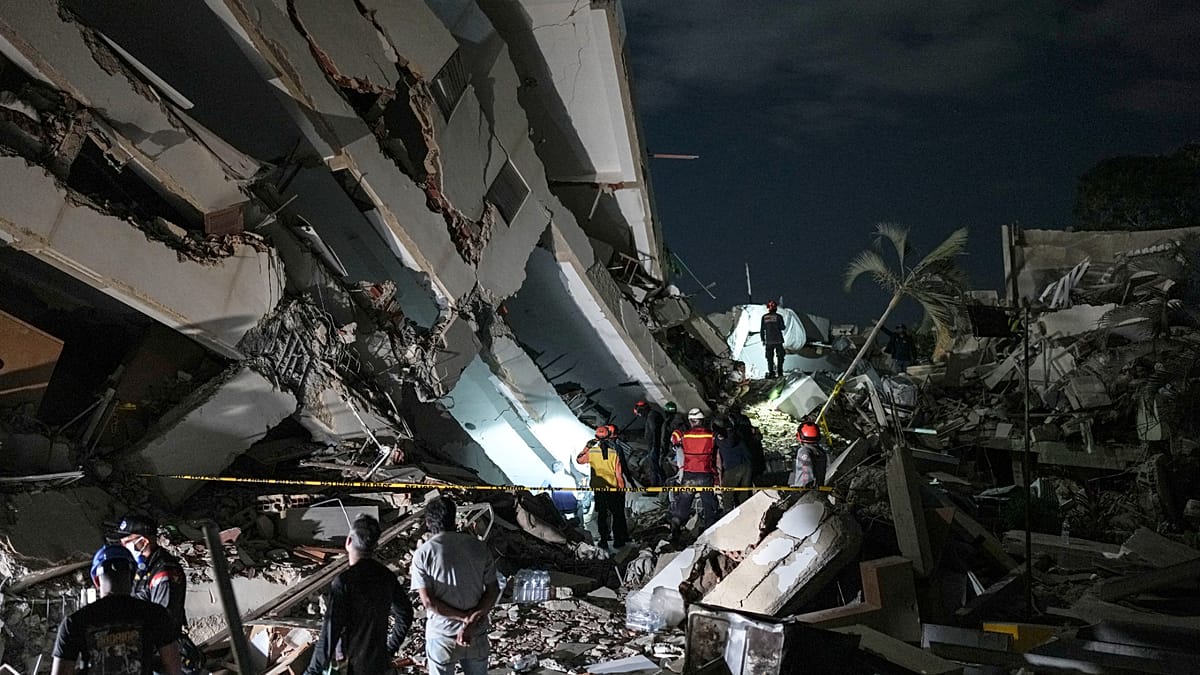
Five days after twin earthquakes struck Venezuela's northern coast, the death toll has risen above 1,700, according to the latest official figures released on Sunday. The earthquakes, of magnitudes 7.2 and 7.5, hit on 24 June, with epicentres between San Felipe and Yumare. The first tremor struck at 18:04 local time, followed 39 seconds later by a second, more powerful quake. The ground shook for nearly three minutes.
Jorge Rodríguez, president of Venezuela's National Assembly, reported that 5,034 people are injured, 15,866 remain displaced, and 22,619 are receiving care in health centres. The most alarming figure comes from the United Nations, which estimates up to 68,000 people missing. The state of La Guaira has borne the brunt of the destruction, prompting the government to declare a disaster zone and impose military control.
International Rescue and EU Involvement
Search and rescue operations are ongoing, with teams from El Salvador, Mexico, and Venezuela working alongside international personnel. The European Union has deployed rescue teams to assist, as reported in our earlier coverage of EU rescue efforts in Venezuela. In Catia La Mar, rescuers are racing to save a 21-year-old man trapped in a collapsed building since the day of the earthquake. Hopes of finding more survivors are fading as time runs out.
The United States has also contributed aircraft, ships, and helicopters to support the relief operation. The Development Bank of Latin America and the Caribbean (CAF) has announced a multi-donor fund of up to 200 million dollars for reconstruction.
Political Response and Criticism
Government officials have faced criticism for a slow and insufficient response. In La Guaira, police and military personnel distributed cans of tuna and crackers to hungry displaced people on Monday. Jorge Rodríguez, brother of acting President Delcy Rodríguez, stated that electricity has been restored to 90% of the hardest-hit state. Authorities are evaluating damaged buildings and have set up 15 temporary displacement camps.
The disaster comes amid ongoing political tensions in Venezuela. The international community, including European nations, has been closely monitoring the situation. The EU's deployment of rescue teams underscores the bloc's commitment to humanitarian aid, even as Europe itself grapples with extreme weather events, such as the recent heatwave in France that led to excess deaths.
Aftershocks continue to rattle the region, with a 4.6-magnitude earthquake recorded in La Guaira on Monday. The full scale of the disaster is still unfolding, and the international community remains on alert for further developments.