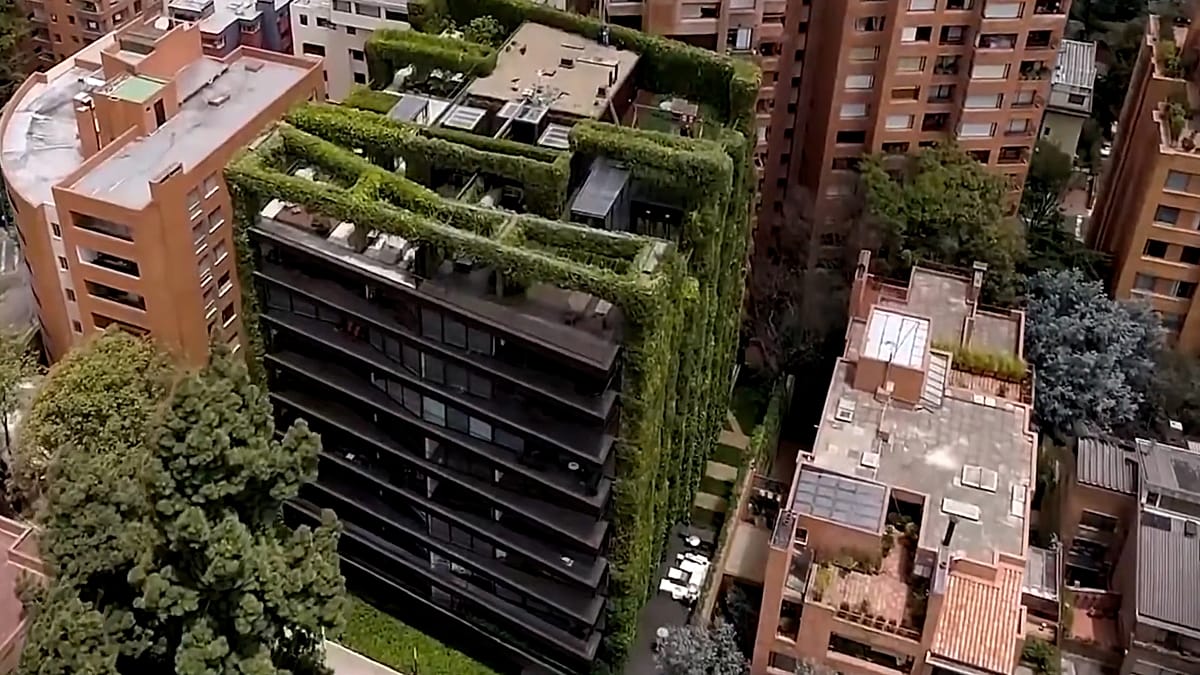
As European capitals brace for another summer of blistering heatwaves, a green solution pioneered on the continent is proving its worth: vertical gardens. These living walls, which range from soil-free hydroponic systems to simple climbing plants, offer a practical and beautiful way to cool down cities.
Spanish botanist Ignacio Solano, who has spent over 14 years studying tropical ecosystems from Colombia's Chocó rainforest to Madagascar, is a leading advocate. Through his Alicante-based company Paisajismo Urbano, he has helped install close to a million square metres of vertical gardens globally. He notes that while Europe has some striking examples, Latin America has embraced the concept on a much larger scale.
“In Europe, it is normal for major capitals to have one, two or three significant vertical gardens,” Solano explains. “If you compare this with Buenos Aires, there are hundreds of vertical gardens there. Mexico City has hundreds. Guatemala City has hundreds.”
From French Innovation to Milan's Forest
The modern vertical garden was pioneered by French botanist Patrick Blanc in the 1980s. Since then, Europe has produced some remarkable examples. Milan's Bosco Verticale, a pair of residential skyscrapers whose terraces hold more than 21,000 trees and shrubs, converts nearly 20,000 kilograms of carbon annually and now shelters 20 species of birds. This project demonstrates how vertical gardens can integrate nature into dense urban environments where space for traditional parks is limited.
Research shows that green walls can significantly lower building surface temperatures, reduce heat absorption, and improve thermal comfort. They also filter particulate matter, absorb carbon dioxide, and provide habitat for birds and insects, supporting urban biodiversity. As cities like Paris, Berlin, and Madrid face rising temperatures, these benefits are increasingly valuable.
Bringing Rainforest Wisdom to Cities
Solano's expertise lies in selecting the right species for each location. Factors such as altitude, climate, and building orientation must be considered. Plants are grouped based on their adaptability and nutritional needs, as they typically grow without soil, fed by nutrient-rich water through a hydroponic system. The result, Solano claims, produces three times more oxygen and grows three times faster than a conventional ground-level green space. “What we actually do is create a biofilter in the cities,” he says.
Modern versions of these systems now consume virtually no water and require just one maintenance visit per year, making them increasingly practical for urban planners and building owners.
Solano's company shares its methodology through its Guatemala City franchise, By Botanik, which runs intensive courses teaching students across the Americas the full business model, including sales, contracts, and species selection. The courses are deliberately accessible: “You don't have to be a botanist, an architect, or an engineer,” says Solano – you just need enthusiasm and an appetite to learn. Within five days, participants can identify plant species by family, native origin, and their optimal placement on a wall. Of around 100 students per cohort, he says 85 typically go on to develop real projects.
As Europe's cities seek sustainable solutions to climate challenges, vertical gardens offer a proven, scalable approach. They not only cool buildings and improve air quality but also bring a touch of nature to urban landscapes. For cities like Lisbon, which recently topped a global expat livability ranking, or those exploring unlikely travel trends, integrating green walls could enhance both livability and resilience.
With heatwaves becoming more frequent, the question is not whether European cities should adopt vertical gardens, but how quickly they can scale up this green infrastructure. As Solano's work shows, the knowledge and technology are already available.