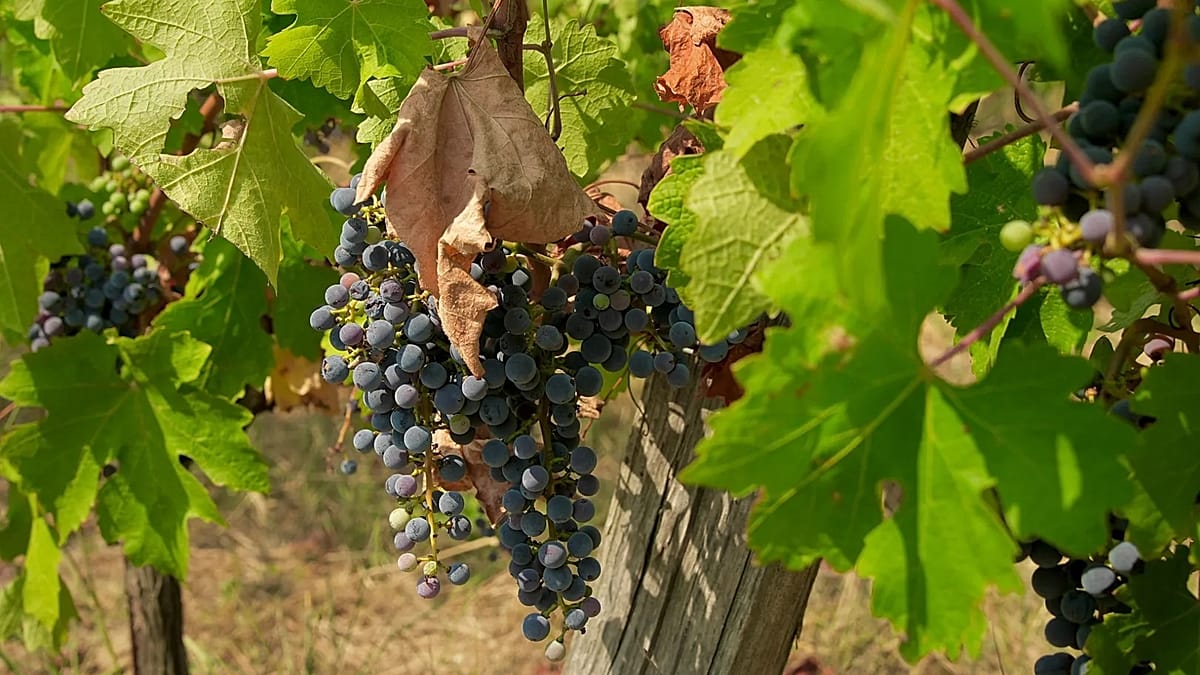
Hungary's southernmost wine region, Villány, is bracing for a sharply reduced harvest this year as a prolonged drought and scorching temperatures take a heavy toll on vineyards. Winegrowers report that berries are smaller and vines are struggling under relentless heat, with both soil moisture and atmospheric humidity at critically low levels.
Gergely Nagy, secretary of the Villány Wine Region Hill Community Council, told Euronews that growers are slowly becoming accustomed to these severe conditions, which are affecting not only the wine region but the entire country. He noted that while expertise remains vital in the vineyards, even the most skilled winemakers are ultimately powerless against the forces of nature.
Although the quality of the grapes is expected to remain largely unaffected, the quantity ready for harvest is projected to be around 30% lower than in previous years. Winemaker Tamás Riczu explained that late summer is normally the period of full berry growth, but this year the drought has caused grape bunches to shrivel. He added that this could pose a particular problem for late-ripening varieties.
In past years, the harvest of red grape varieties in Villány began at the start of September. This year, however, it is likely to start earlier than usual, with the exact timing depending on the progress of the forced ripening caused by the drought.
Drought across Hungary
The situation in Villány is part of a broader crisis. Nearly 89% of Hungary's territory is affected by moderate or severe drought, according to recent assessments. Prolonged heatwaves and scarce rainfall have pushed groundwater levels to critical lows, particularly in the Great Hungarian Plain and the Sand Ridge region. In several areas, conditions are among the most severe on record, surpassing even the impact of the 2022 drought.
The drying up of rivers and lakes is creating serious problems across the country. The sharp drop in the Danube's water level forced most of the Paks nuclear power plant to shut down temporarily, with only a single turbine running for two days. In Budapest, rocks that are normally submerged are now visible along the riverbed.
Long-term outlooks are bleak. Studies show that the devastating drought, which has hit every summer for six consecutive years, has pushed Hungarian agriculture into crisis. Signs of desertification are becoming increasingly visible across larger areas of the country.
European-wide impact
The scarce rainfall and persistent heat are not exclusive to Hungary. Across southern Europe, wildfires continue to rage, with firefighters struggling to bring blazes under control in many places. Record low river levels are disrupting shipping and limiting the cooling of power plants and factories, while agriculture in southern and western Europe is suffering serious damage. In some coastal regions, drought is allowing salt water to flood farmland.
Climate researchers agree that the increasingly severe summer heat and recurring droughts across Europe are symptoms of global warming, driven by human-caused climate change. Europe is the world's fastest-warming continent, according to the European State of the Climate 2025 report, with temperatures rising at around twice the global average.
As the continent grapples with these challenges, the impact on wine regions like Villány is a stark reminder of the fragility of traditional agriculture. For now, growers are hoping for a timely harvest, but the long-term outlook remains uncertain.