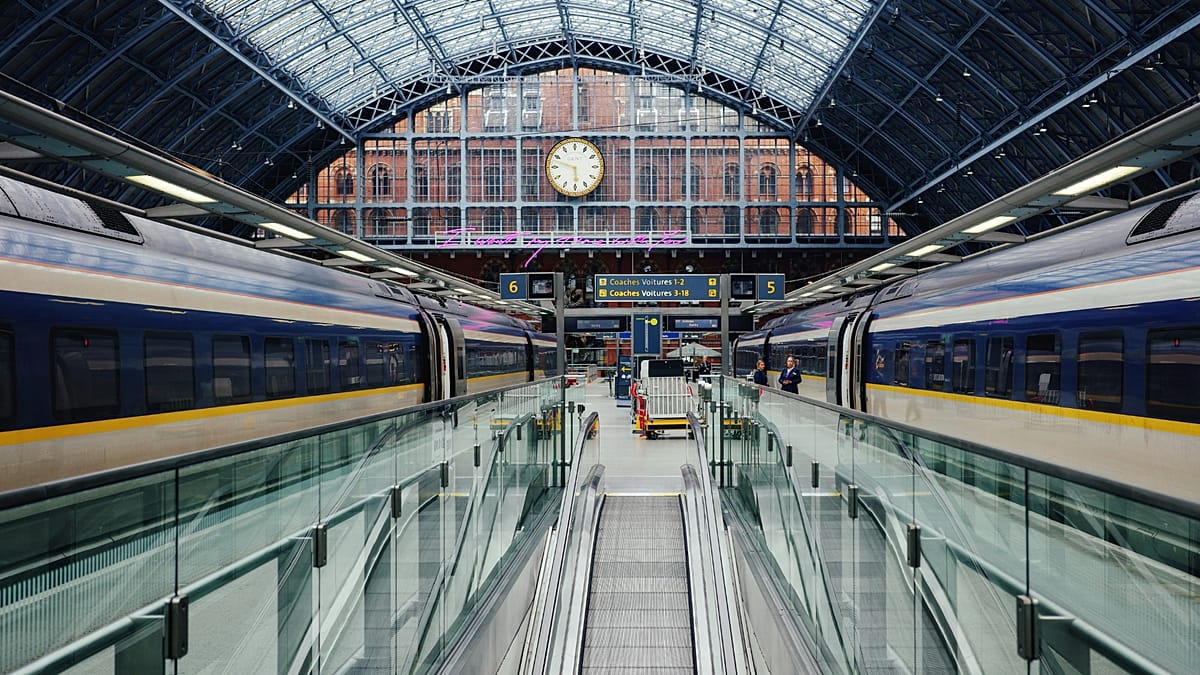
Eurostar's near three-decade dominance of cross-Channel passenger rail is facing its most credible challenge yet. Virgin Trains has secured regulatory approval to run up to 20 daily return services through the Channel Tunnel from 2030, a significant step toward breaking the monopoly on routes linking London with Paris, Brussels, and Amsterdam.
The UK's Office of Rail and Road (ORR) confirmed on Monday that it has granted Virgin Trains access to the tunnel for the period between 1 October 2030 and 31 December 2040. The approval follows the company's earlier success in securing rights to use Eurostar's Temple Mills depot in east London, the only maintenance facility connected to High Speed 1, the line that connects London to the Channel Tunnel in Kent.
Virgin Trains, led by Sir Richard Branson, plans to operate services from London St Pancras International to the same continental stations currently served by Eurostar. Branson has been vocal about his ambition, stating it is "time to end this 30-year monopoly and bring some Virgin magic to the cross-Channel route."
The ORR, however, has stressed that significant work remains before the first Virgin train can roll. The company must still obtain safety certifications from both the ORR and European Union regulators, as well as secure access to the rail networks in France, Belgium, and the Netherlands. These are complex negotiations involving infrastructure managers and national authorities, but the approval marks a major milestone.
End of an era for Eurostar?
Eurostar has enjoyed a de facto monopoly on passenger services through the Channel Tunnel since its launch in 1994. While freight trains and occasional charter services have used the tunnel, no competing passenger operator has successfully challenged Eurostar's hold on the lucrative London-Paris and London-Brussels corridors. The entry of Virgin Trains could finally give travellers a choice, potentially leading to lower fares and improved service quality.
The development is part of a broader trend of liberalisation in European rail. Several countries, including Italy and Sweden, have seen new entrants challenge incumbent operators on high-speed routes, often with positive results for passengers. In Italy, for example, the arrival of Italo forced state-owned Trenitalia to cut prices and improve services. Similar dynamics could now play out under the English Channel.
Virgin Trains' plans are not without challenges. The company will need to invest in rolling stock that meets the stringent safety standards of the Channel Tunnel, including the ability to operate in the event of a fire or other emergency. It will also need to secure paths on the congested high-speed lines in France and Belgium, which are managed by SNCF Réseau and Infrabel respectively.
Industry analysts note that the 2030 start date gives Virgin time to overcome these hurdles. The company has already ordered new trains, though it has not disclosed the manufacturer. Some speculate that it may use the same Alstom or Siemens models that are already proven on cross-border routes.
For Eurostar, the prospect of competition is a wake-up call. The company has faced criticism in recent years over reliability and customer service, particularly after the pandemic disrupted services. A new entrant could force Eurostar to sharpen its offering, benefiting passengers across the continent.
The news also comes as other European rail projects gain momentum. Istanbul's airport expansion and the rise of high-speed rail in Eastern Europe are reshaping travel patterns. Meanwhile, Poland's economic growth is driving demand for better connectivity with Western Europe.
While the Channel Tunnel remains a critical link between Britain and the continent, the political landscape has shifted since Brexit. The UK is no longer part of the EU's single market, which complicates cross-border rail operations. However, the ORR's approval suggests that regulators on both sides are willing to facilitate new services, recognising the benefits of competition.
For now, travellers will have to wait until 2030 to see if Virgin's "magic" translates into a viable alternative to Eurostar. But the wheels are in motion, and the era of a single operator on the world's most famous underwater railway may soon be over.