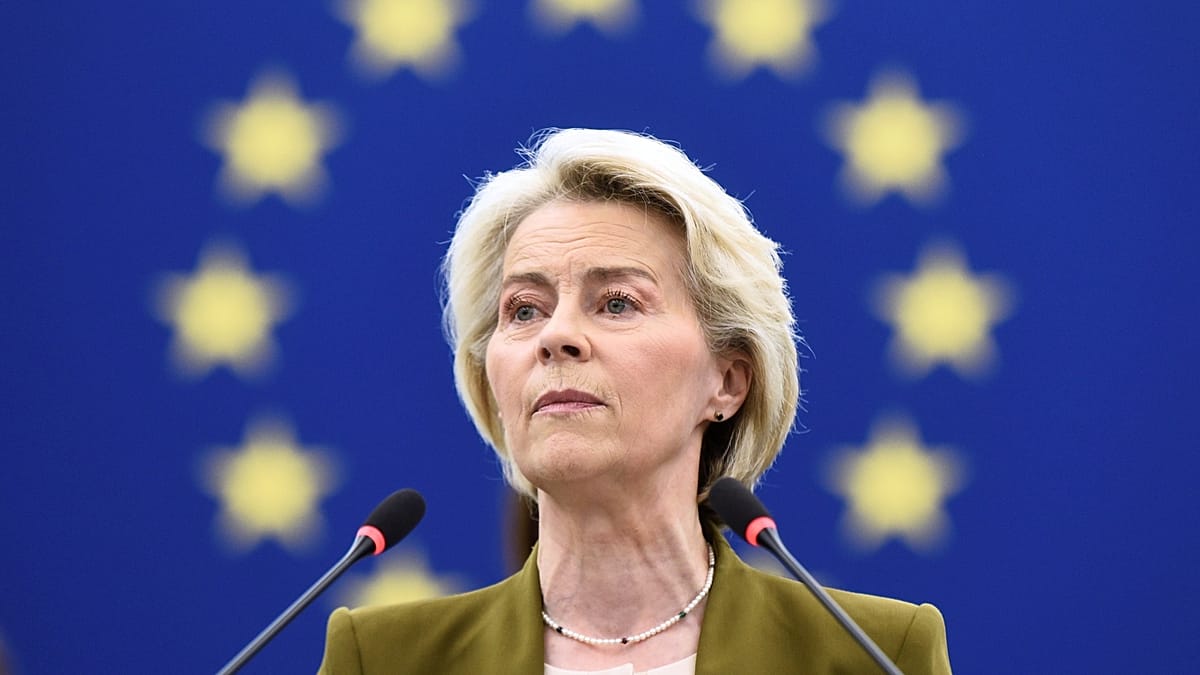
Strasbourg, France — Ursula von der Leyen, president of the European Commission, took the floor in the European Parliament on Tuesday to deliver her annual State of the European Union address, a wide-ranging speech that sets the bloc's political agenda for the year ahead. The address comes at a moment of acute external pressure and internal debate, with the war in Ukraine, the pace of enlargement, and the climate transition all demanding urgent attention.
In the hemicycle, von der Leyen was joined by Canadian Prime Minister Mark Carney, who attended as guest of honour. The visit underscores a deepening EU-Canada partnership, with von der Leyen expected to unveil a new chapter in bilateral relations. Carney will address the Parliament the following day, with von der Leyen in attendance.
Priorities: from Kyiv to the Arctic
The speech is expected to touch on a broad set of challenges, both internal and external. Russia's ongoing war against Ukraine remains the most pressing security issue for the continent, and von der Leyen is likely to reaffirm the EU's support for Kyiv while also addressing the bloc's own defence readiness. Enlargement — particularly the Western Balkans and Ukraine's candidate status — will also feature, as the EU seeks to balance expansion with internal reform.
Climate change and the green transition are set to be another pillar, with the Commission under pressure to deliver on its ambitious emissions targets while managing the social and economic consequences. Irregular migration, a perennial and politically sensitive topic, is also on the agenda, as member states struggle to find common ground on asylum policy. The recent rift in the Parliament's centrist alliance over Ceuta highlights how divisive migration remains.
Trade relations with China, the future of social media regulation, and the Arctic — where a dozen EU states have called for a stronger role amid Russian and US pressure — are also expected to be addressed. The Arctic, in particular, is gaining geopolitical significance as ice melts and new shipping routes open.
A defining moment for the EU
Observers note that this year's address comes at a defining moment for the Union. The war in Ukraine has reshaped the security landscape, while the bloc's own institutions face questions about their effectiveness. Von der Leyen's previous promises have drawn mixed reviews: a year on, some initiatives have delivered, others have stalled. The mixed results of her past pledges are likely to be scrutinised as she outlines new proposals.
The speech also comes amid internal tensions over the rule of law, democratic backsliding in some member states, and the challenge of maintaining unity on sanctions against Russia. The EU's digital agenda, including the lagging rollout of the digital wallet, is another area where the Commission's ambitions have outpaced implementation.
EU-Canada relations take centre stage
The presence of Mark Carney, a former central banker who became Canada's prime minister, signals a desire to strengthen transatlantic ties beyond the United States. The EU and Canada already share a comprehensive trade agreement, and the new chapter is expected to focus on green technology, critical raw materials, and security cooperation. Carney's own address on Wednesday will likely echo these themes, with a focus on climate finance and sustainable growth.
Von der Leyen's speech is being watched closely not only in Brussels and Strasbourg but in national capitals across the 27 member states. As the Commission president, she must balance the interests of diverse governments, from Berlin to Athens, while projecting a common European voice. The address is also an opportunity to set the tone for the coming year, ahead of the European Parliament elections.
For many in the hemicycle, the key question is whether von der Leyen can translate rhetoric into action. The EU faces a series of complex dossiers — from migration to defence — where progress has been slow. The expectation among vice-presidents is that the speech will offer something for every European, but delivering on that promise will require more than words.
As the session got underway, the mood in Strasbourg was a mix of anticipation and scepticism. The war in Ukraine grinds on, energy prices remain volatile, and the climate crisis shows no signs of abating. Von der Leyen's address is a chance to chart a course — but the real test will come in the months ahead, as the EU seeks to turn its ambitions into tangible results.