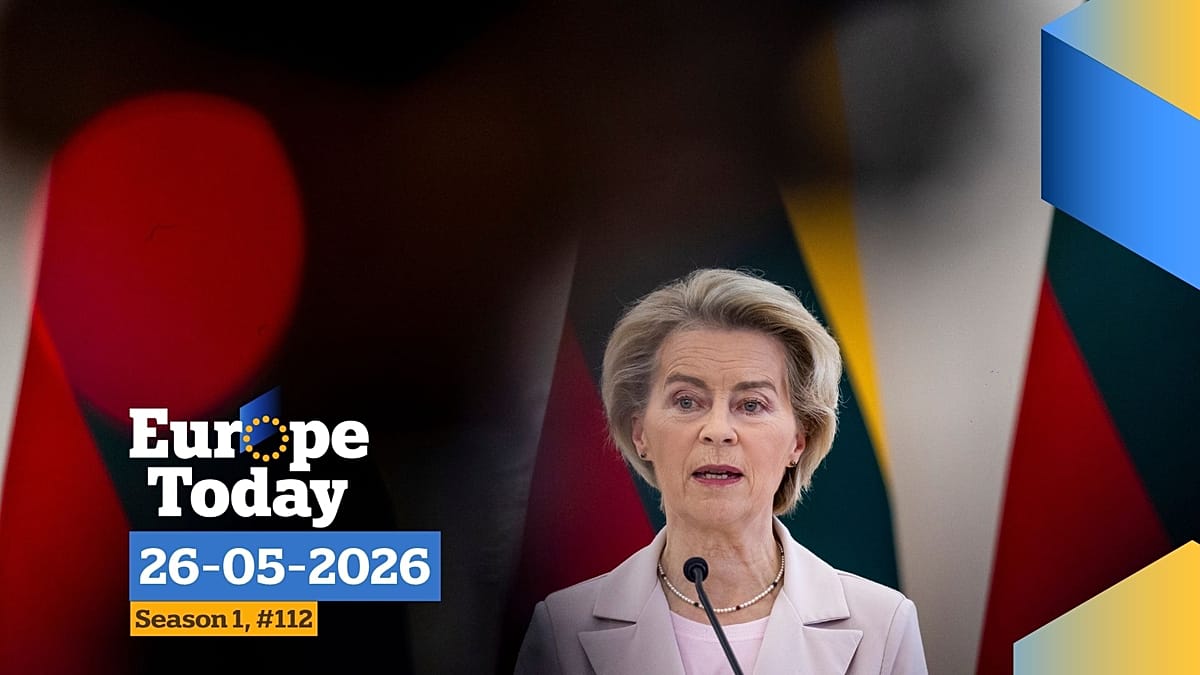
European Commission President Ursula von der Leyen arrived in Lithuania on Wednesday, delivering a sharp condemnation of Russian actions amid rising tensions in the Baltic region. Speaking ahead of her visit, von der Leyen declared that “Russia’s public threats against the Baltic states are completely unacceptable,” underscoring the EU’s solidarity with its eastern members.
The trip comes in the wake of several drone incursions reported across Lithuania, Latvia, and Estonia, which have fueled concerns about Moscow’s intentions. The Baltic states, all NATO and EU members, have long been on the front line of European security, and recent incidents have prompted calls for a stronger collective response.
Baltic Security Under Scrutiny
Von der Leyen’s visit is part of a broader effort to reinforce EU support for the region. She is expected to meet with Lithuanian President Gitanas Nausėda and other officials to discuss defense cooperation, energy security, and the bloc’s response to hybrid threats. The European Commission has already allocated additional funds for border protection and cybersecurity in the Baltics.
In a related development, Lithuania recently blamed a foreign state for a massive data leak of 600,000 records, further straining relations with Russia. The incident, detailed in Lithuania Blames Foreign State for Massive Data Leak of 600,000 Records, highlights the multifaceted nature of the threats facing the region.
Broader European Context
The tensions in the Baltics are part of a wider pattern of Russian aggression. In Ukraine, a Russian drone barrage hit a residential area in Kharkiv, while a strike on Sumy injured six people, as reported in Russian Drone Barrage Hits Kharkiv Residential Area as Attacks Intensify and Russian Strike on Sumy Injures Six Amid Widespread Drone Attacks on Ukraine. These attacks underscore the ongoing war and its ripple effects across Europe.
Meanwhile, Belarusian opposition leader Sviatlana Tsikhanouskaya, who visited Kyiv after Russia’s largest missile attack of the year, continues to advocate for democratic change in Minsk. Her efforts, covered in Belarus Opposition Leader Visits Kyiv After Russia's Largest Missile Attack of the Year, are closely watched by European policymakers.
EU Internal Dynamics
On the EU’s internal front, Kata Tüttő, President of the European Committee of the Regions, has called for greater local involvement in security policies. The debate over EU funds for Hungary also continues, with Euronews’ Zoltán Siposhegyi reporting on the latest developments.
In a separate but related story, Saxony Premier Michael Kretschmer has sparked controversy by advocating for a resumption of Russian gas talks and an end to refugee benefits, as detailed in Saxony Premier Kretschmer: Resume Russian Gas Talks, End Refugee Benefits. This position contrasts sharply with the EU’s unified stance against Moscow.
Cultural and Technological Notes
Beyond politics, Europe Today also features an interview with Pope Francis on his AI-focused encyclical “Magnifica Humanitas,” reported by Euronews’ Angela Skujins. The document addresses the ethical implications of artificial intelligence, a topic of growing relevance for European tech policy.
In the cultural sphere, protests by Pussy Riot and FEMEN against Russia’s return to the Venice Biennale highlight the ongoing cultural boycott of Russia over the Ukraine war, as covered in Pussy Riot and FEMEN Protest Russia's Venice Biennale Return Amid Ukraine War.
As von der Leyen’s visit to Lithuania underscores, Europe faces a complex web of security, political, and cultural challenges. The EU’s response will be crucial in maintaining stability and unity across the continent.