European Commission President Ursula von der Leyen has pledged a united EU response to what she called “escalating and serious” hybrid attacks, after Germany formally attributed a drone incident at Leipzig/Halle airport to Russian operatives. In a statement on Monday, she expressed “full solidarity” with Berlin and said the bloc would not let such acts go unanswered.
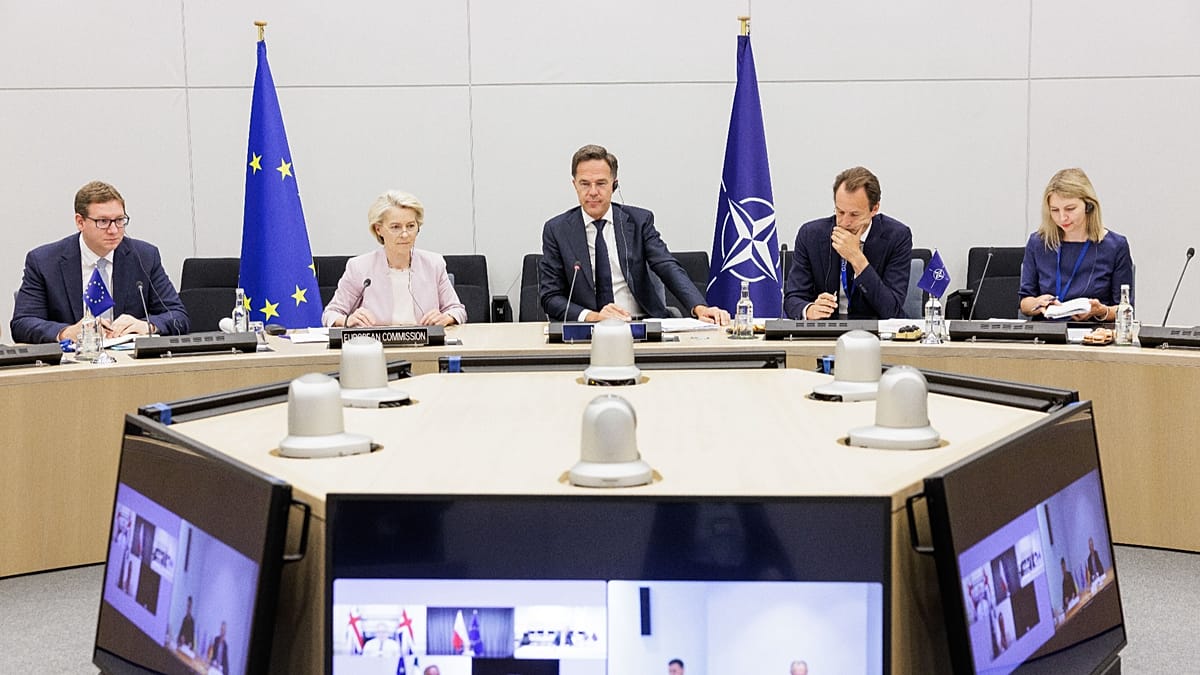
Speaking ahead of a bilateral meeting with NATO Secretary-General Mark Rutte scheduled for Wednesday, von der Leyen said the two would discuss how to deepen coordination against hybrid threats. The meeting, confirmed by the Commission’s chief spokesperson Paula Pinho, comes as European and NATO defence cooperation is being tightened in response to a growing pattern of sabotage, disinformation, and drone incursions across the continent.
Germany points the finger at Moscow
German Interior Minister Alexander Dobrindt announced on Monday that the drone found in the security zone of Leipzig/Halle airport on 4 August was part of a broader Russian hybrid campaign. “The means to carry out the act are known to us from other hybrid operations conducted by Russia and its war against Ukraine,” he said, concluding that Moscow was responsible for the incident.
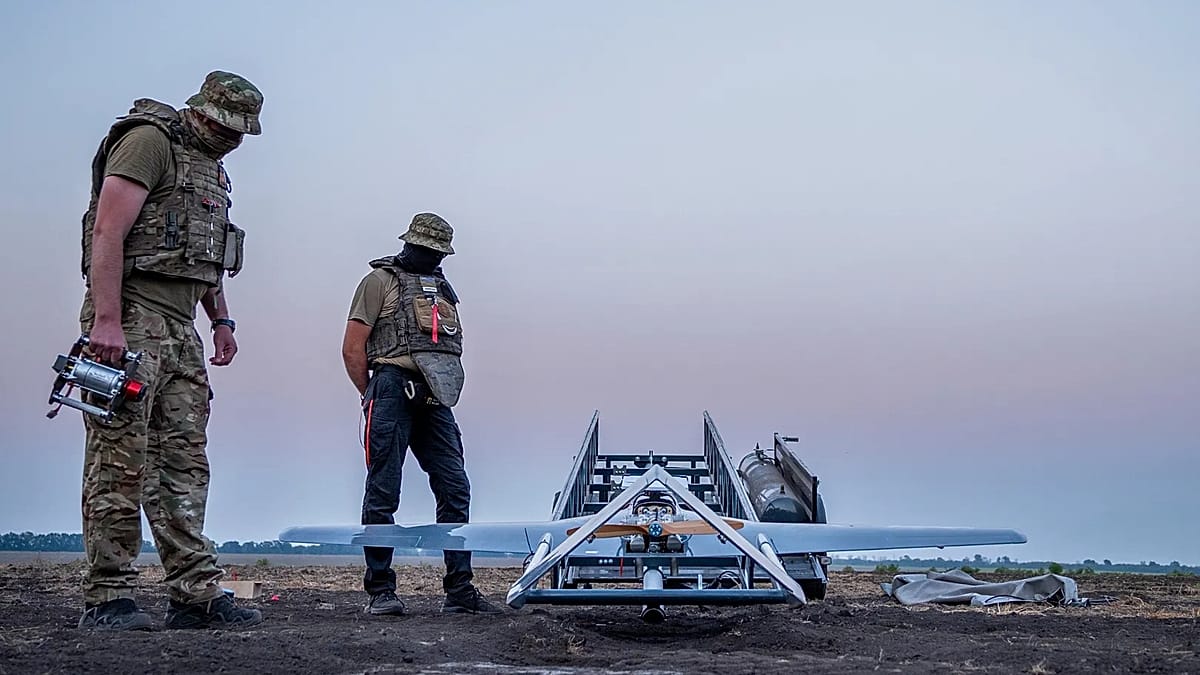
The drone was discovered near a Ukrainian cargo aircraft used to transport military supplies. A second unmanned aerial vehicle later collided with an aircraft, preventing it from landing. In response, Germany has ordered the closure of the Russian consulate in Bonn and the Russian House in Berlin. Foreign Affairs Minister Johann Wadephul described the actions as part of a “long series of attempts at destabilisation, disinformation, threats, sabotage and aggression directed at Europe.”
Chancellor Friedrich Merz had previously vowed a response, with action to be coordinated among EU and NATO allies. The Russian Foreign Ministry, however, dismissed the accusations in late August, arguing that blame was assigned before an investigation had been completed.
EU and NATO move to counter hybrid threats
The EU’s foreign policy chief, Kaja Kallas, said Russia is increasingly using kinetic hybrid incidents to try to “scare us away” from supporting Ukraine. “They will not succeed,” she said after a defence ministerial meeting in Wicklow, Ireland. Kallas acknowledged that the risks are rising and that “clearly we are not doing enough to stop this.”
Irish Foreign Minister Helen McEntee, speaking alongside Kallas, noted that threats are now materialising across the bloc. “We are now starting to see threats materialise as recently as the last 24 hours, where our colleagues in Romania and Latvia and Estonia, and of course Germany, have spoken of incursions into their own airspace, but also into their own land domain,” she said.
On Tuesday, Romania and Estonia both reported drone incursions, and several improvised explosive devices were found near a coal-fired power plant in Germany. Estonian Defence Minister Hanno Pevkur, arriving for talks, said Europe must prepare for more such incidents.
The meeting between von der Leyen and Rutte is expected to focus on practical steps to strengthen resilience, including intelligence-sharing and protection of critical infrastructure. A NATO official told Euronews that deepening coordination against hybrid threats would be the central theme.
Meanwhile, EU foreign ministers are set to prepare additional sanctions against Russia at an upcoming meeting. The bloc has already imposed several rounds of measures targeting Moscow’s economy and individuals linked to hybrid activities.
As the EU and NATO step up their response, the incidents underscore the growing challenge of hybrid warfare on European soil. With defence ministers convening to address the threat, and Baltic states pushing back on fears of an imminent attack, the focus is on deterrence and unity. Von der Leyen’s message was clear: “Hybrid attacks will not go without a clear response.”