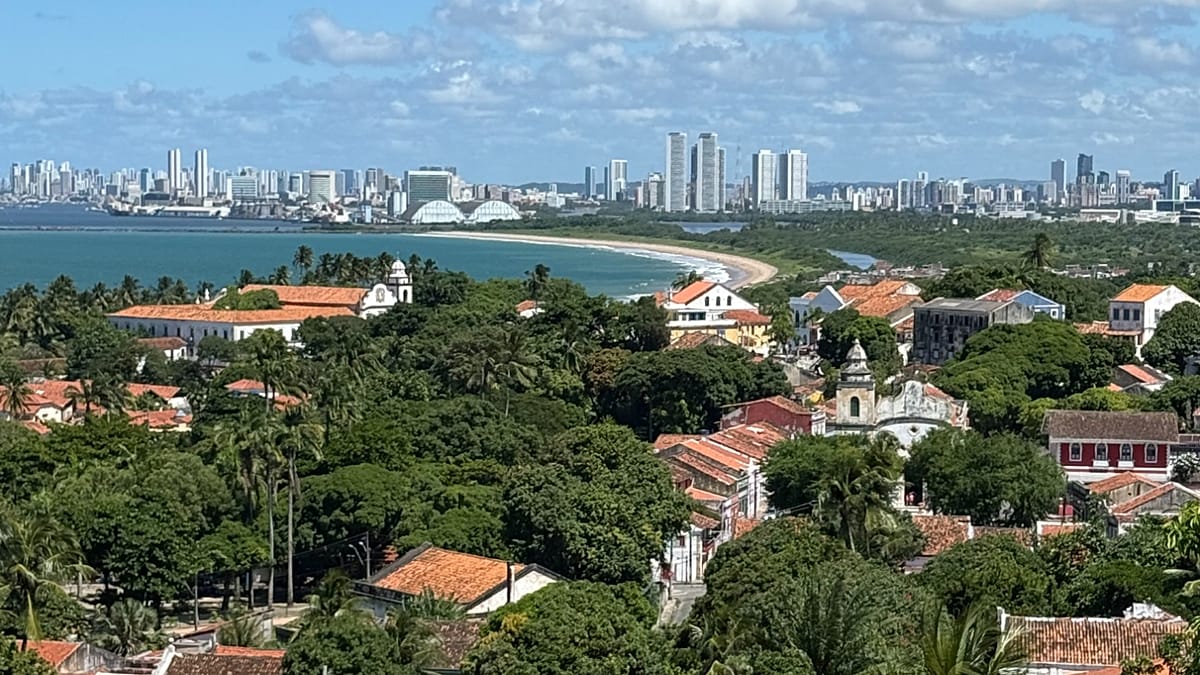
Fortaleza and Recife, the two Brazilian mainland cities nearest to Europe, are leveraging their geographical position to attract a growing number of international visitors. With direct flights from European capitals such as Madrid, Lisbon, and Paris, these northeastern hubs are consolidating their status as primary gateways to a region known for its beaches, nature, culture, and history.
Less than eight hours from Madrid, travelers encounter Fortaleza's skyline—a blend reminiscent of Miami and Benidorm. Its seafront skyscrapers line the long Beira Mar promenade, creating a tropical, holiday atmosphere that encourages outdoor living. The city, with 2.57 million inhabitants, is the capital of Ceará state and one of Brazil's five most populous cities.
Fortaleza: 300 Years of History
Fortaleza's history is rooted in colonial struggles between the Portuguese and Dutch. In 1649, the Dutch built Fort Schoonenborch, later renamed Fortaleza de Nossa Senhora da Assunção after Portuguese reconquest. The city will celebrate its 300th founding anniversary in 2026, a milestone visible in its architecture. Tour guide Castalha describes it as "a vibrant city, with a rich mix of cultures, that never sleeps. From three in the morning lots of people start going out into the streets to exercise or run."
Early mornings reveal dozens of runners along the Beira Mar promenade, which connects three beaches over six kilometers: Iracema, with landmarks like the English Bridge; Meireles, known for its night-time craft market; and Mucuripe. For those combining sport and sea, canoeing in the warm Atlantic waters is an option. At the Mercado dos Peixes, Mucuripe beach remains tied to artisanal fishing, with fishermen using traditional jangadas—light sailing boats. Fish and seafood are staples of Ceará's cuisine. At night, forró music and dance, a cultural symbol of Brazil's northeast, fill the streets.
Outside the city, adventure begins. About 160 kilometers southeast lies Canoa Quebrada, famous for its falésias—reddish and white sand and rock cliffs—and wind-sculpted dunes. The best way to explore is by buggy, offering panoramic views. A crescent moon and star symbol carved into the cliffs has become the village's emblem. This area gained fame in the 1970s among European backpackers and hippies drawn by unspoiled beaches and a laid-back atmosphere.
Another authentic beach is Canto Verde in Beberibe, where around 200 artisanal fishers live. Visitors can go to sea with them in traditional boats, an activity attracting tourists from Switzerland, Portugal, and the United States. Roberto, a local, explains: "We live from artisanal fishing and we are promoting community tourism." Residents have fought property speculation to protect the area. Daniele Rocha from Embratur notes: "That is another of the area's attractions: sustainable tourism that does not drive out local residents, but instead involves them through their traditions and customs."
Just over an hour's flight from Fortaleza, Recife presents a different reality. The capital of Pernambuco state, with 1.5 million inhabitants, was for centuries a major economic engine due to its strategic port and the sugar trade. Its history is deeply tied to colonization, Atlantic trade, and Dutch influence. For more on these destinations, see our feature Fortaleza and Recife: Brazil's Northeastern Gateways Court European Travelers.
Both cities are increasingly opening up to international tourism, offering a mix of urban energy, natural wonders, and cultural depth that appeals to European travelers seeking something beyond the usual beach holiday. As direct flights expand, the northeast of Brazil is poised to become an even more accessible and attractive destination for Europeans.