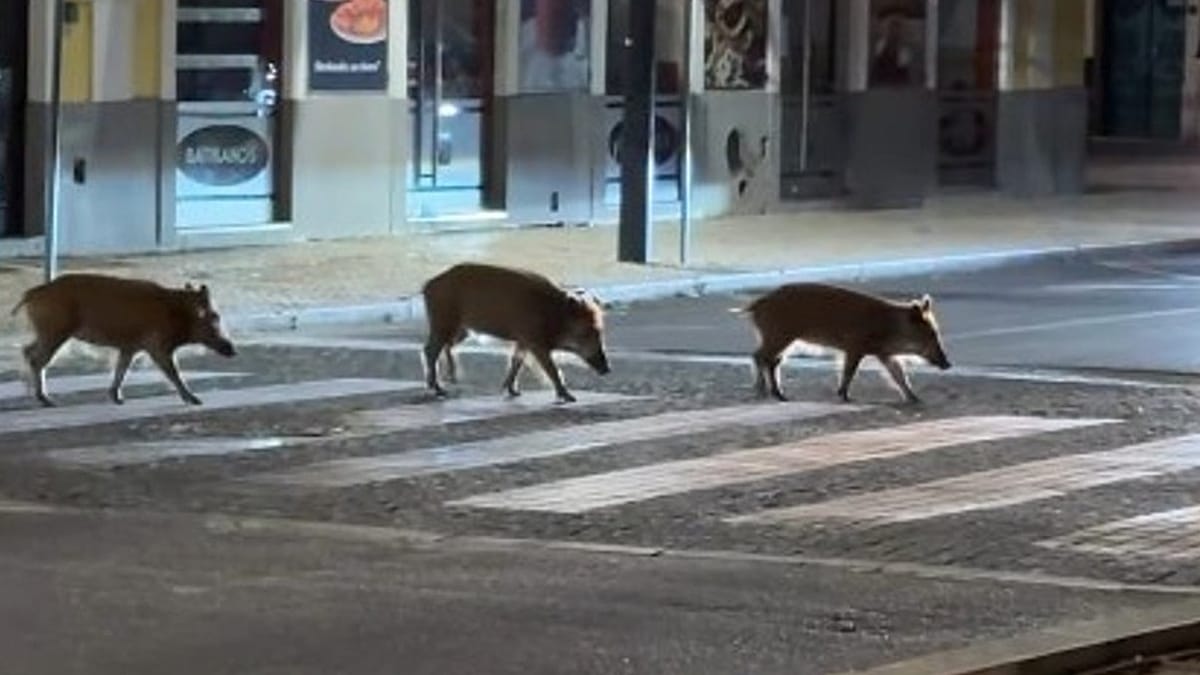
Residents of Setúbal, a port city on Portugal's Atlantic coast, have grown accustomed to an unusual sight in recent months: wild boar ambling through urban streets after dark. A video shared on social media by a local resident shows a group of the animals using a pedestrian crossing on a busy road, while other footage captures them rooting through planted areas with their snouts, apparently in search of food.
The sightings are not limited to the city centre. The boar have also been appearing on the beaches of the nearby Serra da Arrábida, a protected natural park known for its dramatic cliffs and clear waters. In summer, beachgoers have reported animals approaching towels and rummaging through cool bags and food left unattended on the sand.
Council acknowledges growing presence
In a statement posted on social media, Setúbal City Council acknowledged that “in recent months there have been several sightings of wild boar in urban and peri-urban areas of the municipality, particularly in gardens, parks, beaches and areas close to natural spaces.” The council was blunt about the situation: the presence of these animals within city limits “is neither natural nor desirable.”
“As a wild animal with unpredictable behaviour, it poses risks to the safety of people and pets, as well as public health concerns,” the statement added.
The council has published a guide outlining precautions for encounters with wild boar. Advice includes not approaching the animals, backing away slowly if they come towards you, refraining from feeding them, and ensuring food scraps are not left outside bins.
Beaches most affected
The beaches of Portinho da Arrábida, Creiro and Galapinhos record the highest number of sightings. Galapinhos, which lies deep within the Serra da Arrábida, is especially prone to encounters. The animals are known to approach sunbathers, particularly when food is left unattended while people swim.
The situation in Setúbal is part of a broader pattern across Europe, where wild boar populations have expanded and increasingly come into contact with urban areas. Similar incidents have been reported in cities such as Barcelona, Rome and Berlin, where the animals have been filmed wandering through parks and even metro stations.
While the boar are a native species in Portugal, their growing presence in urban settings raises questions about habitat loss and human-wildlife coexistence. The council's response reflects a wider challenge facing many European municipalities as they try to manage wildlife that ventures into populated areas.
For now, the council's message is clear: keep your distance, do not feed the animals, and report sightings to local authorities. As one resident put it, the boar may have learned to use pedestrian crossings, but they are still wild animals that deserve respect and caution.