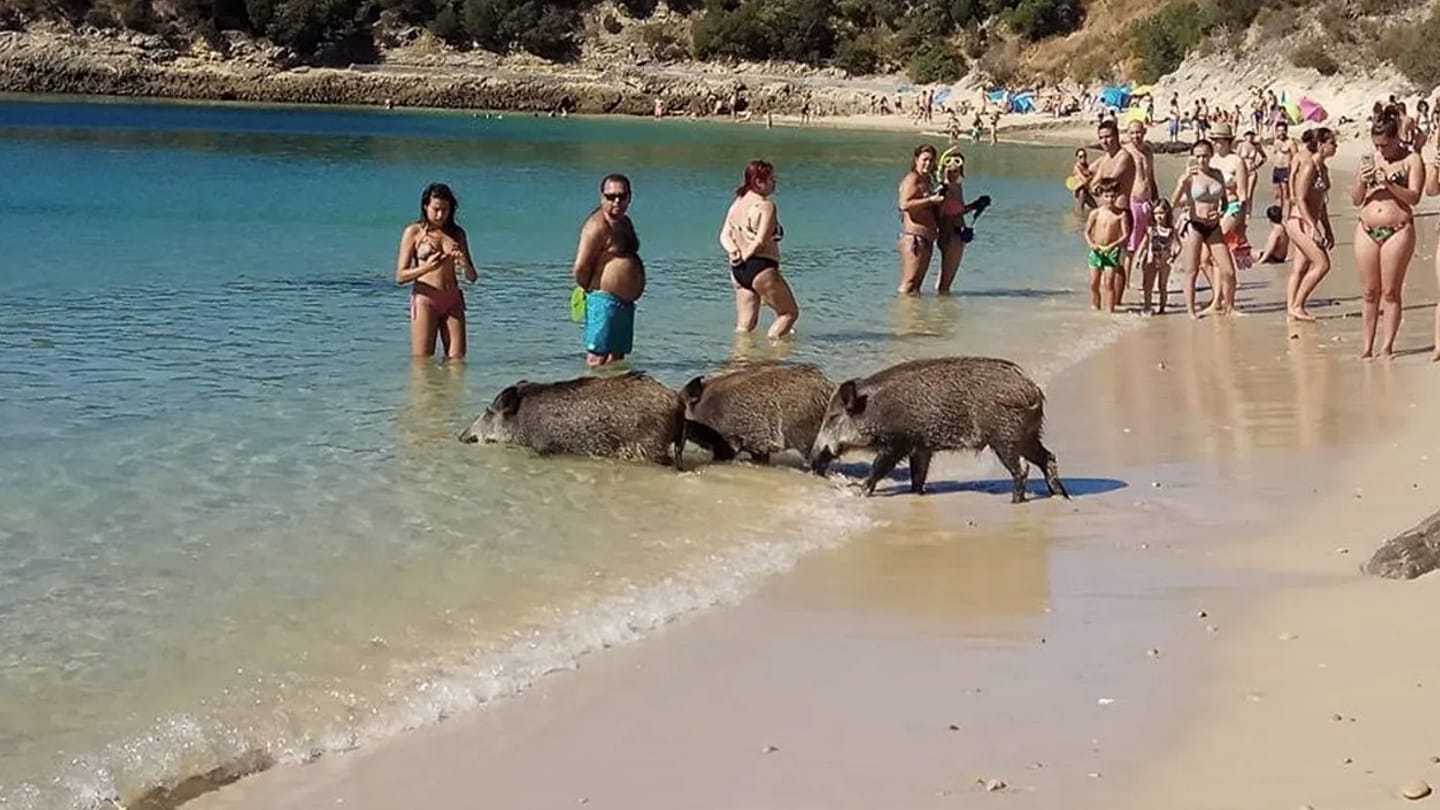
Holidaymakers at the picturesque Portinho da Arrábida beach in Portugal have been encountering unexpected lunch thieves: wild boars. The animals have been spotted emerging from the surrounding forest and approaching beachgoers, making off with food left unattended on towels or in coolers.
The beach, located in the Arrábida Natural Park about 40 kilometres south of Lisbon, is known for its turquoise waters and white sand. But in recent weeks, the local fauna has become bolder. Videos shared on social media show boars trotting past sunbathers and snatching bags of snacks, sandwiches, and even whole picnic baskets.
Local authorities have issued warnings urging visitors to keep food securely stored and to avoid feeding the animals. Feeding wild boars can encourage them to associate humans with food, leading to more frequent and aggressive encounters. The animals are protected within the natural park, so direct intervention is limited.
This is not the first time wild boars have caused trouble on Portuguese beaches. Similar incidents have been reported in other coastal areas near forested zones, particularly during the summer months when tourist numbers peak. The problem is exacerbated by improper waste disposal and visitors leaving food scraps behind.
For those planning a trip to Portinho da Arrábida, the advice is clear: keep your lunch in a sealed container, never leave it unattended, and if a boar approaches, back away slowly and do not run. The animals can be unpredictable, especially if they feel threatened or are protecting their young.
Portugal's wild boar population has been growing in recent years, partly due to mild winters and abundant food sources in rural and suburban areas. The animals have also been spotted in urban fringes, rooting through bins and gardens. In some regions, controlled culls have been authorised to manage numbers, but in protected areas like Arrábida, non-lethal measures are preferred.
Broader Context: Wildlife Encounters Across Europe
Wild boar encounters are not unique to Portugal. Across Europe, from the forests of Germany to the hills of Italy, these adaptable animals are increasingly coming into contact with humans. In Berlin, wild boars have been known to roam city streets, while in Rome, they have been spotted rummaging through rubbish bins in residential neighbourhoods. The trend reflects a broader challenge of urban-wildlife coexistence as natural habitats shrink and animal populations adapt to human environments.
For travellers, the key is to stay informed and respect local wildlife. While a boar stealing your lunch might make for a memorable holiday story, it is a sign of deeper ecological shifts. As European summers grow hotter and drier, animals may venture closer to human settlements in search of food and water.
For more on managing holiday expectations and avoiding common pitfalls, see our guide on Five Central European Summer Destinations Beyond the Beach. And if you are concerned about data security while travelling, be aware of scams such as the recent Phishing Campaign Impersonates Portuguese PM to Steal Personal Data.