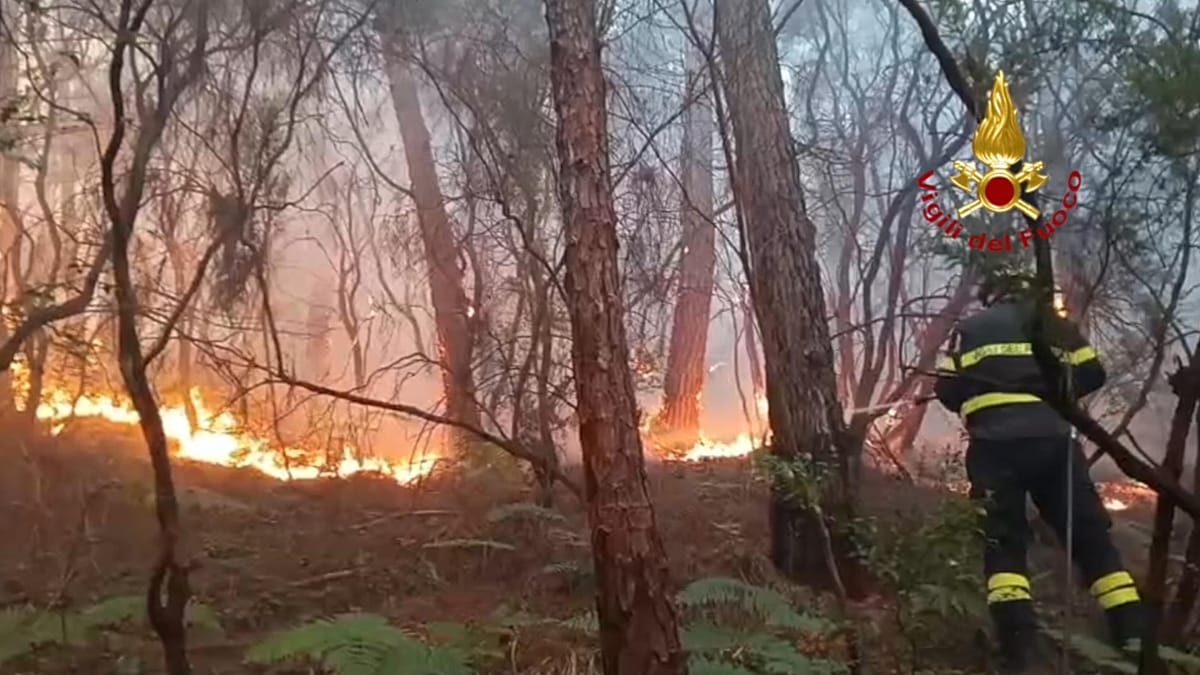
A severe wildfire is raging on Monte Faeta, a mountain straddling the provinces of Pisa and Lucca in Tuscany, Italy. The blaze has already consumed approximately 800 hectares of woodland, threatening settlements and prompting a large-scale emergency response.
The fire, which started in the area between Santa Maria del Giudice, Asciano, and San Giuliano Terme, has been spreading rapidly due to persistent strong winds. These conditions have made containment efforts particularly challenging, with new outbreaks igniting even as firefighters work to control existing fronts.
Firefighting Operations Intensify
Dozens of forest firefighting teams, alongside the Vigili del Fuoco (Italian fire brigade), have been working through the night. They are using drones equipped with thermal imaging cameras to monitor hotspots and coordinate ground efforts. Since dawn, aerial support has been stepped up: at least three Canadair aircraft and several helicopters from the regional fleet are conducting continuous water drops.
Despite these efforts, the windy weather remains a critical obstacle. The gusts not only spread the flames but also create dangerous conditions for air operations, limiting the effectiveness of water bombing runs.
Evacuations and Civil Protection Response
For safety reasons, authorities have ordered the evacuation of about 3,000 people, primarily from the towns of Asciano and San Giuliano Terme. Italy's civil protection system has been activated to assist evacuees, with special attention given to elderly residents and other vulnerable individuals. Roadblocks have been set up in the affected zones to keep rescue routes clear and ensure the safety of emergency personnel.
The scale of the evacuation underscores the severity of the situation. Local officials have urged residents to follow instructions and avoid returning to their homes until the danger has passed.
This wildfire is the latest in a series of environmental challenges facing southern Europe, as climate change increases the frequency and intensity of such events. The region's Mediterranean ecosystems are particularly vulnerable, and the loss of 800 hectares of woodland will have lasting ecological impacts.
For context on broader European environmental and political developments, readers may also be interested in Montenegro's EU accession talks or the EU-Mercosur trade pact, both of which reflect the continent's evolving priorities.