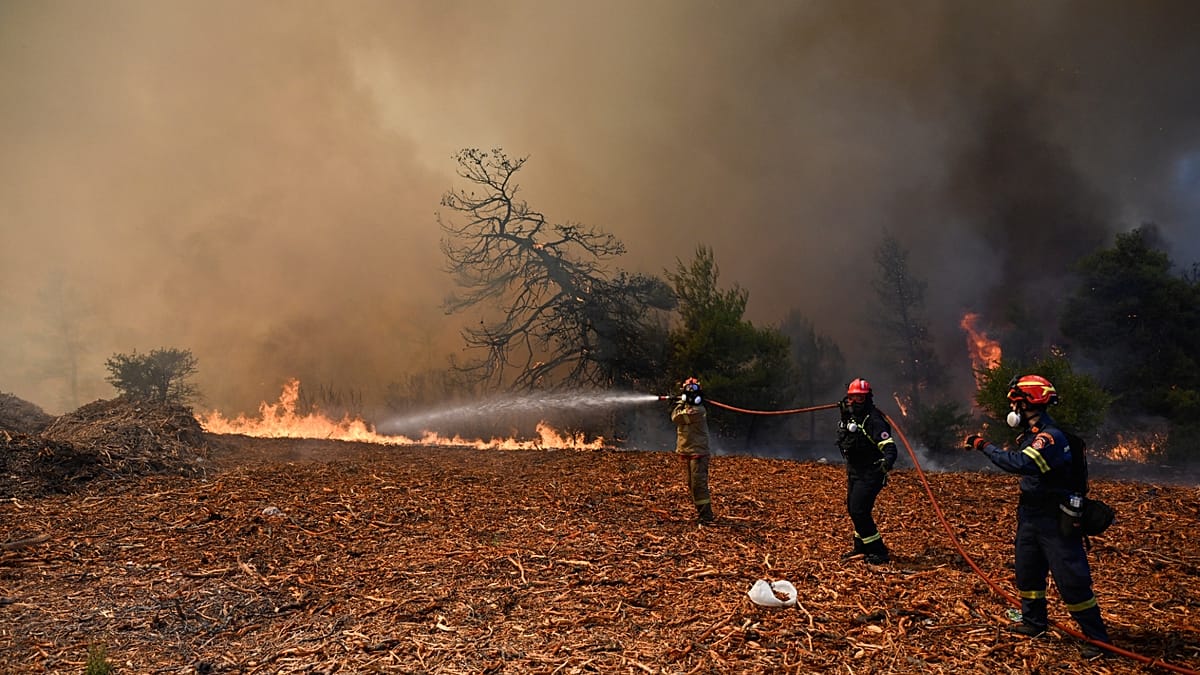
A fast-moving wildfire broke out west of Athens on Tuesday, forcing evacuations and triggering a large-scale response from ground crews and helicopters as strong winds pushed flames toward residential areas. The blaze, which erupted near the town of Mandra in the Attica region, quickly spread through dry brush and pine forest, sending thick smoke over parts of the Greek capital.
Rapid spread and emergency response
According to the Greek fire service, more than 180 firefighters, 45 vehicles, and 12 water-dropping aircraft were deployed to the scene. Helicopters made repeated sorties over the rugged terrain, while ground teams worked to protect homes and infrastructure. By late afternoon, authorities had ordered the evacuation of at least three settlements, including parts of Mandra and the nearby village of Vilia.
Strong winds, gusting up to 70 kilometres per hour, hampered containment efforts and caused the fire to jump firebreaks. "The situation is extremely difficult," said a fire brigade spokesperson. "We are dealing with a fire that is moving very fast, and our priority is to protect lives and property."
The blaze is the latest in a series of wildfires that have hit Greece this summer, following similar incidents on the island of Kefalonia and in other parts of the country. The Greek government has repeatedly warned of the heightened risk posed by climate change, which has made summers hotter and drier across the Mediterranean.
Regional context and European cooperation
The fire near Athens comes as southern Europe grapples with an intense wildfire season. In France, crews have been battling blazes in the Var region, where mistral winds have fanned flames toward the village of Correns. Spain has also issued alerts for extreme heat and fire risk, while Italy has reported several outbreaks in Sicily and Calabria.
European Union mechanisms have been activated to support affected countries. The EU's Civil Protection Mechanism has coordinated the deployment of firefighting aircraft and teams from member states, including Italy, France, and Spain. This cross-border cooperation has been praised as a model for solidarity, though some experts argue that more investment in prevention is needed to reduce the frequency and intensity of such disasters.
Greek authorities have also faced scrutiny over their preparedness. Critics point to years of underfunding in the fire service and a lack of forest management as contributing factors. In response, the government has announced plans to hire additional firefighters and purchase new equipment, but these measures are unlikely to take effect before the end of the current fire season.
Impact on residents and environment
Residents in the affected areas described scenes of panic as flames approached. "We saw the smoke and then the fire was right there," said Maria Papadopoulou, a resident of Mandra. "We grabbed our documents and left. We don't know if our house is still standing."
Local authorities have opened shelters for displaced residents, and the Red Cross has been providing assistance. The full extent of the damage is not yet known, but early reports indicate that several homes and vehicles have been destroyed, and large areas of forest have been burned.
The fire also raised concerns about air quality in Athens, where a thick haze was visible from the city centre. Health officials advised residents, particularly those with respiratory conditions, to limit outdoor activities and keep windows closed.
As night fell, firefighters continued to battle the blaze, with aerial operations suspended due to darkness. The fire service said it would maintain a strong ground presence overnight to prevent flare-ups. Forecasts suggest that winds may ease slightly on Wednesday, which could aid containment efforts.
The wildfire near Athens is a stark reminder of the growing threat posed by extreme weather events across Europe. With temperatures rising and droughts becoming more frequent, the continent faces an increasingly challenging fire season. As Greece battles multiple wildfires, the need for a coordinated and well-funded European response has never been more urgent.