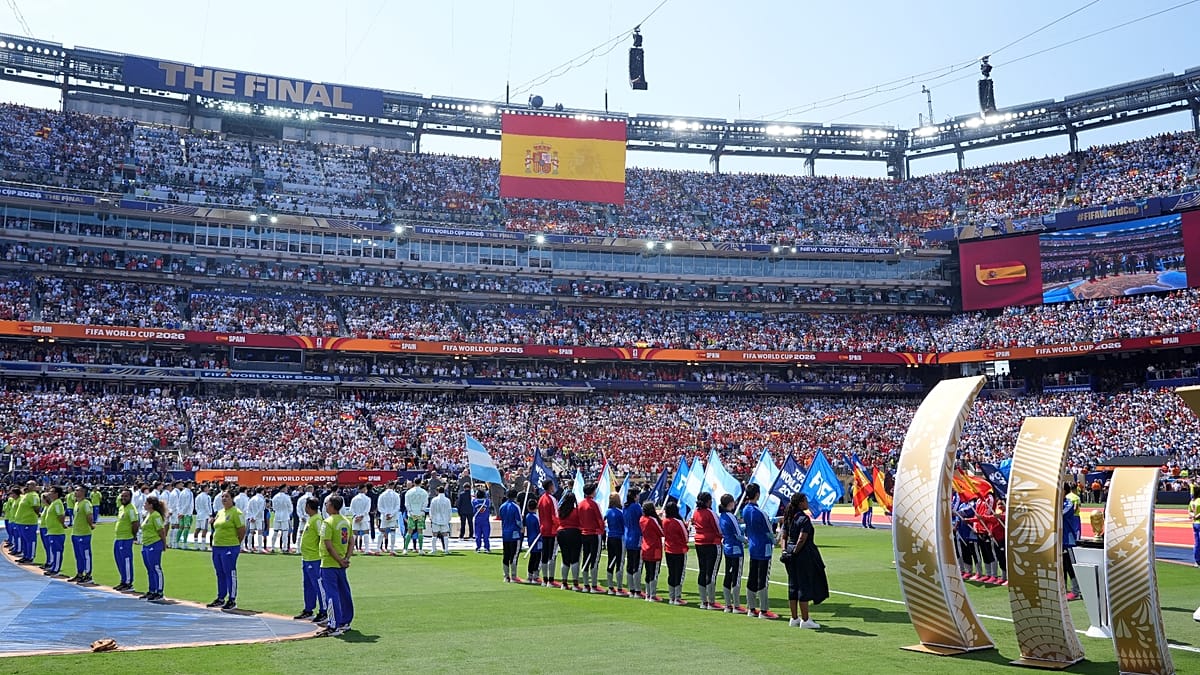
If you tuned into the 2026 FIFA World Cup, you might have noticed a recurring pattern: every seven seconds, an advertisement for junk food, alcohol, or gambling flashed across the screen. A new study from the University of Bristol and the University of Oxford has quantified this saturation, revealing that such ads occupied nearly a quarter of the tournament's total live broadcast time.
Analyzing all 172.6 hours of live play across 104 matches, the researchers counted more than 93,000 advertisements for products potentially harmful to human health. These ads were visible for 39.3 hours, equivalent to 22.8% of the entire live coverage. The study, which used the UK's most powerful supercomputer, Isambard-AI, based in Bristol, also estimated that these ads generated 267 billion impressions in the UK alone.
A global platform for harmful marketing
The World Cup is one of the most-watched sporting events on the planet, with an estimated six billion people engaging across television, streaming, and social media. This reach makes it an unparalleled advertising platform, as co-author Raffaello Rossi from the University of Bristol noted: "As one of the world's most watched sporting events, reaching billions of people, this year's FIFA World Cup provided an unparalleled platform for advertising."
The study focused on advertising embedded in the live match coverage, such as billboard ads, which viewers cannot avoid while following the game. On average, viewers saw nine logos per minute of live play for brands associated with health or financial harm.
Junk food dominates, but alcohol and gambling are close behind
Unhealthy food and drink brands accounted for the vast majority of appearances, with 65,722 logos visible for 28.1 hours—16.3% of all live play. This is particularly concerning given the strong link between unhealthy diets and noncommunicable diseases like heart disease, stroke, cancer, and diabetes.
Prediction markets were the second-largest category, with 9,360 logos and 8.8 hours of screen time. Alcohol followed closely with 9,266 logos and 8.2 hours, while gambling accounted for 6,429 logos and 4.2 hours. The authors emphasize that alcohol consumption is a leading cause of noncommunicable diseases, and gambling can lead to financial, physical, emotional, and social harms.
"We are facing a global crisis of childhood obesity and diet-related disease, yet the world's biggest sporting event is saturated with marketing for unhealthy food and drinks," said Elisa Becker, co-author at Oxford. "Sport should be part of the solution to poor health – not one of the world's most powerful advertising platforms for the products driving it."
The findings raise serious questions about the role of major sporting events in public health. As Europe grapples with rising obesity rates and gambling addiction, the study's authors call for stricter regulations on advertising during such broadcasts. They argue that the World Cup, which should inspire healthy living, is instead becoming a vehicle for promoting products that undermine it.
For more on how global events intersect with health and policy, see our coverage of Europe's most walkable cities and the risks of AI gambling.