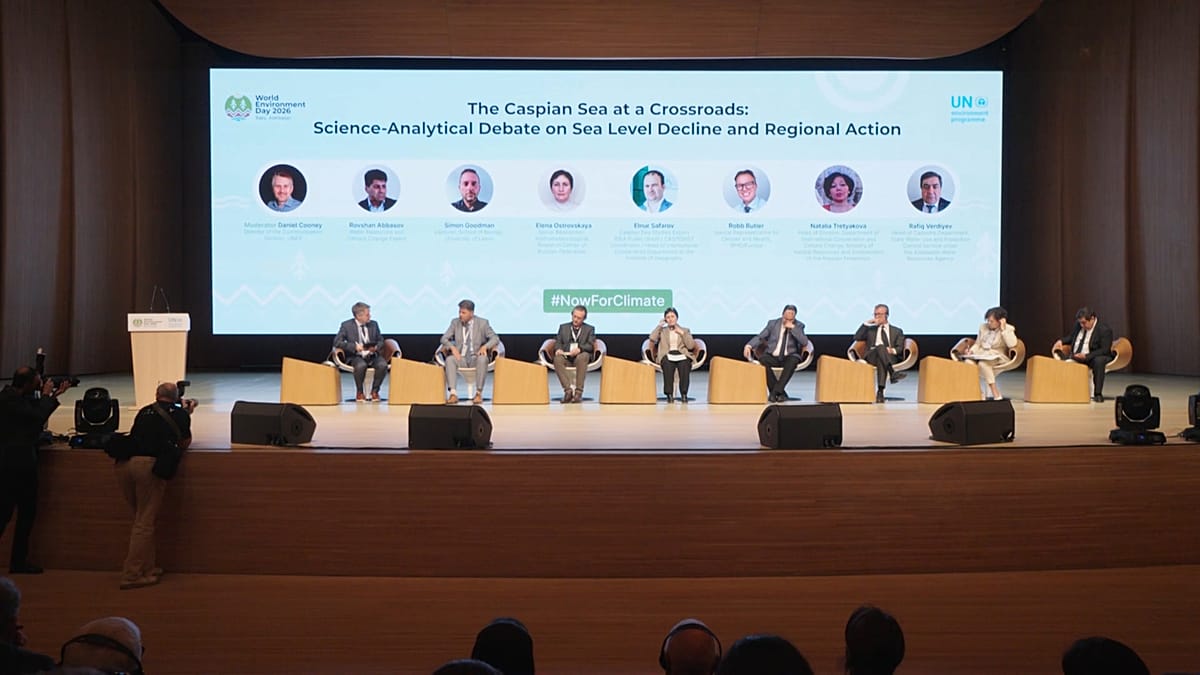
Global leaders gathered in Baku on Wednesday for World Environment Day 2026, issuing a collective call for accelerated action against the intertwined crises of climate change, biodiversity loss, and pollution. The summit, hosted by Azerbaijan, underscored the growing recognition that environmental degradation and public health are inseparable challenges requiring urgent, coordinated responses.
Air pollution remains a particularly deadly threat across Europe, claiming an estimated 520,000 lives each year, according to the European Environment Agency. The figure was a central talking point in Baku, where delegates from EU member states, the United Kingdom, Switzerland, and the Balkans stressed that the continent cannot afford complacency. The scale of the crisis demands nothing less than a fundamental shift in policy and investment, said a senior European Commission official on the sidelines of the event.
Health and Climate: A Shared Agenda
Discussions at the summit focused on the links between environmental sustainability, public health, and economic development. Experts highlighted that vulnerable communities—from the outskirts of Paris to rural villages in the Balkans—bear the brunt of environmental pressures. The World Health Organization presented data showing that heatwaves, wildfires, and worsening air quality are already straining healthcare systems across the continent.
In a session on urban resilience, mayors from cities including Copenhagen, Milan, and Warsaw shared strategies for reducing emissions and improving air quality. Copenhagen, aiming to become the world's first carbon-neutral capital by 2025, showcased its investment in cycling infrastructure and green energy. What works in one European city can inspire others, noted a representative from the European Commission's Directorate-General for Environment.
The summit also addressed the broader geopolitical context. With the G7 Leaders Forge Rare Unity on Ukraine, Sanctions, and AI at Évian Summit earlier this month, there is a renewed push for climate action to be integrated into security and trade discussions. Several speakers in Baku argued that the climate crisis is a threat multiplier, exacerbating conflicts over resources and migration.
Biodiversity and the European Green Deal
Biodiversity loss emerged as another key theme. The European Union's Biodiversity Strategy for 2030, part of the broader European Green Deal, aims to protect 30% of land and sea areas. However, implementation has been uneven, with some member states lagging behind. In Baku, environmental NGOs urged faster action, warning that the collapse of ecosystems could undermine food security and economic stability.
A separate session examined the role of the private sector. Several European companies, including major energy firms from Germany and France, announced new commitments to reduce their carbon footprints. Yet critics pointed out that voluntary pledges are insufficient without binding regulations. We need a level playing field where sustainability is not a competitive disadvantage, argued a representative from a Brussels-based climate think tank.
The summit also touched on the alarming findings of recent climate research. The Atlantic Cold Blob Signals AMOC Weakening, Threatening Europe's Climate, a study presented at the event, warned that a slowdown of the Atlantic Meridional Overturning Circulation could lead to more extreme weather patterns across Europe, including colder winters and hotter summers.
Youth and Civil Society Demand Action
Outside the conference halls, youth activists from across Europe staged protests, demanding that leaders move beyond rhetoric. The Fridays for Future movement, which originated in Sweden, has maintained pressure on governments to honor their Paris Agreement commitments. In Baku, young delegates from Poland, Spain, and the Netherlands presented a manifesto calling for a just transition that protects workers and communities.
The summit concluded with a joint declaration reaffirming the goal of limiting global warming to 1.5°C above pre-industrial levels. However, many observers noted that current national pledges put the world on track for a 2.5°C rise. The gap between ambition and action remains dangerously wide, warned the UN Environment Programme's executive director.
As World Environment Day 2026 draws to a close, the message from Baku is clear: the window for meaningful action is narrowing. For Europe, a continent that prides itself on climate leadership, the challenge is to translate summit declarations into tangible results—before the next crisis overwhelms the capacity to respond.