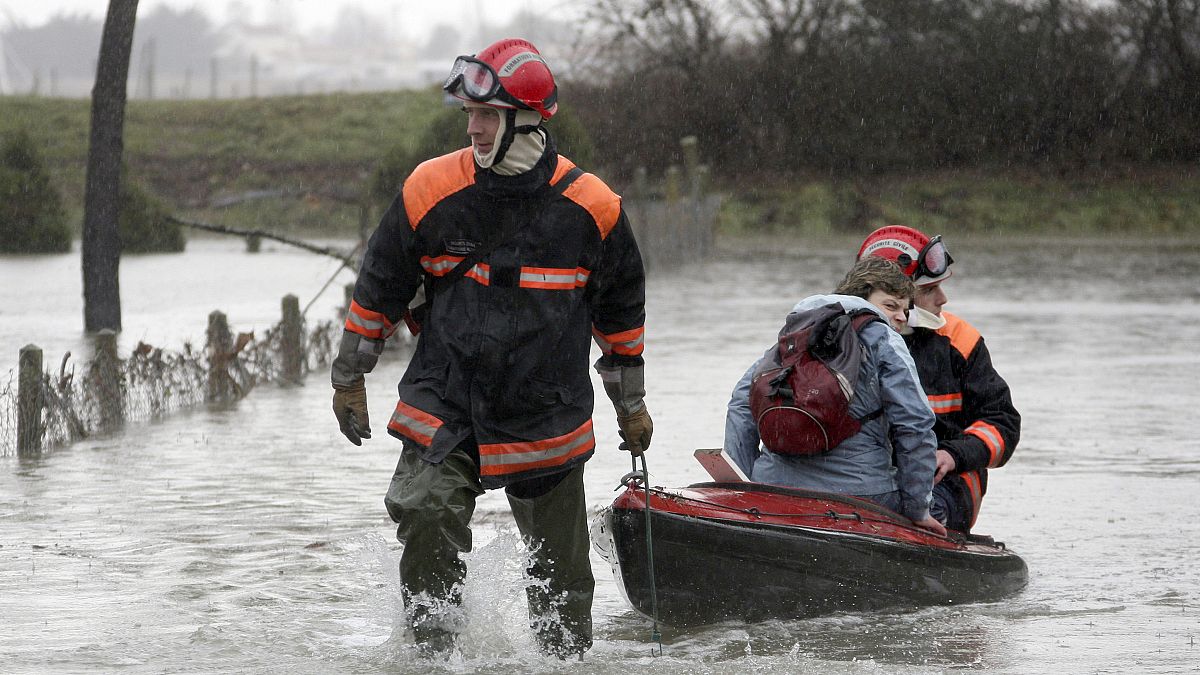
On the night of 28 February 2010, Anne and Jean Birault went to bed in their home in La Faute-sur-Mer, a sandy spit of land jutting into the Atlantic. The forecast had warned of strong winds and rain, but nothing prepared them for what came next. A wall of water 1.5 metres high pushed against their door. Anne looked out the window and saw the sea invading. She knew they had fifteen minutes to escape.
Twenty-nine of their neighbours drowned that night in what locals now call la cuvette de la mort — the basin of death. The Biraults became climate migrants, relocating 30 kilometres inland to Jard-sur-Mer. For Anne, migration is not about distance but about leaving behind a life built over decades: the home where they raised their children, the garden, the memories.
A Perfect Storm, Amplified by Climate Change
Storm Xynthia was a meteorological monster: hurricane-force winds, surging seas, and driving rain that smashed into western France and Spain, leaving more than a million households without power across Europe, as far inland as Germany. Fifty people died. But neither the storm nor the flood were exceptional in themselves. What made them so destructive, explains Freddy Vinet, a disaster-risk lecturer at the University of Montpellier, was climate change.
“The aggravating factor related to climate change is the rise in sea levels,” Vinet says. “For the same storm, a rise in sea levels will result in a higher flood.” Since satellite records began in 1993, some oceans have risen by as much as 20 centimetres, with the rate of increase more than doubling in the early 2000s. The IPCC warns that sea levels could rise by a metre by 2100.
Firefighters arrived late at La Faute-sur-Mer, overwhelmed by calls from other towns. In the basin of death, phones — already underwater — were silent. The disaster exposed a deeper failure: the town had been built on a floodplain, with building permits granted in as little as two weeks. Ahmed Bounaceur, an intensive care doctor, bought land in 2007 and received a permit in under two weeks. On the night of the flood, he lost his mother, his wife, and his two sons, aged five and thirteen. Only his daughter survived. He left La Faute-sur-Mer for good.
Elisabeth Tabary, who had retired to the town with her husband, was sleeping downstairs with her two-year-old grandson Raphaël when the water rose. She climbed onto a door, holding the boy in her arms. Her husband drowned in front of her. Hours later, Raphaël died of hypothermia. “At that point, I wanted to drown myself,” she says. She put the baby’s body behind the kitchen door to protect it from being washed away. Firefighters did not find him for 24 hours. Elisabeth suffered a stroke and now struggles to remember not just the storm, but her life before it. She decided never to leave the town, saying it would be like “abandoning the members of my family who died here.” Her son’s wife, Raphaël’s mother, has never returned.
After Xynthia, more than 600 houses in La Faute-sur-Mer were demolished. Around 400 of the 1,000 residents who lost their homes chose to leave. The French state bought their destroyed properties, but for many, the trauma remains. The town has since become a laboratory for climate adaptation, with new building codes, flood defences, and a ban on construction in the most vulnerable zones. Yet the broader challenge persists: across Europe, coastal communities from the Lancet report on climate inaction to the limits of tech-first transport solutions are grappling with how to live with rising seas.
For Anne Birault, the decision to move was driven by fear. “We couldn’t live with the idea that something like this could happen again,” she says. Her story is not unique. As the climate warms, more Europeans will face the same choice: adapt, or leave. La Faute-sur-Mer is a warning — and a test case — for the continent.