As Europe grapples with its climate commitments, the transport sector remains a formidable challenge. From the autobahns of Germany to the périphérique of Paris, the continent's reliance on the private automobile is deeply entrenched. Policymakers in Brussels and national capitals, alongside major automotive firms, are championing a wholesale shift to electric vehicles (EVs) as the primary route to decarbonisation. However, a growing critique contends that this technology-centric vision is a dangerous diversion from the more profound systemic changes required.
The Limits of a Simple Swap
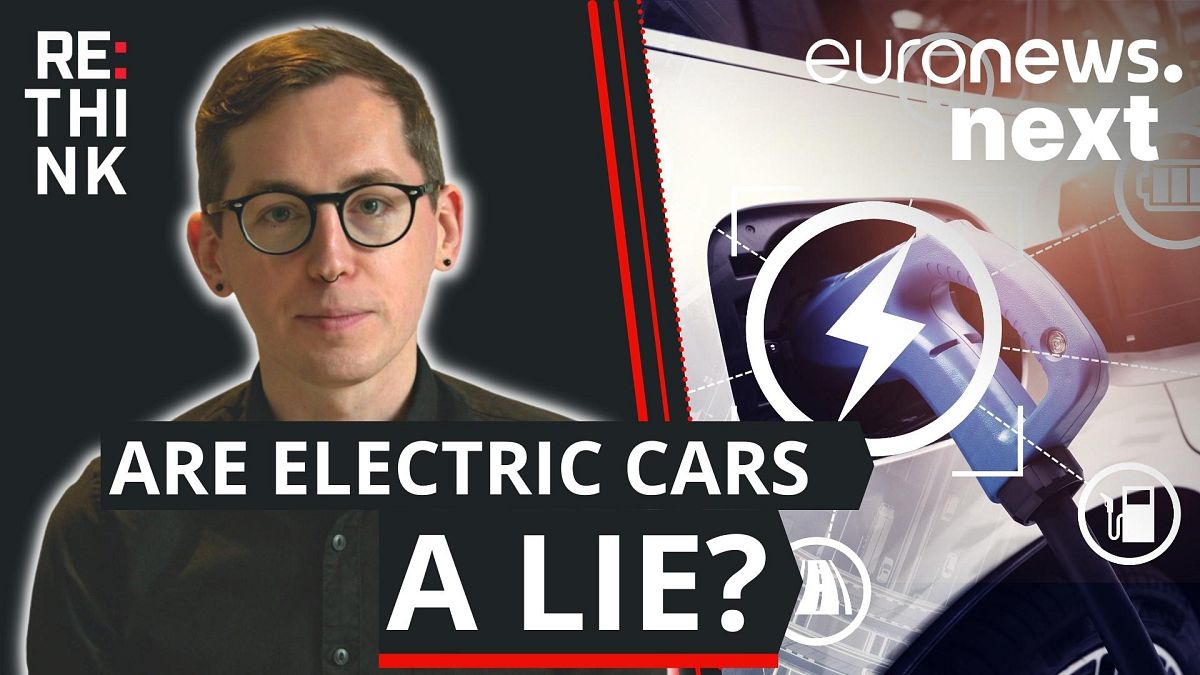
Tech companies and legacy carmakers, from Tesla to Volkswagen, promote electric cars as a direct, cleaner replacement for internal combustion engines. While EVs produce zero tailpipe emissions, their environmental footprint is merely displaced, not eliminated. "In order to create an electric car, a lot of minerals need to be mined and much of that will continue to happen in the global south," explains Paris Marx, author of 'Road to Nowhere'. "And those mines have incredible environmental and health impacts in the places that they exist." The extraction of lithium, cobalt, and other critical minerals presents a substantial ethical and ecological dilemma that the industry's marketing often glosses over.
This focus on a like-for-like substitution fails to address the root cause of transport emissions: the sheer volume of cars and the infrastructure built to accommodate them. Transport fundamentally shapes European societies. "It's how we get around, it's how we get to work, how we get to the shop, how we see the people that we care about," says Marx. The car has dictated urban planning for decades, leading to sprawling suburbs, congested city centres, and a decline in alternative mobility networks.
Rethinking Mobility, Not Just Motors
The solution, according to this analysis, is not to swap one type of car for another but to reduce car dependency altogether. The priority must be a significant reinvestment in comprehensive public transit, safe cycling infrastructure, and the creation of genuinely walkable urban spaces. Cities like Copenhagen and Amsterdam offer proven models, but the scale of change needed across Europe—from Lisbon to Helsinki—is immense. "Placing so much focus on the automobile and even now the electric automobile is not the way that we solve our mobility problems," Marx argues, "but rather it's time to invest in transit, in cycling, in walkable cities, to get people out of cars altogether."
This transition must also be equitable. A shift that primarily benefits affluent urbanites who can afford new EVs or live in neighbourhoods with new tram lines risks deepening social divides. "The mobility system is one piece of this, but we also need to pay attention to how it's in conversation with other systems within the city," Marx notes, "to ensure that the policies that we take to improve transportation are equitable for everyone, and not just the people who can afford to live in the areas where those improvements are made." Policies must consider peripheral housing estates, rural communities, and lower-income households to avoid a two-tier transport system.
The urgency for a broader perspective is underscored by reports like the recent Lancet Countdown on health and climate change, which highlighted how Europe's current trajectory exacerbates public health risks. Furthermore, the continent's coastal vulnerabilities, exemplified by Venice's existential fight against rising seas, serve as a stark reminder that half-measures in any sector, including transport, carry profound costs.
Internationally, Europe's stance on climate finance and technology transfer influences global negotiations. As COP29 climate finance talks face challenges, a European transport strategy that merely exports the EV model risks repeating unsustainable patterns worldwide. The debates in Baku, as with previous summits where donor disputes have stalled progress, reflect the complex geopolitics of a just transition that the EV narrative often simplifies.
Ultimately, the critique presented by Marx and others calls for a paradigm shift. It asks European policymakers and citizens to look beyond the showroom and the charging station, and to reimagine the very fabric of daily life. The goal is not a silent, electric traffic jam, but a diverse, accessible, and low-carbon mobility ecosystem where the car is an option, not a necessity. Achieving this requires political courage and public investment on a scale that matches the climate crisis itself, moving from a tech fix to a societal transformation.