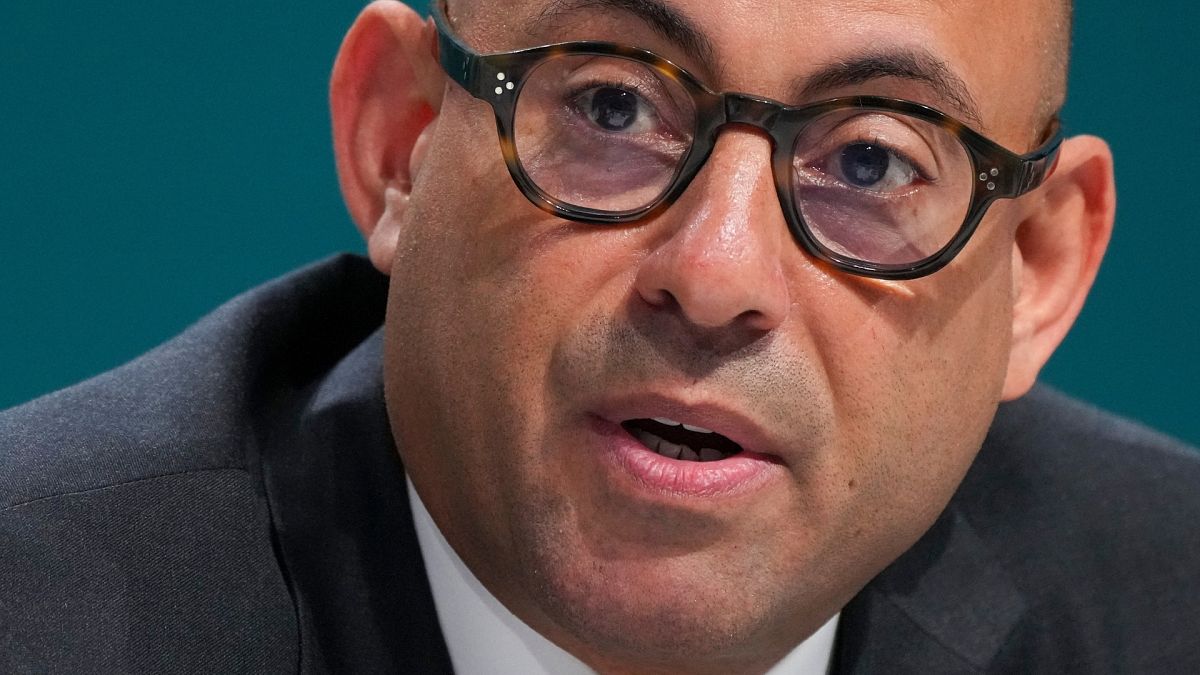
With just days remaining at the COP29 climate summit in Baku, Azerbaijan, the United Nations' top climate official has issued a stark warning that political posturing could sink a critical deal to finance the global energy transition. Simon Stiell, executive secretary of the UN Framework Convention on Climate Change (UNFCCC), told ministers that the entire multilateral process risks stalling or reversing if governments refuse to compromise.
"Bluffing, brinksmanship, and pre-meditated playbooks burn up precious time and run down the goodwill needed for an ambitious package," Stiell declared in his opening plenary address for the summit's decisive second week. He urged negotiators to "cut the theatrics," arguing that a failure to agree on a new collective finance goal would be "a recipe for going literally nowhere" and could set global climate efforts back.
EU Shifts from Binding to Voluntary Demands
The European Union, a traditional leader in climate finance, has notably softened its negotiating stance regarding major emerging economies. Ahead of the summit, Brussels had insisted that countries like China, Saudi Arabia, and the United Arab Emirates—whose wealth has grown substantially since the 1990s—should take on binding financial obligations under the new climate finance goal, known as the New Collective Quantified Goal (NCQG).
However, EU Climate Commissioner Wopke Hoekstra indicated a significant shift in Baku. "With affluence comes responsibility," Hoekstra stated, but added that "a potential solution could be to…move into a space of voluntary contributions." He emphasized that the EU would welcome such steps from countries that "find it difficult to leave that [developing country] category officially." This pragmatic move acknowledges the political reality that China and Gulf states are unlikely to accept legally binding donor status at this summit.
"The reality is that there will never, ever be enough public money – from any source," Hoekstra told reporters, underscoring the need to leverage private investment. "We are here to design a system that reflects these realities."
When pressed on whether this voluntary approach would also apply to traditional wealthy nations, including EU member states currently bound by the $100 billion annual pledge, Hoekstra said only that the bloc would "continue to stick with [its] commitments."
The Core Challenge: Defining Who Pays
The central task at COP29 is to establish a new, post-2025 annual finance target to help developing nations cut emissions and adapt to climate impacts. The negotiations have been deadlocked over which countries should contribute, the total sum, and the balance between grants and loans. The EU's adjustment on China represents a key attempt to break this impasse.
COP29 President Mukhtar Babayev, Azerbaijan's ecology minister, confirmed the wide divergence in proposals. "I think these discussions will continue until the last day," he said. "Today we are not ready to talk about any numbers."
Hoekstra pointed to carbon markets as one mechanism to mobilize private capital, referencing Article 6 of the Paris Agreement, which allows for international transfers of carbon credits. Azerbaijan touted a procedural breakthrough last week on standards for such a market, but substantial disagreements on its integrity and operation remain. As the Lancet Countdown report recently highlighted, the human and economic costs of climate inaction are mounting rapidly across Europe and globally, increasing pressure for a functional financial architecture.
The summit's outcome carries significant weight for Europe's strategic interests. A failed COP29 would undermine global climate governance, potentially leading to fragmented national policies that disadvantage European industries. Conversely, a robust finance deal could accelerate the global clean energy transition, creating markets for European technology. The negotiations also intersect with broader geopolitical tensions, as the EU navigates its complex relationship with Beijing. This comes as MEPs in Brussels debate the bloc's international posture on multiple fronts.
Stiell's urgent plea underscores that the technical negotiations have concluded; the remaining hurdles are purely political. With ministers now leading the talks, the success of COP29 hinges on whether major economies can move beyond symbolic positions. The EU's pragmatic concession on voluntary contributions may provide the necessary flexibility, but it also raises questions about the enforceability and scale of future climate funding. As the final days of negotiation begin, the world is watching to see if Baku can deliver a system capable of financing a just transition, or if brinksmanship will prevail, leaving the Paris Agreement's goals in jeopardy.