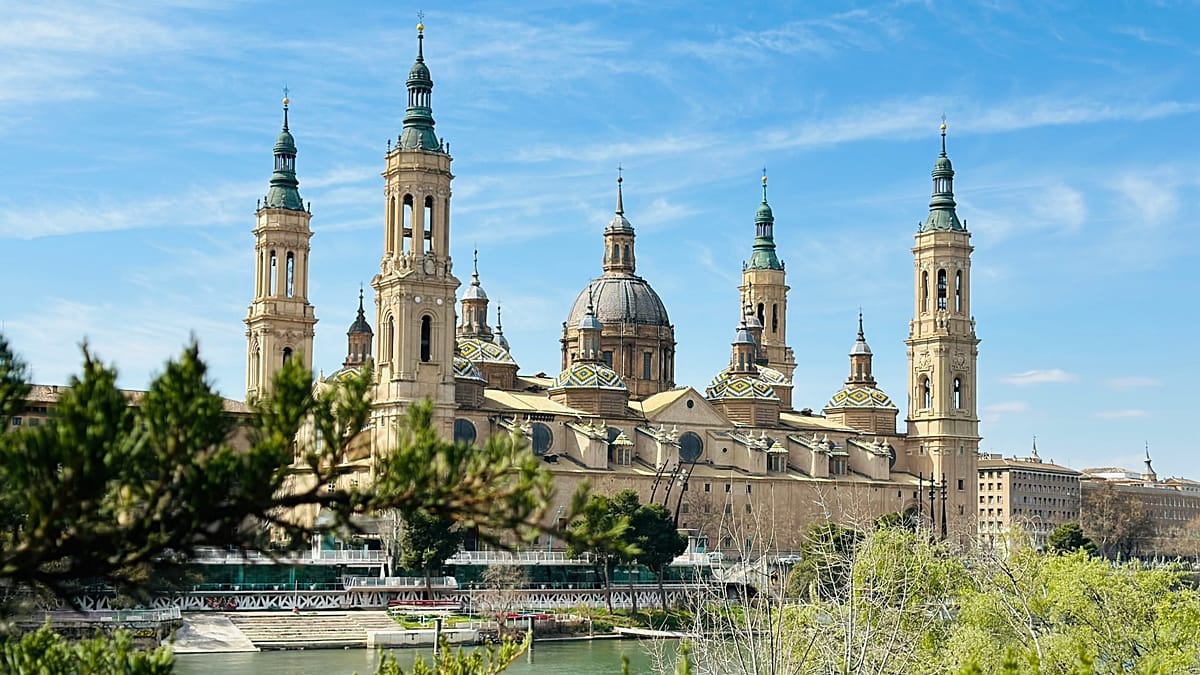
Zaragoza, the capital of Spain's Aragón region, has been crowned European Green Capital 2028, while Benidorm and Estarreja have jointly won the European Green Leaf 2028 title for smaller cities. The awards, announced on Thursday at a ceremony in Guimarães, Portugal, recognise municipalities that combine measurable environmental progress with improved quality of life for residents.
The European Commission's annual prizes, now in their 15th year, are among the most prestigious accolades for urban sustainability on the continent. This year's results mark a notable triumph for Spain and Portugal, with three of the five winning cities located on the Iberian Peninsula.
Zaragoza's winning formula
Zaragoza, which previously hosted the 2008 Expo on water and sustainable development, impressed the jury with its long-term commitment to tackling climate challenges. The city's Green Infrastructure Master Plan, which aims to maximise and connect green spaces across the urban fabric, was singled out for praise. The plan includes strategies to enhance urban biodiversity, expand green areas, and promote sustainable land use.
"Zaragoza has shown strong governance and a clear vision," said a European Commission spokesperson. "Its approach to integrating nature into the city is a model for others." The city will receive €600,000 to help turn its ambitions into further action.
Benidorm, on Spain's Mediterranean coast, was recognised for successfully managing the pressures of mass tourism while maintaining environmental protections and sustainable development. Estarreja, a Portuguese town that has transformed itself from an industrial hub into a green example, was praised as a "compelling example" of ecological transition. Both will receive €200,000 for green projects and public activities.
European context and judging criteria
The awards are open to cities with more than 100,000 inhabitants for the Green Capital title, and to those with populations between 20,000 and 100,000 for the Green Leaf. An independent panel of experts evaluated applicants on seven criteria: air and water quality, biodiversity and green space, waste and noise management, emissions reduction, and preparedness for climate threats such as extreme heat and flooding.
This year's shortlist included Aalborg (Denmark), Bielsko-Biała (Poland), Košice (Slovakia), Porto (Portugal), and Zaragoza for the main title, with Benidorm, Chiclana de la Frontera (Spain), and Estarreja competing for the Green Leaf. The strong showing by Spanish cities reflects a broader trend across the country, where urban planners are increasingly prioritising sustainability.
"Our cities are at the heart of Europe's environmental transition," said Jessika Roswall, European Commissioner for Environment, Water Resilience and a Competitive Circular Economy. "They are where we can turn policies into visible change by bringing nature back into our neighbourhoods to cool our streets, reduce air, water and noise pollution, and improve waste management."
Roswall congratulated all three winners, noting that many cities in Spain and Portugal are "true frontrunners in urban sustainability." She added: "I hope their experience will inspire many more European cities and accelerate the transition towards greener, more resilient communities."
Adapting to a hotter continent
The awards come as cities across Europe grapple with rising temperatures and more unpredictable weather. Urban planners are increasingly giving space back to trees, parks, and water. In Barcelona, for example, some streets have been closed to through traffic and converted into pedestrian zones, while Milan's Bosco Verticale towers demonstrate how greenery can be added even in dense urban settings.
In Breda, the Netherlands, a decade of civic involvement has transformed the city: concrete tiles have been replaced with grass and flower beds, and rooftop gardens now adorn homes and schools. Today, 60 per cent of Breda is green space, a factor that helped it become the EU's first National Park City in 2025.
For Spain, the awards add to a growing list of environmental achievements, though challenges remain. The country's high labour costs and housing pressures are separate issues, but urban sustainability is increasingly seen as a way to improve liveability and attract investment.
The winners will now use their prize money to fund concrete projects. Zaragoza plans to expand its green corridors and improve climate resilience in vulnerable neighbourhoods. Benidorm will invest in sustainable tourism initiatives, while Estarreja aims to further reduce its industrial footprint and enhance public green spaces.
As Europe's cities compete for these titles, the message from Brussels is clear: the green transition is not just about national targets, but about the places where people live, work, and play. The 2028 winners have set a benchmark that others will now aim to match.