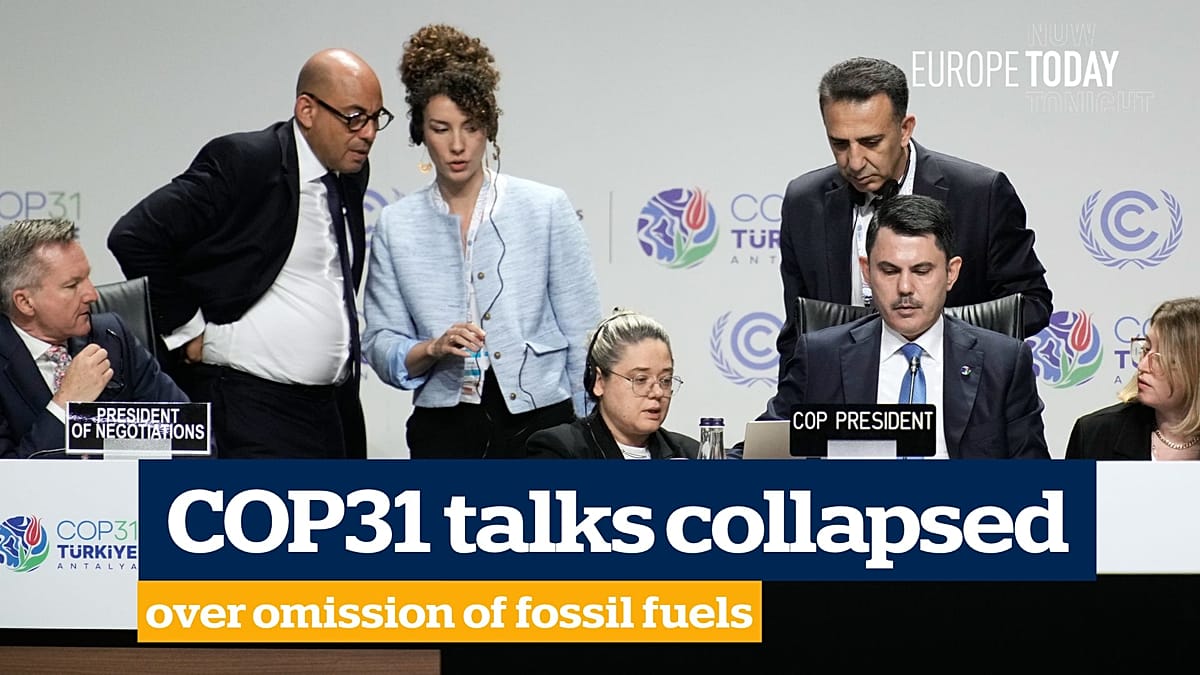
The COP31 climate summit in Antalya, Turkey, concluded in diplomatic disarray on Friday, as nearly 200 countries failed to reach a consensus after two weeks of negotiations and over 50 hours of overtime. The breakdown centered on two intractable issues: the future of fossil fuels and the scale of climate finance for developing nations.
The final draft text, circulated in the closing hours, notably omitted any direct reference to fossil fuels—a step backward from previous agreements that had at least acknowledged the need to transition away from coal, oil, and gas. The European Union, which had pushed for stronger language, rejected the draft outright, effectively scuppering any chance of a unified outcome.
Ciarán Cuffe, co-chair of the European Green Party, described the outcome as a profound disappointment. "We came to Antalya expecting progress, but we leave with a text that ignores the very core of the climate crisis," he said. "The EU cannot accept an agreement that pretends fossil fuels are not the problem. This is a failure of collective responsibility."
EU military readiness under scrutiny
The collapse of the climate talks was not the only pressing issue on the European agenda. With the next meeting of EU Chiefs of Defence just two days away, General Seán Clancy, Chairman of the EU Military Committee, spoke about the readiness of European armies to face a major military confrontation. "We are in a new era of strategic competition," Clancy said. "European forces must be prepared for high-intensity operations, and that requires sustained investment and closer integration."
His remarks come amid heightened tensions on the continent's eastern and southern flanks, particularly in the Black Sea region, where the war in Ukraine continues to reshape security dynamics.
Bulgaria and the Black Sea security dilemma
Adding to the security conversation, Bulgaria's Deputy Prime Minister, Atanas Pekanov, joined the discussion to explore how the conflict in Ukraine is altering Europe's security landscape. Pekanov highlighted the growing risks to maritime traffic in the Black Sea, which have put significant pressure on NATO's southeastern flank. "Bulgaria is on the front line of a new reality," Pekanov said. "We are working closely with our allies to ensure the security of our waters and the stability of the region."
The combination of a failed climate summit and an increasingly volatile security environment underscores the challenges facing Europe as it navigates a complex geopolitical landscape. The EU's rejection of the COP31 draft may be seen as a principled stand, but it also leaves the global community without a clear path forward on emissions reductions.
As the dust settles in Antalya, the focus now shifts to the next round of climate negotiations, where the EU will likely push for a more robust framework. Meanwhile, the security discussions in Brussels will continue, with European defence ministers set to deliberate on how to bolster the continent's military capabilities.
For now, the message from European leaders is one of resolve, even in the face of diplomatic setbacks. "We will not compromise on the future of our planet," Cuffe asserted. "The EU will continue to lead by example, regardless of the outcome in Antalya."