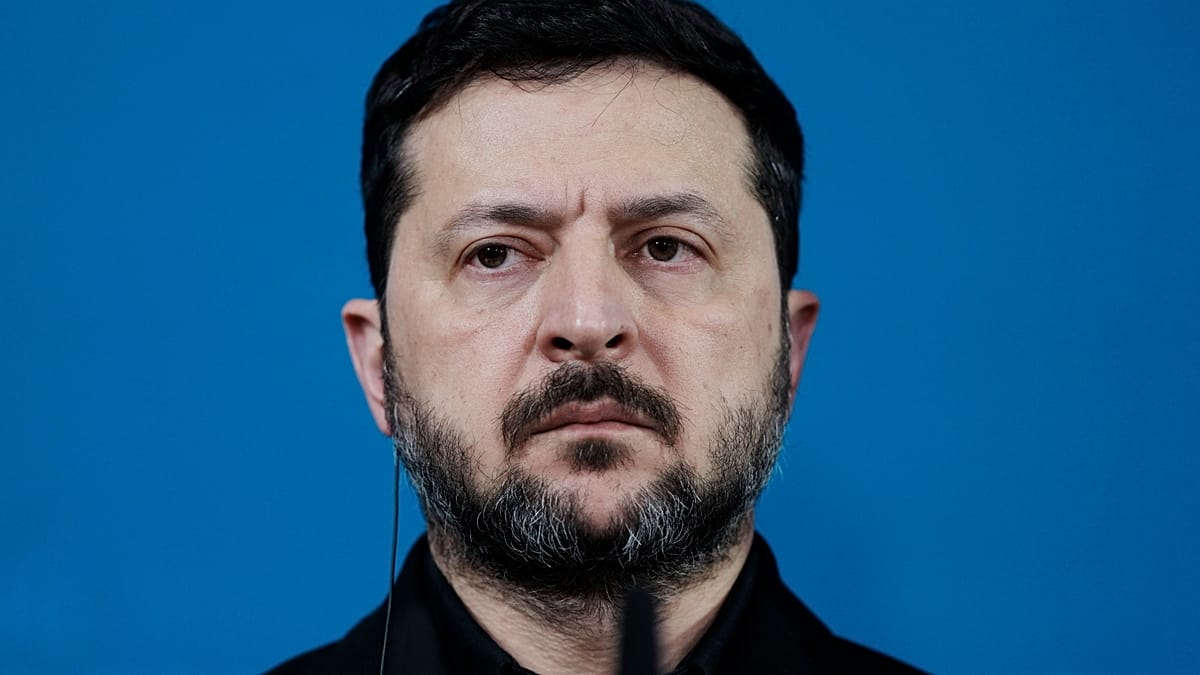
Volodymyr Zelenskyy has challenged the United States and its European allies to define what an Article 5-style security guarantee would actually mean for Ukraine, warning that another Russian offensive is a question of when, not if.
Speaking after a meeting of the so-called Coalition of the Willing in Berlin on Thursday, the Ukrainian president said the concept, floated since December, remains dangerously unclear. “I'm not sure we have a common acceptance of Article 5,” he told reporters. “What does it mean?”
The idea, modelled on NATO's collective defence clause, would commit signatories to treat an attack on Ukraine as an attack on themselves. But unlike full NATO membership, it has never been fleshed out. Peace talks stalled, and the proposal faded—until this week's gathering in the German capital revived it.
Kushner's assurances meet scepticism
US special envoy Jared Kushner, who attended the Berlin talks, said President Donald Trump was “open” to offering such a commitment to a post-war Ukraine. “From an American perspective, giving an Article 5-like security guarantee is a really, really big deal,” Kushner said, standing alongside Zelenskyy. “Obviously, it has to be in America's interest to do that. And we also have to make sure that it's part of a broader security package.”
Kushner claimed Russia had grown “comfortable” with the concept, though he conceded there was “a lot of scepticism and disbelief” in Moscow. He insisted the Russian intention was “to not have another war in the future”, and called for a renewed dialogue between Europe and Russia. “We have to work on a system of incentives and interests to make sure that whatever agreement we come to is something that will be kept, it will be monitored, there'll be huge deterrence, and there'll be massive consequences if it's ever violated.”
But Zelenskyy was not satisfied. In a later press conference, he pressed for specifics: would American troops be stationed on Ukrainian soil? Would the US establish bases? “What about American soldiers?” he asked. “Do you have an answer on it? Me not. For today. I don't know the answer.”
For such a guarantee to function, he argued, Washington and Europe must spell out their exact response to a new Russian assault. “What will partners do?” he said. “What happens if – sorry to be sceptical – not if, but when (Russians) will try to do it again? What will they do?”
Zelenskyy stressed that clarity was essential not only for governments but for the people, societies, and investors who would help rebuild Ukraine after the war. “All these people, they need clear answers.”
He reiterated that full NATO membership would remove all ambiguity, as Ukraine would automatically benefit from the real Article 5. That goal, long cherished in Kyiv and fiercely opposed by Moscow, has split allies. Some argue it is the surest way to deter future aggression; others warn it would needlessly provoke Russia.
French President Emmanuel Macron, who joined the Berlin talks, said Russia's “maximalist” demands warranted revisiting the question of Ukraine's NATO accession. The meeting ended with a declaration signed by Germany, France and the UK that contained a subtle reference to a potential Article 5-like guarantee.
The ambiguity is not just a diplomatic headache. As Berlin hosted the security talks, the gap between American and European positions on Ukraine's future security architecture remained wide. Poland has insisted that no peace deal can be made without Europe's say, while Trump has challenged Europe's aid commitments in a surprise call to allies.
For Zelenskyy, the clock is ticking. “It has to be clear not only to partners (but also) to people, societies, investors,” he said. Without concrete answers, he warned, the promise of protection rings hollow—and the next Russian attack may come before the ink dries on any agreement.