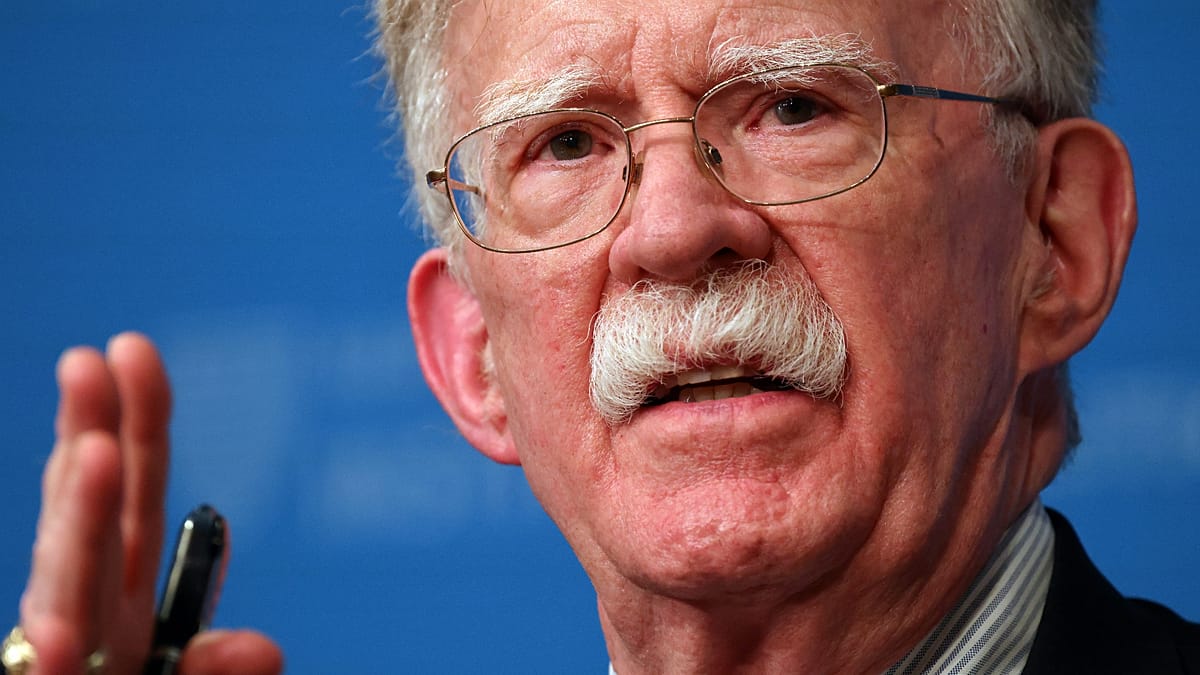
John Bolton, who served as Donald Trump's national security adviser from 2018 to 2019, has poured cold water on the idea that Thursday's trilateral meeting in Shenzhen between the American, Russian, and Chinese leaders marked a new global order. In an interview, Bolton dismissed the encounter as a mere photo-op, arguing that Moscow and Beijing walked away with the real gains.
A summit of symbols, not substance
Bolton rejected comparisons to the Yalta Conference of 1945, where the Allied powers redrew the map of post-war Europe. Instead, he framed the Shenzhen meeting as a carefully staged event designed to project an image of unity and power. "This was not Yalta 2.0," Bolton said. "It was a photo-op, pure and simple."
The former adviser pointed to Trump's well-documented admiration for strongmen, suggesting that the US president "envies the authoritarian figures" because they can act without the constraints of democratic checks and balances. "He sees Putin and Xi and thinks, 'They can do what they want,'" Bolton explained. "That's a level of freedom he doesn't enjoy."
Bolton's remarks come as European leaders watch the Shenzhen summit with a mix of concern and skepticism. The meeting, which brought together the leaders of the world's three largest military powers, has been interpreted by some as a challenge to the transatlantic alliance. For Brussels, Berlin, and Paris, the optics of Trump posing alongside Putin and Xi—both of whom have sought to undermine European unity—are troubling.
Ukraine on the sidelines?
Bolton also suggested that Ukraine was likely discussed during the encounter, even if it was not on the formal agenda. "It's entirely possible that Trump and Putin talked about Ukraine at some point," he said. "Trump has always believed he can strike a deal with Putin, and Ukraine is the obvious bargaining chip."
This comes amid reports that Trump has challenged Europe's Ukraine aid in a surprise call to allies, raising questions about Washington's commitment to Kyiv. European capitals, particularly Warsaw and Tallinn, have long feared that a Trump-brokered deal could come at Ukraine's expense. Bolton's comments will do little to ease those anxieties.
The summit in Shenzhen has already unsettled Asia, with Trump leaving without a meeting with Kim Jong-un, a move that analysts say reflects the shifting priorities of the US president. Meanwhile, Putin has called the talks a new diplomatic chapter, a framing that Bolton rejects as spin.
For Europe, the implications are significant. The trilateral summit signals a potential realignment of global power, with the US, Russia, and China potentially coordinating on issues that affect the continent—from arms control to trade. Yet Bolton's assessment suggests that the substance behind the symbolism is thin.
"Trump wants to be seen as one of the big guys," Bolton said. "But the big guys—Putin and Xi—know exactly how to play him. They gave him a stage, and they got what they wanted."
As European leaders digest the outcome of Shenzhen, they will be watching closely for any signs of a US-Russia deal on Ukraine that could bypass Brussels and Kyiv. The warnings from figures like Bill Browder about Putin's efforts to fracture European support for Ukraine add another layer of urgency to the debate.
For now, Bolton's blunt assessment offers a sobering counterpoint to the carefully choreographed images emerging from Shenzhen. The question for Europe is whether the photo-op will be followed by real consequences—or whether it will fade into the annals of diplomatic theater.