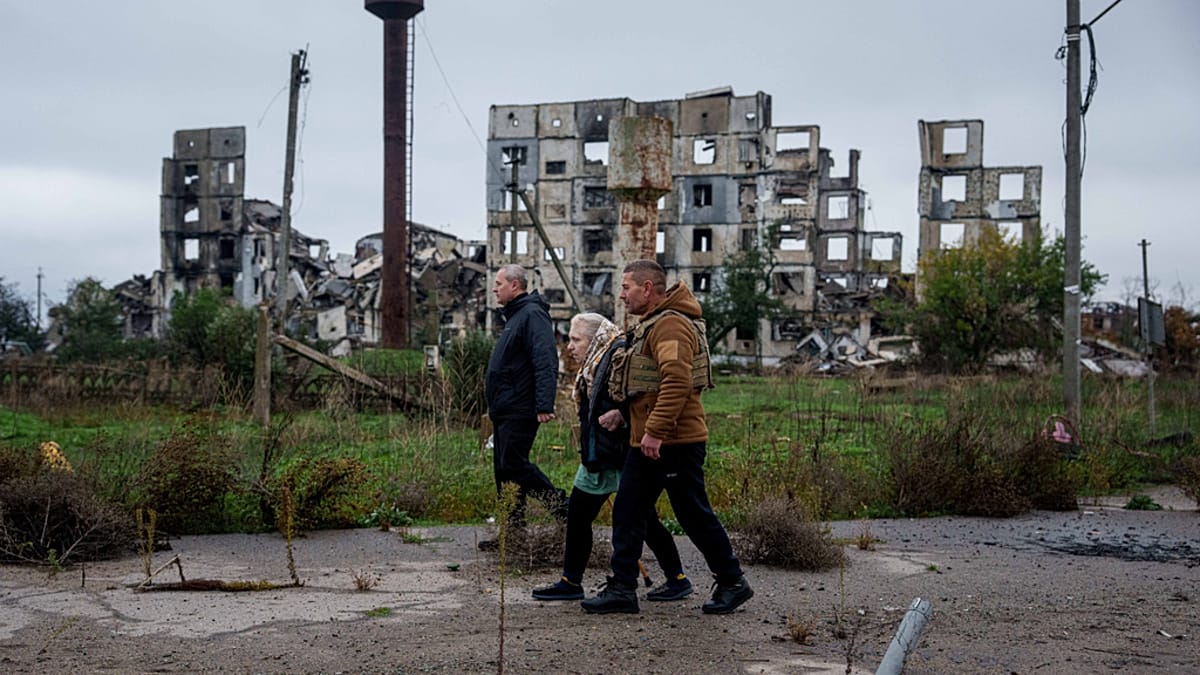
Ukrainian President Volodymyr Zelenskyy has put forward a plan for ten new humanitarian evacuation operations in the Russian-occupied parts of the Kherson and Zaporizhzhia regions, building on the recent ceasefire that allowed hundreds of civilians to leave the town of Oleshky. The proposal was discussed at a meeting on Tuesday, where officials reviewed the outcomes of trilateral talks held in Abu Dhabi.
In a social media post, Zelenskyy said: "Ukraine proposed another 10 locations in temporarily occupied areas of the Kherson and Zaporizhzhia regions where a similar humanitarian operation is required." He did not name the specific settlements, but confirmed that Ukraine's diplomatic delegation would present the plan to US mediators.
A fragile precedent in Oleshky
The Oleshky operation, which ran from 27 October to 1 November, was initiated by US First Lady Melania Trump. It established a safe corridor that allowed residents to leave the town, which has been under Russian control since early in the war. According to Melania Trump, nearly 800 people were evacuated in total. Those who chose to move to Ukrainian-controlled territory were transported via Gomel in Belarus to the Chernihiv region, while others reportedly opted to go to Russia. Neither Kyiv nor Moscow disclosed the exact breakdown of the numbers.
Ukraine later accused Russia of using the ceasefire to rotate its troops on the left bank of the Kherson region. Dmytro Lubinets, the Verkhovna Rada's Human Rights Commissioner, said he had agreed with his Russian counterpart Yana Lantratova to appeal to the US First Lady to extend the Oleshky model to other occupied settlements.
The proposal comes as Ukraine continues to face intense pressure on multiple fronts. The EU has recently stepped up its support, with Brussels unveiling a €45bn loan backed by joint EU debt to help stabilise the country's finances. Meanwhile, the EU is preparing a 22nd sanctions package as Russia targets Ukraine's energy infrastructure ahead of winter.
Russia's parallel proposal
During his meeting with Donald Trump and US envoy Steve Witkoff in the Kremlin on 12 November, Russian President Vladimir Putin made a similar suggestion, proposing a humanitarian operation in Kostiantynivka in the Donetsk region, which he claimed was under Russian "control".
Ukrainian presidential adviser Dmytro Lytvyn dismissed the proposal, suggesting Russia was likely seeking a ceasefire there for the same reason as in Oleshky — to rotate its troops. Ukrainian military statements and open-source intelligence research indicate that Russian forces occupy only parts of the city's eastern and south-western outskirts, with a significant portion in a contested zone and another part held by Ukraine's armed forces.
The situation on the ground remains fluid, and any new evacuation corridors would require careful negotiation. Ukraine's push for more humanitarian operations reflects its broader strategy to protect civilians while also exposing Russian tactics. As the war grinds on, Ukraine has turned to flying stretchers to rescue wounded soldiers from the front lines, highlighting the urgent need for innovative solutions.
The proposal for ten new evacuation zones is likely to be a key topic in upcoming discussions with US mediators. Whether Moscow will agree to such operations remains uncertain, given its history of using ceasefires for military advantage. For now, the international community watches closely as Ukraine seeks to extend a fragile humanitarian precedent to other embattled communities.