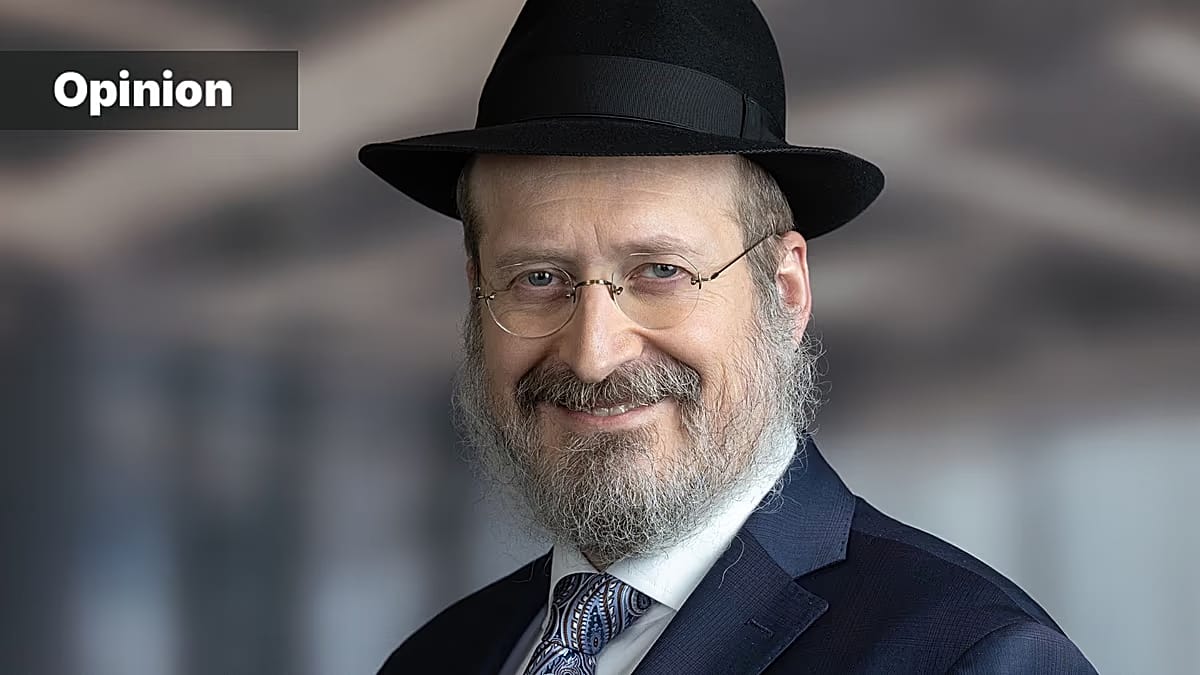
At the Antalya Diplomacy Forum, a gathering of ministers, diplomats, and security officials, Rabbi Mendy Chitrik stood out. Wearing a kippah, he was an unexpected figure in the corridors of power. A senior US official remarked, not unkindly, that he had not anticipated seeing a rabbi there. For Chitrik, this moment of surprise was a reminder of how much the region’s Jewish heritage is often overlooked.
Jewish communities have been part of Anatolia for millennia. Twenty kilometres from Belek, the ancient city of Side holds a seventh-century synagogue excavated by Professor Feriştah Alanyalı of Anadolu University. Its floor bears an engraved menorah and an inscription in Hebrew and Greek: Joseph of Korakesion (modern Alanya) renovated the synagogue in memory of his son Daniel, who died at two and a half. The text ends with a single word: Shalom. A rescue excavation in Kaleiçi, Antalya’s Old Town, uncovered a marble colonette carved with a menorah, published by Mark Wilson in Adalya in 2020. Jewish presence here spans from the second century BCE through late antiquity, and Chitrik hopes to read Torah in a local synagogue this November.
The first hours of the forum were slow. The kippah drew glances—some amused, some frowning—and many walked on. That experience is not unfamiliar in parts of Europe today. But the dynamic shifted when the Qatari delegation engaged openly with Chitrik. Others read this as permission. By the second day, those who had avoided eye contact approached to introduce themselves. Daniel Levy, the former Israeli peace negotiator, had noticed him from the start and soon they were tracing shared synagogue connections in North London.
At a dinner hosted by President Recep Tayyip Erdoğan and Foreign Minister Hakan Fidan, Chitrik spoke with leaders from across the region, including the Emir of Qatar and President Sharaa of Syria, whom he thanked for protecting the Jewish community in Damascus from a recent bomb threat. Some conversations were difficult, with rhetoric that was hard to hear. Yet Chitrik came away with practical outcomes: he hopes to return to Damascus and Doha soon. The Alliance of Rabbis in Islamic States already supplies kosher food to Syria’s Jewish community, and that work will expand. Doha has its own emerging communal needs. A dinner like this does not produce agreements; it produces the next visit.
The Courage to Speak After Fracture
Since October 7 and the war in Gaza, much has fractured. Relationships that once felt natural have gone silent. The suffering in Gaza shapes how many across the region understand this moment. In the West Bank, recurring violence against civilians has deepened fear and mistrust. These actions travel and erode what little trust remains. At times, it feels as if the bridges between communities have been taken out one after another, like the bridges along the Litani in Lebanon.
In Belek itself, one kilometre from the NEST conference centre, a modern religious complex built in 2005 includes a synagogue alongside a church and a mosque. Jewish life in this region is older than the current conflicts. It has not ended. In November, COP31 will bring tens of thousands of delegates to Antalya. Chitrik plans to be in Belek during the conference to provide kosher meals, welcome Shabbat in that synagogue, and, if a minyan gathers, read from the Torah scroll he carries. A space built twenty-one years ago will do what it was built to do.
After a ceasefire, there is a lull. Not peace, but a pause. In that pause, a simple question: what now? Hillel asked this too: If not now, when? Across Europe and the Middle East, that question is being asked in different languages. For many, the instinct is to withdraw. Chitrik argues that we need to speak. Without speaking, there is no way forward. But it cannot remain words; it must be followed by action. We are destined to live together, and we have a responsibility to make that possible.
During the days of the Omer, Jews count toward Sinai. The counting is the discipline; you cannot skip ahead. Ben Azzai taught: do not dismiss any person, do not disregard any thing. Every person has his hour. The teaching is not about agreement; it is about recognition. On Friday evening at the hotel in Antalya, Chitrik welcomed Shabbat with an American Jewish journalist who has found a home in Istanbul’s Jewish community. The next night they made Havdalah together. At that table were people who do not see every question the same way. The table held them anyway.
This story resonates beyond the forum. As Turkey hosts middle powers in Antalya amid shifting trade routes, the need for dialogue across divides is urgent. Similarly, Qatar’s role in urging diplomacy highlights how small states can facilitate conversations. In Europe, where communities are increasingly polarized, Chitrik’s message is a reminder that even small moments of dialogue can begin to rebuild fragile bridges.