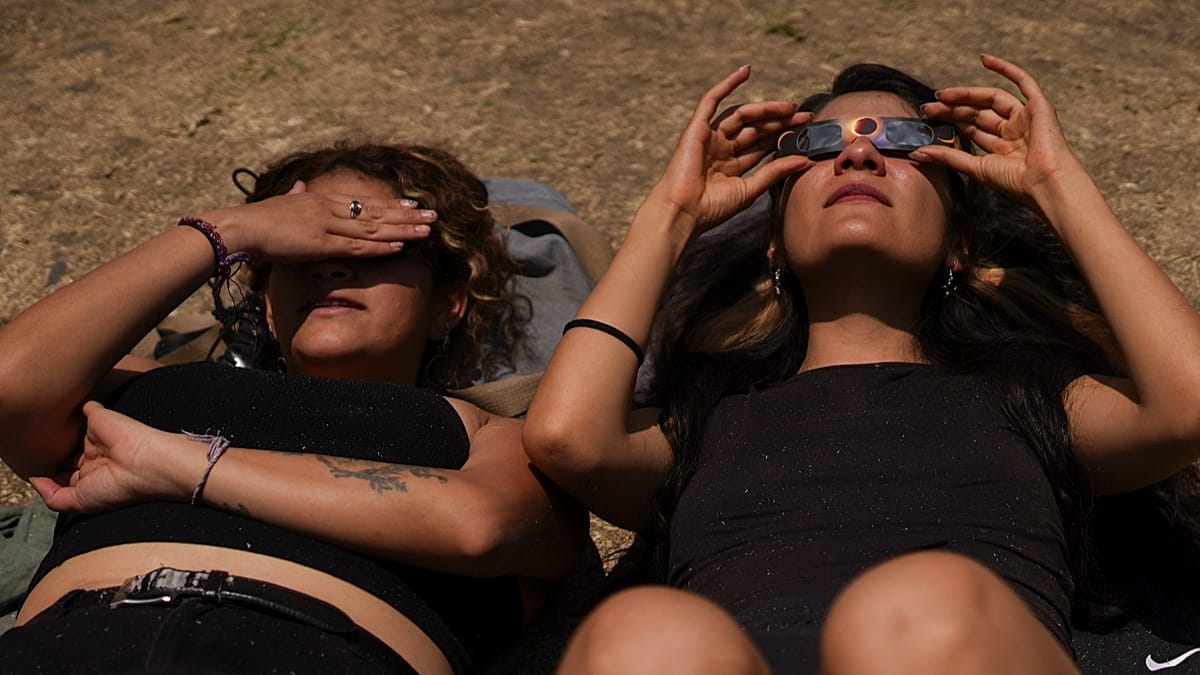
Millions of people across the Iberian Peninsula witnessed the first total solar eclipse visible from the region since 1912, an event that drew eyes skyward from Lisbon to Barcelona. But in the aftermath, ophthalmologists are fielding concerns from those who may have accidentally glanced at the Sun without adequate protection. The question on many minds: how do you know if your eyes are truly damaged?
Dr Laura Sararols, head of the Retina Unit at Hospital General de Granollers and head of service at OMIQ in Hospital Universitari General de Catalunya, explains that not all symptoms carry the same weight. The first, and usually benign, issue is dry eye. Staring at the eclipse—even with certified glasses—can reduce blinking, leaving eyes feeling gritty, dry, or as if a foreign body is present. This is temporary and easily relieved with artificial tears, Sararols assures.
The more serious condition is solar retinopathy, or solar maculopathy, which occurs when direct solar radiation damages the retina, particularly the macula responsible for central vision. Unlike dry eye, this injury is painless at the moment of exposure. "At the moment when you are looking at the light you do not notice anything. There is no pain, you do not feel anything," Sararols notes.
Warning signs to watch for
The key symptom to take seriously is a change in central vision. Sararols describes it as "a kind of black patch, an area that does not focus or a greyish patch that is always in the same place." Blurred vision, distorted images, and difficulty distinguishing colours are also red flags, according to the Healthcare Management of Soria in Castile and León.
These symptoms differ markedly from the temporary discomfort of dry eyes. A gritty feeling or dryness is likely due to reduced blinking, but a persistent spot in the centre of your vision demands immediate attention.
Importantly, symptoms may not appear right away. Sararols warns that solar maculopathy can manifest "the next day or two days later," so anyone who looked directly at the Sun without protection should remain alert for changes over the following days. This is especially critical for children, who may not admit to having looked at the Sun. "Children are not going to tell us they were looking at the eclipse and did what they were told not to do," she says, urging parents to seek specialist advice if a child reports vision problems.
How much exposure is dangerous?
Even a few seconds of direct viewing can be enough to cause a phototoxic injury to the fovea, the centre of the macula. That is why experts stressed the use of certified solar viewing glasses before the event. The highest-risk moment came just before and after totality, when the Sun's reappearance caught some people off guard. "Very quickly you can see the Sun's light again and that is the moment of greatest risk," Sararols explains.
For those who filmed the eclipse on their phones, the risk is not in the act of recording itself but in whether they looked directly at the Sun while setting up or adjusting the device. "If you set your phone in position, press record and then look at the screen, nothing happens," Sararols clarifies. However, using binoculars, telescopes, or cameras with optical viewfinders without solar filters concentrates radiation and significantly increases the risk of eye injury.
As Europe looks ahead to the next celestial events, including the exact times for the 12 August eclipse, the lesson from this week is clear: protect your eyes, and if you notice any persistent visual disturbance, see a specialist promptly. For those who missed the spectacle, many in Spain will miss the next one, but the advice remains timeless.