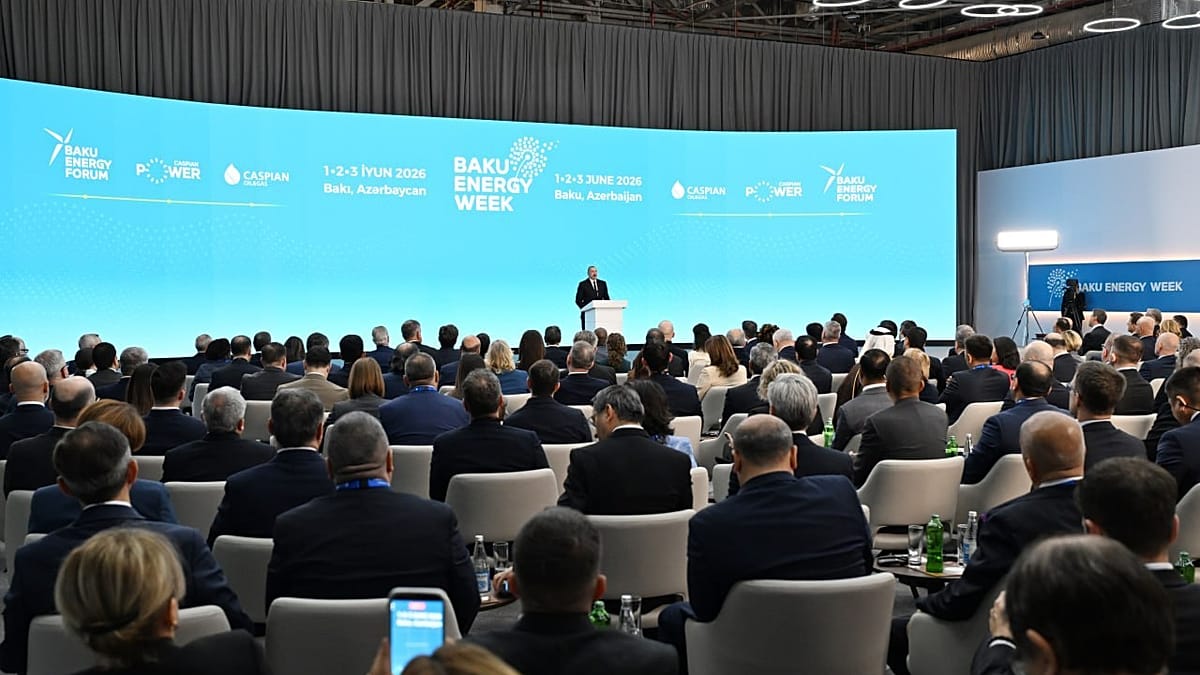
At the Baku Energy Forum, energy executives and policymakers underscored the growing importance of the Southern Gas Corridor and the Middle Corridor as strategic energy transport bridges linking the Caspian region to Europe. These routes, which offer alternatives to Russian gas, are becoming increasingly critical amid geopolitical disruptions. However, speakers stressed that their long-term viability depends on substantial investments in logistics connectivity and digital infrastructure.
AI and Digitalisation Reshape Energy Transport
The forum highlighted how artificial intelligence and new digital technologies are transforming the efficiency and security of these energy corridors. Digital pipeline monitoring systems, predictive maintenance platforms, and intelligent operational technologies are now being deployed to reduce costs and improve reliability. BP’s Regional President for Azerbaijan, Georgia and Turkey, Gio Cristofoli, told Euronews that the existing infrastructure—including the BTC and SUPSA pipelines—already provides a foundation for diversification, but that innovation is essential for future capacity.
“We are using AI to enhance seismic data to really see where we can drill wells,” Cristofoli explained. “We are bringing the latest technology in drilling, using robotics and drones for inspection systems where human beings cannot go. Technology is really the key to unlock volumes for years to come.”
The Middle Corridor, which connects Asia to Europe via railways, ports, and pipelines, is also benefiting from these advances. Business leaders at the event noted that automation and intelligent infrastructure management are critical to handling rising demand while keeping operational costs in check.
Strategic Agreements and Investment Commitments
Azerbaijan’s State Oil Company SOCAR used the forum to announce several strategic agreements. A major one involves a Southern Gas Corridor-linked project to export Azerbaijani gas to Turkey. SOCAR also signed memorandums of understanding with Shell and JPMorgan for future cooperation and financing of strategic projects. Edward Strachan, General Director of ICA Events, noted that “billions of dollars worth of contracts were signed during the opening of the Baku Energy Forum, which are deals that have been built over years of cooperation and discussions.”
These developments come as Europe seeks to reduce its reliance on Russian energy, a shift that has accelerated since the invasion of Ukraine. The European Union has been exploring multiple avenues to secure alternative supplies, including the Southern Gas Corridor, which already delivers gas from Azerbaijan to Italy and other member states. The Southern Energy Corridors to Reshape Europe's Gas Supplies report from the forum highlighted the potential for further expansion.
Digital Transformation in Historical Context
Emin Sevdimalıyev, media secretary at SOCAR, reflected on how far the industry has come. “When we first started in the 1990s, the landscape was absolutely different,” he told Euronews. “Twenty or thirty years ago we could only dream about innovations like cloud computing or AI.” This digital shift is not only improving operational efficiency but also enhancing security along the pipelines, which traverse multiple countries and require constant monitoring.
The forum also touched on broader challenges facing Europe’s energy transition. While renewable energy is expanding rapidly, grid bottlenecks remain a significant hurdle. A recent analysis noted that Europe's €100 Billion Clean Energy Queue is stalled by inadequate infrastructure, underscoring the need for integrated digital solutions across the entire energy system.
Geopolitical and Economic Implications
The Baku Energy Forum took place against a backdrop of heightened geopolitical tensions. The conflict in Iran and ongoing instability in the Middle East have driven energy price shocks across Europe, as highlighted by the EBRD's recent growth forecast cut. In this context, the Southern Gas Corridor and Middle Corridor are not just commercial projects but strategic assets for European energy security.
As the continent pushes toward net-zero emissions, the role of natural gas as a transition fuel remains contentious. However, for countries like Italy, which has sought limited fiscal flexibility on energy costs, reliable gas supplies are a near-term necessity. The investments announced in Baku aim to ensure that these corridors can meet growing demand while integrating advanced technologies to minimize environmental impact.
In summary, the Baku Energy Forum reinforced that AI and digital systems are no longer optional but central to the future of energy transport corridors linking the Caspian to Europe. With billions in new contracts and a clear focus on innovation, the region is positioning itself as a key hub in Europe’s diversified energy landscape.