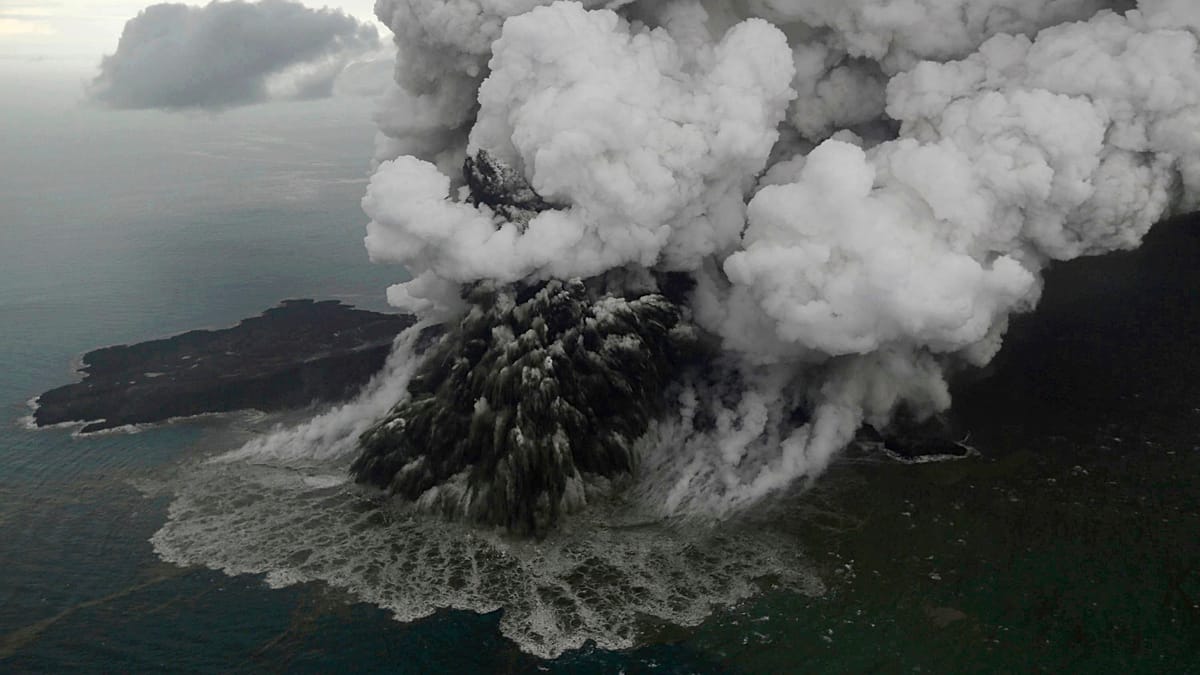
Mount Anak Krakatau, one of Indonesia's most active volcanoes, erupted over the weekend, sending a dense column of ash into the skies and forcing the suspension of flight operations across the country's most populous region. The disruption has left tens of thousands of travelers stranded, with authorities extending closures at Jakarta's Soekarno-Hatta International Airport and three other hubs until 6 p.m. local time (1100 GMT) on Monday.
The volcano, located roughly 150 kilometers west of the capital in the Sunda Strait, began its latest eruptive phase on Saturday. The national geology agency reported that the eruption produced lava flows and towering plumes of ash that drifted into the flight paths of several airports, prompting the transport ministry to halt operations at eight facilities over the weekend. In total, hundreds of flights were canceled, and more than 170,000 passengers were left waiting for rescheduled departures.
Airport operator Angkasa Pura announced the extended suspension on social media, citing the ongoing volcanic activity. "In connection with the increasing eruption activity of Mount Anak Krakatau, flight operations at several airports have been suspended; passengers are advised to regularly monitor their flight status with the respective airlines," the company said. The statement also confirmed that Halim Perdanakusuma, a smaller airport in Jakarta that handles both commercial and military flights, would remain closed through the same period.
Volcanic history and ongoing risk
Anak Krakatau, whose name means "Child of Krakatau," emerged from the sea in the early 20th century within the caldera left by the cataclysmic 1883 eruption of Mount Krakatau, one of the deadliest volcanic events in recorded history. The volcano has been sporadically active ever since, and its eruptions have occasionally disrupted air travel in the region. The current episode, however, has been particularly intense, with the geology agency warning that the likelihood of further eruptive activity remains high through Monday morning.
The extended closures have created a logistical nightmare for travelers, many of whom are stranded at airports across Java and Sumatra. Local media reported long queues at ticket counters and crowded terminals as passengers sought alternative arrangements. Some have turned to ground transport, but the sheer scale of the disruption has overwhelmed available options.
For European travelers, the situation is a reminder of how volcanic ash can ripple across global aviation. In 2010, the eruption of Iceland's Eyjafjallajökull grounded flights across Europe for nearly a week, affecting millions of passengers. While the current disruption is localized to Indonesia, it underscores the vulnerability of air travel to natural events—a concern that has also been raised by warnings about unsafe skies in other parts of the world.
Indonesia sits on the Pacific Ring of Fire, an area of intense seismic and volcanic activity. The country has more than 120 active volcanoes, and eruptions are a recurring challenge for its aviation industry. In recent years, ash clouds from Mount Merapi and other peaks have repeatedly forced airport closures, highlighting the need for robust contingency planning.
As of Monday morning, the geology agency had not reported any casualties or major damage from the eruption itself, but the economic impact is already significant. The closures have disrupted not only passenger travel but also cargo operations, affecting businesses that rely on air freight. The transport ministry said it would continue to monitor the situation and update the public as conditions evolve.
For now, passengers are being urged to stay in contact with their airlines and to avoid unnecessary travel to affected airports. The extended closure at Soekarno-Hatta, which handles more than 40 million passengers annually, is a major blow to Indonesia's connectivity, and it remains unclear when full operations will resume.
The eruption also serves as a stark reminder of the power of nature, even as scientists work to improve early warning systems. In Europe, researchers are studying volcanic activity closer to home, such as the renewed seismic activity beneath Germany's Eifel region, to better understand the risks. While the immediate focus is on Indonesia, the lessons learned here could help mitigate future disruptions elsewhere.