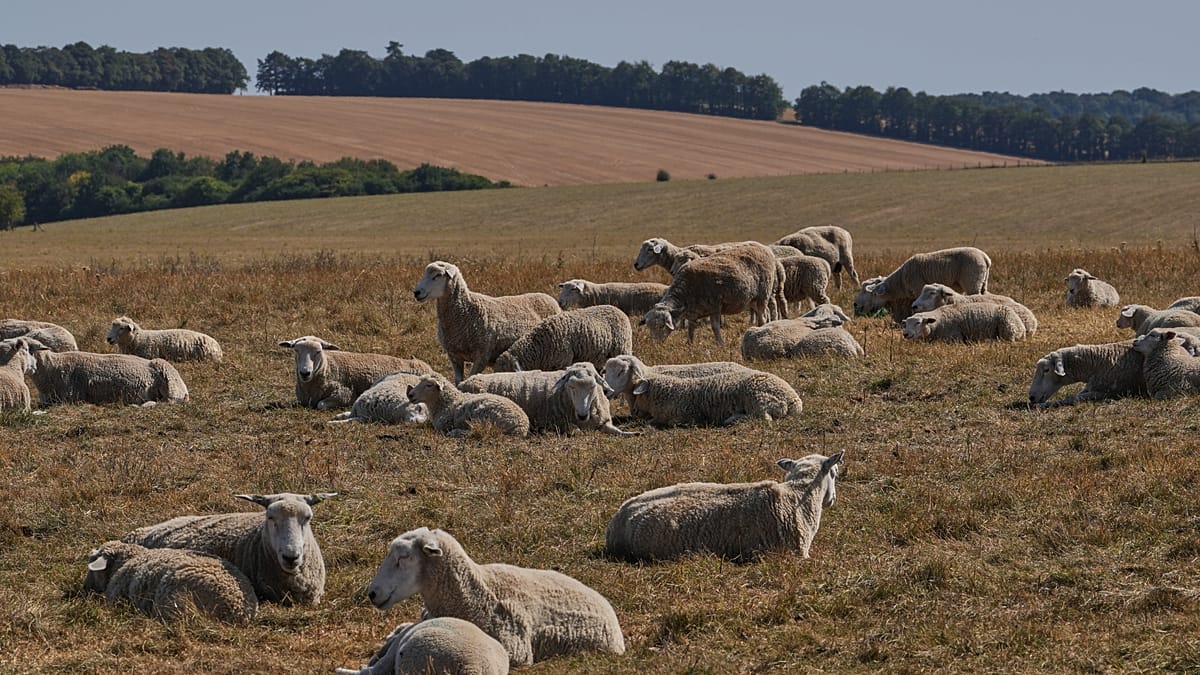
In the Middle Ages, European scribes wrote on parchment made from the skins of sheep, goats, and cattle. Now, an international team has discovered that these animal-derived pages hold more than just text—they contain genetic traces of a deadly sheep virus that has plagued flocks for thousands of years.
Led by scientists at University College Dublin, the researchers extracted DNA from the skin of centuries-old manuscripts, revealing the presence of the sheep pox virus, a highly contagious disease that causes fever, skin lesions, and often death in sheep. The findings, published in Science Advances, offer a rare glimpse into the ancient history of a pathogen that continues to affect livestock today.
Parchment as a time capsule
Parchment, a writing material made from animal skin, was the primary medium for European manuscripts throughout the medieval period. The team analyzed a range of documents, including the 1,000-year-old York Gospels, a masterpiece of late Anglo-Saxon illumination, and the Corpus Glossary at Corpus Christi College, Cambridge, considered one of the earliest English dictionaries. Other texts came from across Britain and continental Europe.
“The recording of ancient DNA of pathogens has completely changed our understanding of infectious disease in the past, and here we show that parchment can also preserve animal pathogen DNA,” said Louis L’Hôte, lead author of the study. The discovery suggests that archives and libraries worldwide may hold hidden genetic records of past animal disease outbreaks.
Sheep pox is a serious economic threat, causing reduced milk production, poor hide and wool quality, and trade restrictions. While it does not infect humans, it can devastate flocks, making its historical impact significant for agrarian societies.
In some cases, multiple pages from the same manuscript contained sheep pox virus DNA, indicating that infected animals were used to produce the parchment. This finding underscores the potential of parchment as a source of ancient pathogen genomes.
By combining the manuscript DNA with older samples from Bronze Age sheep teeth, the researchers traced the virus back over 3,700 years. “Ancient genomes can help us understand how these pathogens affecting us today evolved,” L’Hôte explained. “We find that unlike the smallpox virus, the sheeppox virus genome was very stable over the last few millennia.”
This stability is intriguing. “This might mean that genetic changes before this point were very important to how the sheep pox virus evolved to infect its host, which may help us fight the pathogen in the future,” he added.
The study highlights the value of combining historical documents with modern genomics to reconstruct the evolutionary history of diseases. As researchers continue to mine parchment collections across Europe, they may uncover more clues about how pathogens and their hosts have interacted over centuries.
For those interested in how ancient practices and modern science intersect, the ancient horse-milk drink thriving in modern Kazakhstan offers a parallel story of tradition meeting innovation. Similarly, the longevity genes of bats are providing new insights into disease resistance, much like the ancient DNA from parchment is reshaping our understanding of viral evolution.
The research also underscores the importance of preserving historical artifacts, not just for their cultural value but for the biological information they may contain. As L’Hôte noted, “It is possible that archives and libraries around the world also contain the genetic traces of disease outbreaks in animals in the past.”