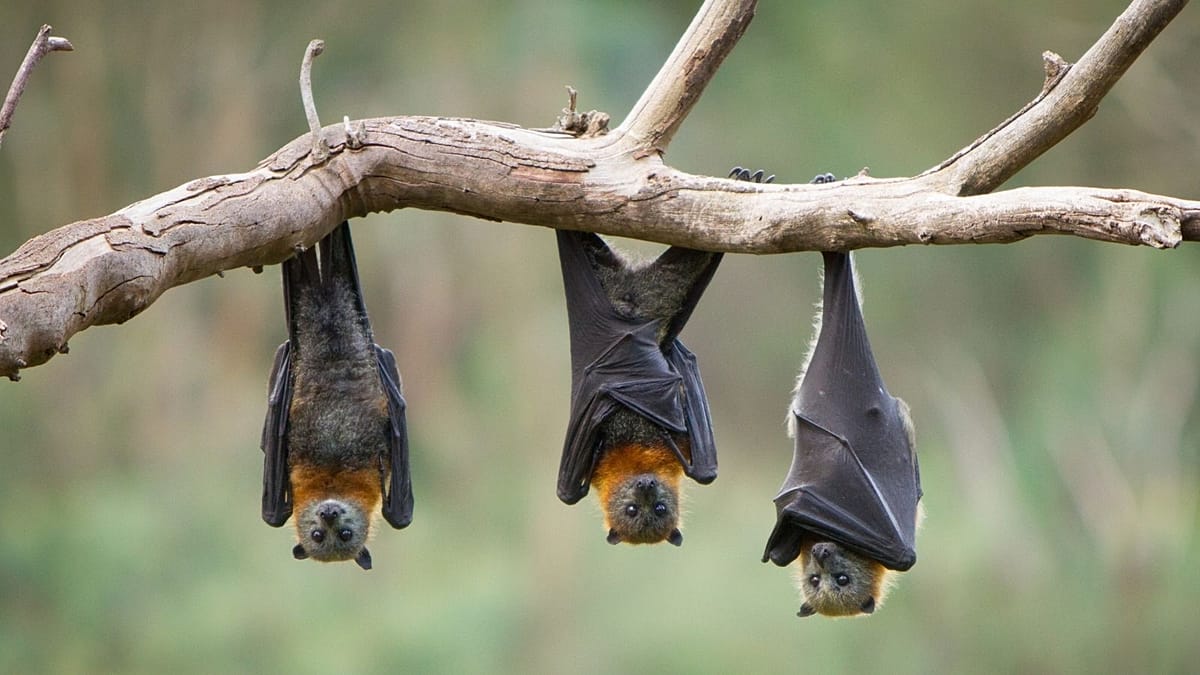
Bats are among the most resilient mammals on the planet: they live far longer than animals of similar size, tolerate viruses that are deadly to humans, and rarely develop cancer. Now, scientists are asking whether these remarkable traits could be harnessed to improve human health.
A study published in the journal Nature has mapped the genomes of eight bat species and identified the genetic mechanisms that allow them to slow aging and fend off disease. The findings suggest that the same biological pathways that protect bats from infections also shield them from the ravages of old age.
“Bats have evolved this incredible fitness capacity, this incredible ability to deal with disease and this incredible ability to be able to prevent cancer,” said Juan Manuel Vazquez, the study's lead author at the University of California, Berkeley. “That means that, by understanding how bats have evolved to do all these things that other mammals haven’t, we can find completely new and unexpected ways of dealing with the normal things that cause human diseases.”
What makes bats so special?
Vazquez and his team traveled to capture, biopsy, and release bats from various species, building a collection of cell cultures from 259 individuals representing 32 species. They focused on the Myotis genus, which includes some of the longest-lived bats, such as Brandt’s bat (Myotis brandtii), which can survive up to 42 years.
One of the key findings is that long-lived bats have evolved enhanced mechanisms to clear out damaged cells before they can become cancerous. For example, the little brown bat (Myotis lucifugus) has an unusually robust ability to remove senescent cells—cells that have stopped dividing and can contribute to aging and tumor formation.
Another crucial adaptation involves the immune gene PKR. Most Myotis species have duplicated this gene, giving them extra copies that help them recognize and respond to a wider range of viruses.
A different strategy: viral tolerance
Bats are known as zoonotic reservoirs—they can carry viruses that are dangerous to humans without falling ill themselves. This is due to a strategy called viral tolerance, which differs from the typical immune response seen in most mammals.
While most animals use “resistance” to fight off pathogens by trying to eliminate them, bats have evolved to tolerate viruses. They suppress the damaging inflammation and cellular stress that would normally kill other mammals, allowing the virus to coexist without causing harm.
For RNA viruses—the type responsible for outbreaks like COVID-19—bats often adjust the number of immune genes they have, evolving extra copies to broaden their defenses.
Implications for human health
The study's authors believe that understanding how bats achieve these feats could provide a roadmap for tackling human diseases. Because bats have evolved natural solutions to problems like cancer and cellular decay, they offer a unique window into how these processes might be managed in people.
Vazquez noted that bats' longevity without disease suggests that aging and infection are not entirely separate fields. “We can look at these bats and try to understand how, in the same way you can improve your immune system to fight off viruses, maybe you can improve your immune system so it doesn’t decline in old age,” he said.
He added: “Or maybe bats can help us find ways to fight off tumors so our immune system doesn’t get tired, and that can also help us deal with other stresses of life and not exhaust our immunity.”
The research adds to a growing body of work on the biology of aging, including studies on centenarians' immune cells that are uncovering why some people live past 100. It also connects to broader efforts to understand how extreme environments shape health, such as the health impacts of extreme heat.
While the findings are still far from clinical applications, they highlight the potential of looking to nature for novel solutions to human disease. As Vazquez put it, “We don’t necessarily need to look at diseases of ageing and diseases of infection as completely separate fields.”