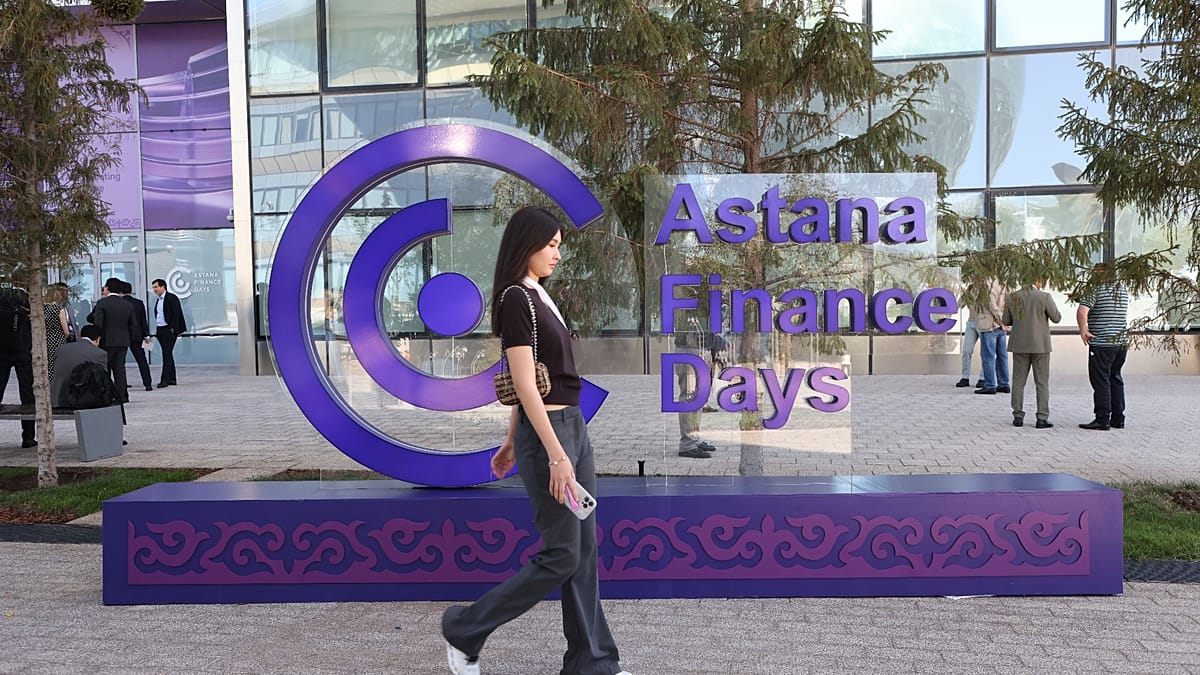
The annual Astana Finance Days forum concluded in Kazakhstan's capital, bringing together roughly 8,000 delegates from 90 countries. Organised by the Astana International Financial Centre (AIFC), the event has grown steadily since its inception; last year it attracted 5,500 participants from 82 nations. This year's edition featured representatives from major global financial institutions and asset managers who collectively oversee more than €22 trillion.
The programme concentrated on capital markets, investment products, regulatory frameworks, and cross-border cooperation. Renat Bekturov, Governor of the AIFC, framed the gathering as a response to intensifying competition for capital. "Today, competition for capital requires not only attractive conditions but also the ability to transform opportunities into real projects and investments," he said. "This is the essence of Astana Finance Days 2026—Delivering Impact. Capital in Action."
From tokenisation to mining finance
Day one featured discussions on sovereign and institutional capital, financial infrastructure, and the tokenisation of assets. A notable practical outcome was the launch of the Junior Mining Platform, designed to channel investment into early-stage mining ventures. The working group has already shortlisted 23 projects to present to investors from Oman, the United Kingdom, China, and other countries.
The second day delivered concrete agreements. The Astana International Exchange (AIX) became the first bourse in Central Asia to offer trading in voluntary carbon credits verified under the international Verified Carbon Standard (VCS). London-based Valor Carbon will act as the initial supplier. The move aligns with broader efforts to develop green finance infrastructure across the region, a theme that has also resonated in wildlife recovery efforts elsewhere in Eurasia.
Several memoranda of understanding were signed to bolster regional regulatory cooperation. The Astana Financial Services Authority (AFSA) inked a pact with the National Bank of Georgia on mutual access and recognition in financial services. Meanwhile, the stock exchanges of Kazakhstan and Kyrgyzstan agreed to deepen collaboration and cross-listing opportunities.
Shifting away from bank dominance
On the sidelines, policymakers offered candid assessments of the region's financial architecture. Timur Suleimenov, Governor of the National Bank of Kazakhstan, argued that the country should reduce its heavy reliance on banks, which currently account for at least 80% of the financial sector. He envisions a gradual rebalancing, with brokers, dealers, insurance companies, and the stock market expanding their combined share from 20% to roughly 40% over time.
"In other words, if banks are active, then the economy exists, and funding for the economy exists. If banks have problems, then we have no other source," Suleimenov told reporters. He described the current system as "neither good nor bad," noting that it mirrors structures in other civil-law and transition economies. Still, he prefers a more diversified model.
"We now want to gradually and intelligently move away from the situation where we have 80% — let it be 60%, and the rest will be the securities market. Will it be KASE, AIX or perhaps Alatau City? Will it be standard stocks and bonds, or tokenized assets, or assets from new finance? Time will tell, but it’s crucial that we attract all available funding sources for the development of the real sector and not be bank-centric."
The push for diversification comes as Kazakhstan seeks to position itself as a regional financial hub, a goal that has drawn attention from international investors. The country's efforts to modernise its capital markets echo similar trends in other emerging economies, where technological disruption is reshaping traditional banking models.
Beyond the formal sessions, the forum hosted talks on sustainable aviation fuels and facilitated business deals. A Kazakh airline secured a leasing agreement with an American lessor, and the AIFC provided a dedicated B2B platform for networking. The event closed with a performance by renowned Kazakh singer Dimash Qudaibergen, adding a cultural touch to the proceedings.
As Central Asia's financial markets mature, events like Astana Finance Days serve as a barometer for the region's ambitions. With growing participation and a clearer focus on practical outcomes, the forum is likely to remain a key fixture in the continental calendar, especially as regional alliances evolve and cross-border cooperation deepens.