A Bahraini court on Monday sentenced 64 people, most of them Shia clerics, to life imprisonment over an alleged plot backed by Iran to overthrow the government. Five other defendants received 15-year sentences, according to the UK-based Bahrain Institute for Rights and Democracy (BIRD), which said all 69 defendants were convicted, including 60 Shia clerics.
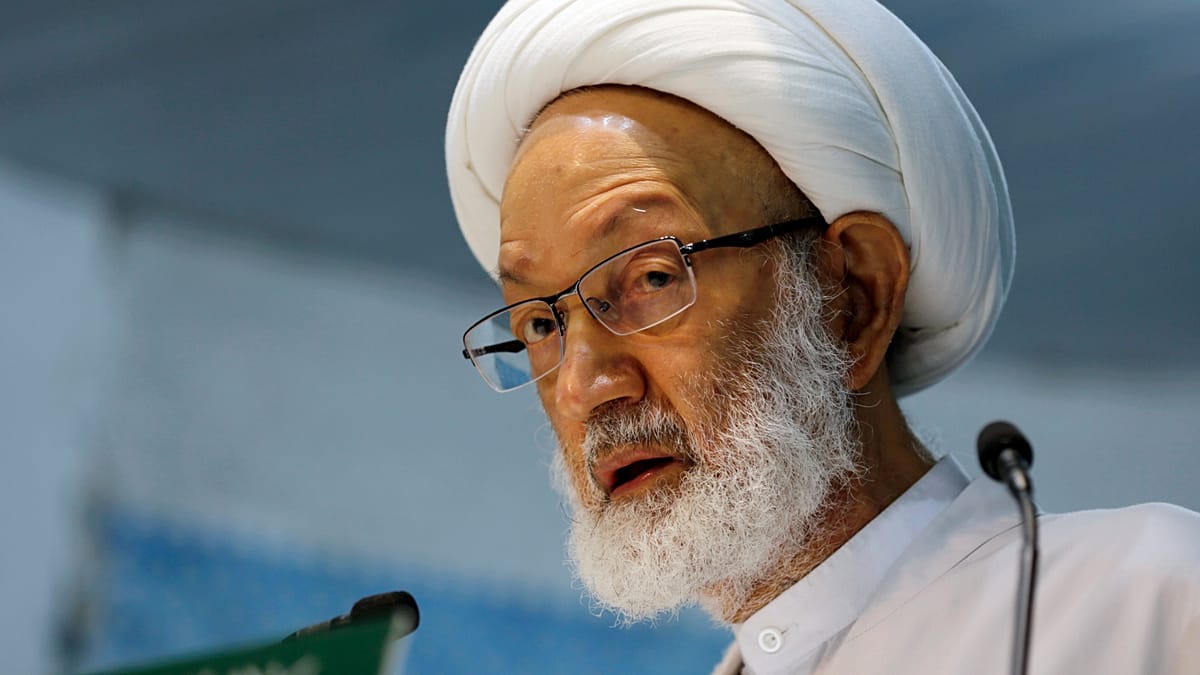
Among those sentenced in absentia was Sheikh Isa Qassim, a prominent Shia religious leader who lives in Iran, BIRD told Reuters. He was one of 13 defendants tried without being present in court.
Prosecutors alleged that the defendants had formed and operated a terrorist group linked to Iran's Islamic Revolutionary Guard Corps (IRGC). They were accused of raising funds without authorisation and using mosques, sermons, and charitable organisations to promote loyalty to Iran's leadership. The court also fined some defendants 100,000 Bahraini dinars (€240,000) and ordered the confiscation of more than 8 million dinars (€19.2 million) for charitable purposes, prosecutors said.
Torture allegations and due process concerns
Before the verdict, 20 human rights organisations, including Amnesty International and Human Rights Watch, had called for an independent investigation into torture allegations and urged the court to exclude any confessions obtained through abuse. The groups said defendants had described prolonged blindfolding, sleep deprivation, and threats against themselves and their families. Some said they had been questioned without lawyers and pressured into signing statements they were not allowed to read.
Defence lawyers were also prevented from obtaining copies of case files and had to rely on handwritten notes taken under tight time limits, the groups said. Bahrain's public prosecution said it respected defendants' legal rights throughout the investigation and trial, adding that lawyers representing those in custody had attended hearings and were able to examine evidence, question witnesses, and present their arguments.
BIRD said the court brought the verdict forward from 22 November to Monday at prosecutors' request, with defence lawyers notified only the evening before it was delivered. The UK government said last Tuesday that it was aware of concerns about the trial and regularly discussed human rights, including fair trial guarantees, with Bahrain.
Regional reactions
Iran's foreign ministry condemned the ruling on Tuesday as a human rights violation and rejected allegations linking the defendants to Tehran. Bahrain rejected the criticism, saying its courts judged criminal acts rather than religious beliefs and that the defendants had received the safeguards required by law.
On Wednesday, Gulf Cooperation Council Secretary-General Jasem Mohamed Albudaiwi expressed the bloc's confidence in Bahrain's judiciary and accused Iran of interfering in the country's internal affairs. Bahrain, which hosts the US Navy's Fifth Fleet, has faced Tehran's missile and drone attacks during the Iran war. Authorities arrested dozens of Shia clerics and religious speakers in May and June, accusing them of seeking to overthrow the government with Iranian support.
The case highlights the ongoing tensions between Bahrain and Iran, and the broader regional rivalry that has drawn in European powers concerned about stability in the Gulf. The European Union has previously called for fair trials and respect for human rights in Bahrain, but has not commented on this specific verdict.