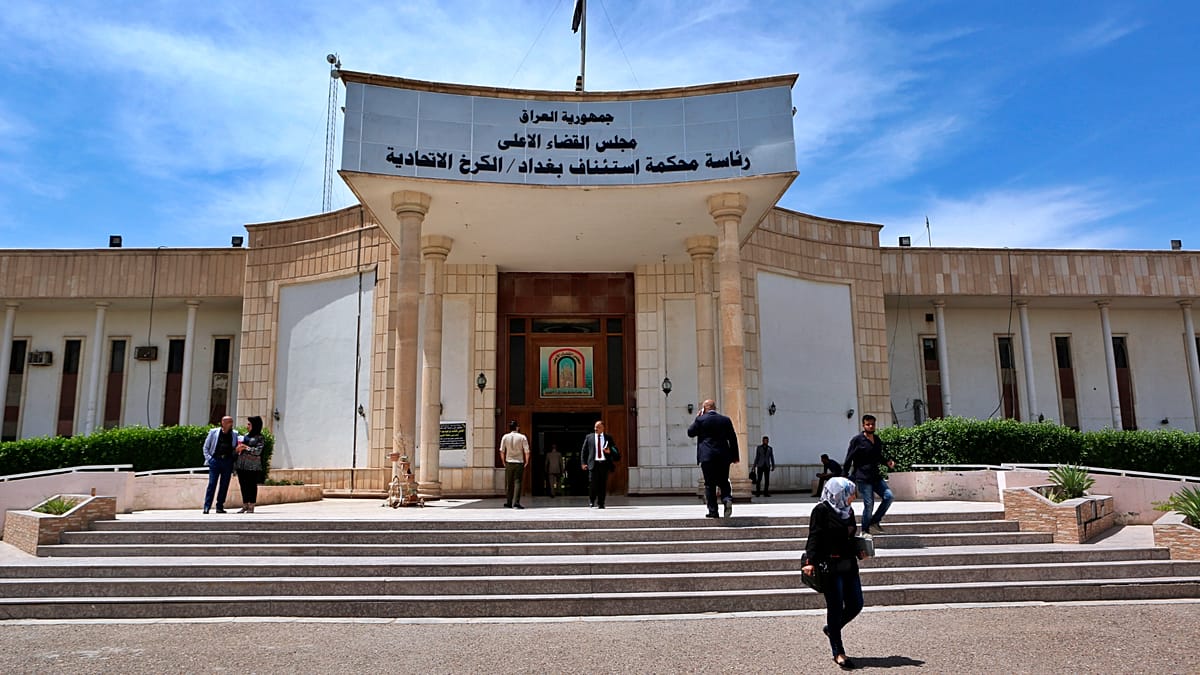
An Iraqi court on Wednesday sentenced six French citizens to life imprisonment for membership in the Islamic State (IS) group, according to an AFP journalist in the courtroom. The verdicts bring the total number of French nationals convicted in Iraq to 16, with most receiving life terms.
The six were part of a group of 47 French citizens transferred from Syria to Iraq last year and charged with belonging to the extremist organisation. Their trials began in September, and ten others had already been sentenced before Wednesday's rulings.
Among those sentenced was Barnouin, a 45-year-old French convert to Islam who told the court during his trial that he went to Syria because he believed it was his religious duty. He claimed he had not known that IS would later carry out attacks in France.
Barnouin was radicalised in the early 2000s and became part of a jihadist network in southwestern France. That network included Mohamed Merah, who killed four people, including three children, at a Jewish school in Toulouse in 2012. Barnouin joined IS in Syria in 2014 and was captured by Kurdish-led forces three years later.
Overcrowded prisons and questionable trials
Iraq's prisons were already holding large numbers of suspected jihadists when, in February, the United States transferred more than 5,700 IS detainees from over 60 countries into Iraqi custody. These detainees had spent years in prisons run by Kurdish-led forces in Syria. A court source said their trials would begin on Sunday.
Iraqi courts have issued hundreds of death sentences and life terms over the years for terrorism convictions, including against foreign fighters. Human rights groups have criticised the proceedings as hasty and have said defendants are denied due process, raising concerns about the fairness of the trials.
At its height, between 2014 and 2017, IS controlled large parts of Iraq and Syria, carrying out massacres and forcing women and girls into sexual slavery. Baghdad declared victory over the group in 2017 with support from a US-led coalition, and Kurdish-led forces backed by Washington defeated IS in Syria two years later.
Iraq is still dealing with the aftermath: mass graves are still being discovered, and many accounts of IS atrocities have yet to be investigated. The trials of foreign fighters are part of this broader reckoning, but they also raise questions about the legal standards applied.
Thousands of Europeans travelled to the Middle East to join IS. France has allowed relatives of French jihadists to come home, but it has refused to repatriate most of the fighters themselves, leaving them to stand trial abroad. This policy has drawn criticism from some legal experts and human rights groups, who argue that trials in Iraq may not meet international standards.
The situation is part of a wider debate about how European countries handle their citizens who joined extremist groups. While some nations have repatriated fighters and their families, others, like France, have preferred to let them face justice in the region. The outcome of these trials will be closely watched in Europe, as they set a precedent for how other countries might deal with their own nationals.
As the trials of the 5,700 detainees begin, the international community will be observing whether Iraq's courts can deliver justice that is both fair and credible. The sheer number of cases and the complexity of the evidence will test the capacity of the Iraqi judicial system, which has already been strained by years of conflict.